Systems Engineering is a multidisciplinary approach to designing, integrating, and managing complex systems throughout their life cycles. It encompasses the application of engineering principles to ensure that all components of a system work together efficiently to meet specified requirements and objectives.
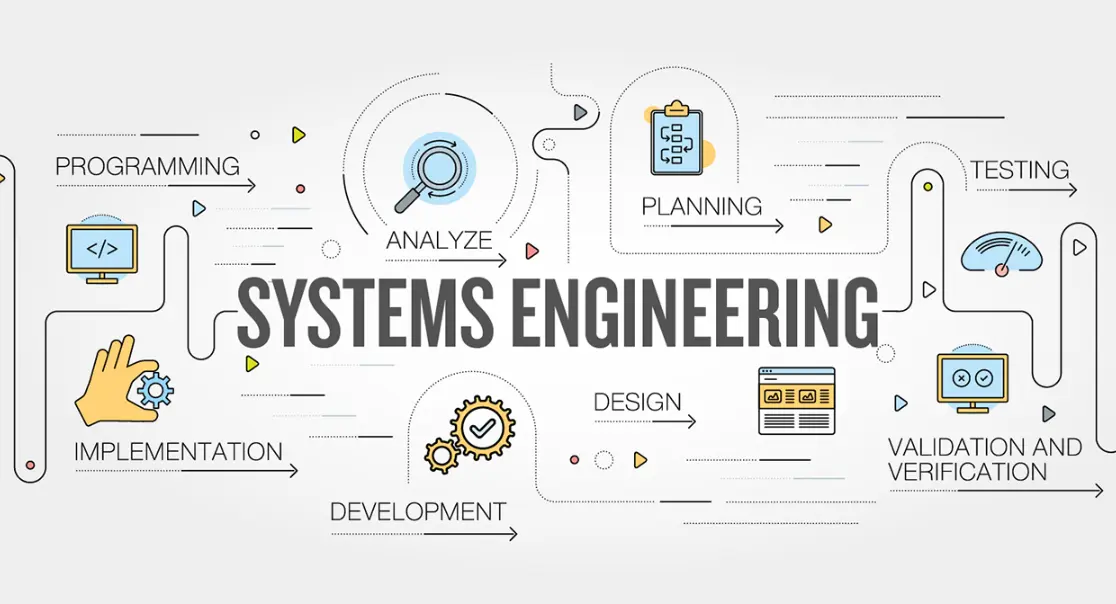
At its core, Systems Engineering involves identifying stakeholder needs, defining system requirements, performing system analysis, designing architectures, verifying and validating performance, and managing risks. This iterative process helps in developing systems that are reliable, cost-effective, and adaptable to changing environments.
Key principles include:
– Holistic Perspective: Viewing the system as a whole, including its interactions with users, environments, and other systems.
– Life Cycle Management: Addressing all phases from concept development to retirement, including design, production, operation, and disposal.
– Interdisciplinary Collaboration: Integrating knowledge from fields like mechanical, electrical, software, and human factors engineering.
– Requirements Engineering: Clearly defining and managing what the system must achieve.
– Verification and Validation: Ensuring the system meets its requirements and performs as intended in real-world scenarios.
Systems Engineering is applied in various domains, such as aerospace, defense, healthcare, transportation, and information technology. For example, it is crucial in developing satellites, where precise coordination between hardware, software, and ground systems is essential.
The field emphasizes risk management, optimization of resources, and the use of tools like modeling and simulation to predict system behavior. By adopting Systems Engineering practices, organizations can reduce costs, minimize errors, and enhance innovation in complex projects.
Historically, Systems Engineering emerged during World War II for military applications and has evolved with advancements in technology, particularly in the space race and modern software development. Today, it plays a vital role in addressing global challenges like sustainable energy and smart cities.
Table of Contents
- Part 1: OnlineExamMaker AI Quiz Maker – Make A Free Quiz in Minutes
- Part 2: 20 Systems Engineering Quiz Questions & Answers
- Part 3: AI Question Generator – Automatically Create Questions for Your Next Assessment
Part 1: OnlineExamMaker AI Quiz Maker – Make A Free Quiz in Minutes
Still spend a lot of time in editing questions for your next Systems Engineering assessment? OnlineExamMaker is an AI quiz maker that leverages artificial intelligence to help users create quizzes, tests, and assessments quickly and efficiently. You can start by inputting a topic or specific details into the OnlineExamMaker AI Question Generator, and the AI will generate a set of questions almost instantly. It also offers the option to include answer explanations, which can be short or detailed, helping learners understand their mistakes.
What you may like:
● Automatic grading and insightful reports. Real-time results and interactive feedback for quiz-takers.
● The exams are automatically graded with the results instantly, so that teachers can save time and effort in grading.
● LockDown Browser to restrict browser activity during quizzes to prevent students searching answers on search engines or other software.
● Create certificates with personalized company logo, certificate title, description, date, candidate’s name, marks and signature.
Automatically generate questions using AI
Part 2: 20 Systems Engineering Quiz Questions & Answers
or
1. Question: What is the primary goal of systems engineering?
A) To minimize costs
B) To optimize the entire system lifecycle
C) To focus solely on software development
D) To maximize individual component performance
Answer: B
Explanation: Systems engineering integrates various disciplines to ensure the system meets its objectives efficiently throughout its lifecycle, emphasizing holistic optimization over isolated elements.
2. Question: In systems engineering, what does V&V stand for?
A) Verification and Validation
B) Value and Variety
C) Virtual and Visual
D) Volume and Velocity
Answer: A
Explanation: V&V ensures that the system is built right (verification) and that the right system is built (validation), confirming it meets specifications and user needs.
3. Question: Which phase of the systems engineering process involves identifying and defining stakeholder needs?
A) Design phase
B) Requirements analysis phase
C) Implementation phase
D) Disposal phase
Answer: B
Explanation: The requirements analysis phase gathers and refines needs to form a clear basis for system development, preventing mismatches later in the process.
4. Question: What is a key benefit of using systems modeling languages like SysML?
A) They simplify hardware-only designs
B) They provide a visual representation of system architecture and behavior
C) They eliminate the need for testing
D) They focus only on cost estimation
Answer: B
Explanation: SysML allows engineers to model complex systems visually, improving communication, analysis, and design across interdisciplinary teams.
5. Question: In systems engineering, what is a trade-off study?
A) A method to select the cheapest option
B) An analysis to evaluate alternatives based on multiple criteria
C) A process to ignore risks
D) A technique for rapid prototyping
Answer: B
Explanation: Trade-off studies help balance factors like cost, performance, and risk to make informed decisions about system design options.
6. Question: What does the term “system of systems” refer to?
A) A single, isolated component
B) A collection of independent systems that interoperate to achieve a larger goal
C) A software-only architecture
D) A hardware-focused design
Answer: B
Explanation: System of systems involves integrating multiple autonomous systems, each with their own purpose, to create a more complex and capable overall system.
7. Question: Which tool is commonly used for risk management in systems engineering?
A) FMEA (Failure Mode and Effects Analysis)
B) Excel spreadsheets only
C) Basic flowcharts
D) Random number generators
Answer: A
Explanation: FMEA systematically identifies potential failure points and their impacts, allowing engineers to prioritize and mitigate risks early in development.
8. Question: What is the purpose of interface control in systems engineering?
A) To define how system components interact
B) To increase system isolation
C) To reduce documentation
D) To focus on aesthetics
Answer: A
Explanation: Interface control ensures that connections between subsystems are clearly defined, preventing integration issues and maintaining system functionality.
9. Question: In the systems engineering lifecycle, what follows the conceptual design phase?
A) Detailed design
B) Manufacturing
C) Retirement
D) Operation
Answer: A
Explanation: After conceptual design outlines high-level ideas, detailed design refines them into specific plans, including components and specifications.
10. Question: What is configuration management in systems engineering?
A) Tracking changes to system elements over time
B) Ignoring updates to save time
C) Focusing only on initial setup
D) Randomly altering designs
Answer: A
Explanation: Configuration management controls and documents changes to ensure the system remains consistent, traceable, and reliable throughout its lifecycle.
11. Question: Why is stakeholder involvement critical in systems engineering?
A) To speed up development without input
B) To align the system with user needs and expectations
C) To minimize communication
D) To focus on technical details only
Answer: B
Explanation: Involving stakeholders ensures that the system addresses real-world requirements, reducing the risk of costly revisions later.
12. Question: What is the role of a requirements traceability matrix?
A) To link requirements to design elements and verification activities
B) To eliminate the need for testing
C) To store unrelated data
D) To create random connections
Answer: A
Explanation: A traceability matrix tracks how requirements are met, ensuring all aspects are covered and facilitating impact analysis for changes.
13. Question: In systems engineering, what does MODAF stand for?
A) Ministry of Defense Architecture Framework
B) Model of Design and Analysis Framework
C) Management of Operations and Data Framework
D) Modern Operational Design Framework
Answer: A
Explanation: MODAF provides a standardized way to describe architectures for defense and other complex systems, aiding in interoperability and decision-making.
14. Question: What is the primary focus of human factors engineering in systems design?
A) To optimize for machine efficiency only
B) To ensure systems are user-friendly and safe for humans
C) To ignore ergonomic considerations
D) To prioritize cost over usability
Answer: B
Explanation: Human factors engineering integrates user capabilities and limitations into design, reducing errors and improving overall system effectiveness.
15. Question: How does systems engineering address complexity?
A) By breaking systems into smaller, manageable parts and managing interactions
B) By avoiding detailed analysis
C) By using a single discipline approach
D) By increasing randomness in design
Answer: A
Explanation: Systems engineering decomposes complex systems into subsystems while considering their interconnections, making it easier to manage and integrate.
16. Question: What is the purpose of a functional baseline in systems engineering?
A) To document the approved system functions at a specific stage
B) To skip functional testing
C) To focus on non-functional aspects only
D) To ignore baseline updates
Answer: A
Explanation: The functional baseline serves as a reference point for functions, allowing for controlled changes and verification against requirements.
17. Question: In systems engineering, what is a use case?
A) A description of how users interact with the system
B) A random scenario generator
C) A method for hardware selection
D) An irrelevant detail
Answer: A
Explanation: Use cases outline specific interactions and scenarios, helping to define requirements and validate that the system meets user needs.
18. Question: Why is iterative development important in systems engineering?
A) It allows for continuous refinement based on feedback
B) It eliminates the need for planning
C) It focuses on a single iteration only
D) It increases project delays
Answer: A
Explanation: Iterative development enables testing and improvements in cycles, reducing risks and adapting to changes throughout the process.
19. Question: What is the key outcome of the integration phase?
A) Combining subsystems into a complete system
B) Designing individual components
C) Disposing of the system
D) Analyzing risks post-deployment
Answer: A
Explanation: The integration phase assembles and tests subsystems together, ensuring they work as an interconnected whole before full deployment.
20. Question: How does systems engineering promote sustainability?
A) By considering environmental and long-term impacts in design
B) By ignoring resource use
C) By focusing only on short-term gains
D) By avoiding lifecycle analysis
Answer: A
Explanation: Systems engineering incorporates sustainability through lifecycle assessments, ensuring efficient resource use and minimal environmental harm over the system’s life.
or
Part 3: AI Question Generator – Automatically Create Questions for Your Next Assessment
Automatically generate questions using AI