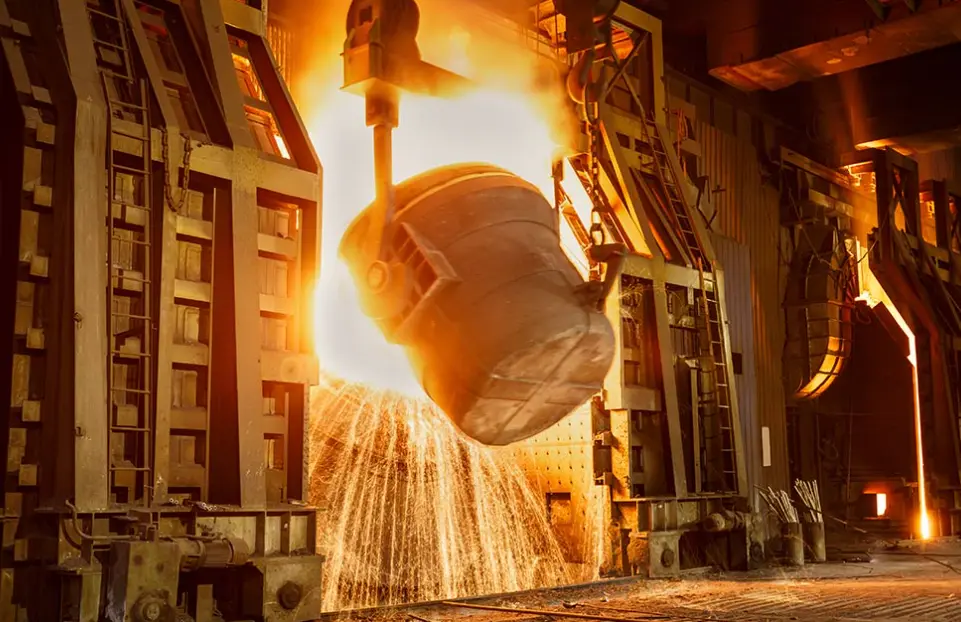
The steel industry is a cornerstone of global manufacturing, encompassing the extraction, processing, and production of steel from raw materials like iron ore, coal, and scrap metal. This sector involves key processes such as mining, smelting in blast furnaces, refining through basic oxygen or electric arc furnaces, and shaping steel into various forms like sheets, bars, and beams. As a vital component of modern economies, it supports infrastructure development, including bridges, buildings, and railways, while playing a critical role in automotive, shipbuilding, and appliance manufacturing. The industry has evolved with technological advancements, such as automation and sustainable practices like recycling scrap steel to reduce environmental impact. Major players include integrated producers like ArcelorMittal and Nucor, operating in a competitive market influenced by fluctuating raw material prices, trade policies, and demands for greener production methods. Despite challenges like high energy consumption and carbon emissions, innovations in electric arc furnaces and hydrogen-based reduction are driving the transition toward a more sustainable future.
Table of Contents
- Part 1: OnlineExamMaker AI Quiz Generator – Save Time and Efforts
- Part 2: 20 Steel Industry Quiz Questions & Answers
- Part 3: Try OnlineExamMaker AI Question Generator to Create Quiz Questions
Part 1: OnlineExamMaker AI Quiz Generator – Save Time and Efforts
Still spend a lot of time in editing questions for your next Steel Industry assessment? OnlineExamMaker is an AI quiz maker that leverages artificial intelligence to help users create quizzes, tests, and assessments quickly and efficiently. You can start by inputting a topic or specific details into the OnlineExamMaker AI Question Generator, and the AI will generate a set of questions almost instantly. It also offers the option to include answer explanations, which can be short or detailed, helping learners understand their mistakes.
What you may like:
● Automatic grading and insightful reports. Real-time results and interactive feedback for quiz-takers.
● The exams are automatically graded with the results instantly, so that teachers can save time and effort in grading.
● LockDown Browser to restrict browser activity during quizzes to prevent students searching answers on search engines or other software.
● OnlineExamMaker API offers private access for developers to extract your exam data back into your system automatically.
Automatically generate questions using AI
Part 2: 20 Steel Industry Quiz Questions & Answers
or
1. Question: What is the primary raw material used in steel production?
A) Aluminum
B) Iron ore
C) Copper
D) Zinc
Answer: B) Iron ore
Explanation: Iron ore is the main source of iron, which is smelted and refined to produce steel in processes like blast furnace operations.
2. Question: Which process is commonly used to remove impurities from pig iron to make steel?
A) Electroplating
B) Bessemer process
C) Distillation
D) Crystallization
Answer: B) Bessemer process
Explanation: The Bessemer process blows air through molten pig iron to oxidize impurities like carbon, silicon, and manganese, resulting in steel.
3. Question: What is the main function of limestone in a blast furnace?
A) To provide carbon
B) To act as a flux and remove impurities
C) To generate heat
D) To cool the furnace
Answer: B) To act as a flux and remove impurities
Explanation: Limestone decomposes into lime, which combines with silica and other impurities to form slag, which is then separated from the molten iron.
4. Question: Which type of steel is known for its resistance to corrosion?
A) Carbon steel
B) Stainless steel
C) Tool steel
D) Alloy steel
Answer: B) Stainless steel
Explanation: Stainless steel contains chromium, which forms a passive layer of chromium oxide on the surface, protecting it from rust and corrosion.
5. Question: What is the approximate carbon content in mild steel?
A) 0.05% to 0.25%
B) 0.60% to 1.00%
C) 1.00% to 2.00%
D) Over 2.00%
Answer: A) 0.05% to 0.25%
Explanation: Mild steel has low carbon content, making it ductile and easy to weld, which is ideal for construction and automotive applications.
6. Question: In the Basic Oxygen Furnace (BOF) process, what is injected to refine the steel?
A) Pure oxygen
B) Nitrogen gas
C) Hydrogen
D) Carbon dioxide
Answer: A) Pure oxygen
Explanation: Pure oxygen is blown into the molten iron to oxidize carbon and other impurities quickly, reducing the carbon content to produce steel.
7. Question: Which country is the largest producer of steel in the world as of recent years?
A) United States
B) Japan
C) China
D) Germany
Answer: C) China
Explanation: China has dominated global steel production due to its massive industrial capacity, high demand, and government-supported infrastructure projects.
8. Question: What does the term “annealing” refer to in steel production?
A) Rapid cooling of steel
B) Heating and slow cooling to relieve internal stresses
C) Adding alloys to steel
D) Forging steel into shapes
Answer: B) Heating and slow cooling to relieve internal stresses
Explanation: Annealing involves controlled heating and cooling to soften steel, improve its ductility, and reduce hardness caused by previous processing.
9. Question: Which alloying element is added to steel to increase its hardness and wear resistance?
A) Nickel
B) Chromium
C) Manganese
D) Tungsten
Answer: D) Tungsten
Explanation: Tungsten forms hard carbides in steel, enhancing its ability to withstand wear and maintain strength at high temperatures.
10. Question: What environmental issue is commonly associated with steel production?
A) Ozone depletion
B) Greenhouse gas emissions
C) Acid rain from sulfur dioxide
D) All of the above
Answer: D) All of the above
Explanation: Steel production releases CO2 from fossil fuel use, sulfur dioxide contributing to acid rain, and other pollutants, though emissions vary by technology.
11. Question: What is the role of coke in the blast furnace?
A) To provide oxygen
B) To act as a reducing agent and fuel
C) To remove slag
D) To cool the iron
Answer: B) To act as a reducing agent and fuel
Explanation: Coke, derived from coal, burns to produce carbon monoxide, which reduces iron ore to iron, and provides the necessary heat for the process.
12. Question: Which steel grade is typically used for making cutting tools?
A) High-speed steel
B) Low-carbon steel
C) Structural steel
D) Galvanized steel
Answer: A) High-speed steel
Explanation: High-speed steel contains tungsten, molybdenum, and vanadium, allowing it to retain hardness at high temperatures during cutting operations.
13. Question: What is the purpose of galvanizing steel?
A) To increase its weight
B) To protect it from corrosion by coating with zinc
C) To make it magnetic
D) To harden it
Answer: B) To protect it from corrosion by coating with zinc
Explanation: Galvanizing applies a zinc layer that acts as a sacrificial anode, preventing rust on the underlying steel even if the surface is scratched.
14. Question: In steel recycling, what percentage of steel can be recycled indefinitely?
A) 25%
B) 50%
C) 100%
D) 75%
Answer: C) 100%
Explanation: Steel is fully recyclable without loss of quality, meaning it can be melted and reused repeatedly, making it one of the most sustainable materials.
15. Question: Which process converts cast iron to steel by controlling carbon content?
A) Smelting
B) Open-hearth process
C) Extrusion
D) Rolling
Answer: B) Open-hearth process
Explanation: The open-hearth process heats a mixture of scrap steel and iron ore in a furnace to adjust the carbon content and produce high-quality steel.
16. Question: What is the main advantage of electric arc furnaces in steelmaking?
A) Lower initial cost
B) Use of scrap metal as primary input
C) Faster production time
D) Reduced energy consumption
Answer: B) Use of scrap metal as primary input
Explanation: Electric arc furnaces primarily melt scrap steel using electricity, making them efficient for recycling and reducing the need for raw iron ore.
17. Question: Which factor primarily influences the price of steel in the global market?
A) Currency exchange rates
B) Supply and demand dynamics
C) Weather patterns
D) Agricultural output
Answer: B) Supply and demand dynamics
Explanation: Steel prices fluctuate based on global demand from industries like construction and automotive, as well as supply constraints from production capacities.
18. Question: What is the typical composition of alloy steel?
A) Iron and carbon only
B) Iron, carbon, and other elements like chromium or nickel
C) Pure iron
D) Iron and aluminum
Answer: B) Iron, carbon, and other elements like chromium or nickel
Explanation: Alloy steel includes additional elements to enhance properties such as strength, corrosion resistance, and heat tolerance beyond basic carbon steel.
19. Question: Which invention revolutionized modern steel production in the 19th century?
A) The steam engine
B) The Bessemer converter
C) The cotton gin
D) The telegraph
Answer: B) The Bessemer converter
Explanation: The Bessemer converter allowed for mass production of steel by quickly converting iron into steel, spurring industrial growth.
20. Question: What is the impact of increasing silicon content in steel?
A) Improves electrical conductivity
B) Enhances magnetic properties
C) Reduces strength
D) Increases brittleness
Answer: B) Enhances magnetic properties
Explanation: Silicon is added to steel for electrical applications, as it improves the material’s magnetic permeability and reduces energy losses in transformers.
or
Part 3: Try OnlineExamMaker AI Question Generator to Create Quiz Questions
Automatically generate questions using AI