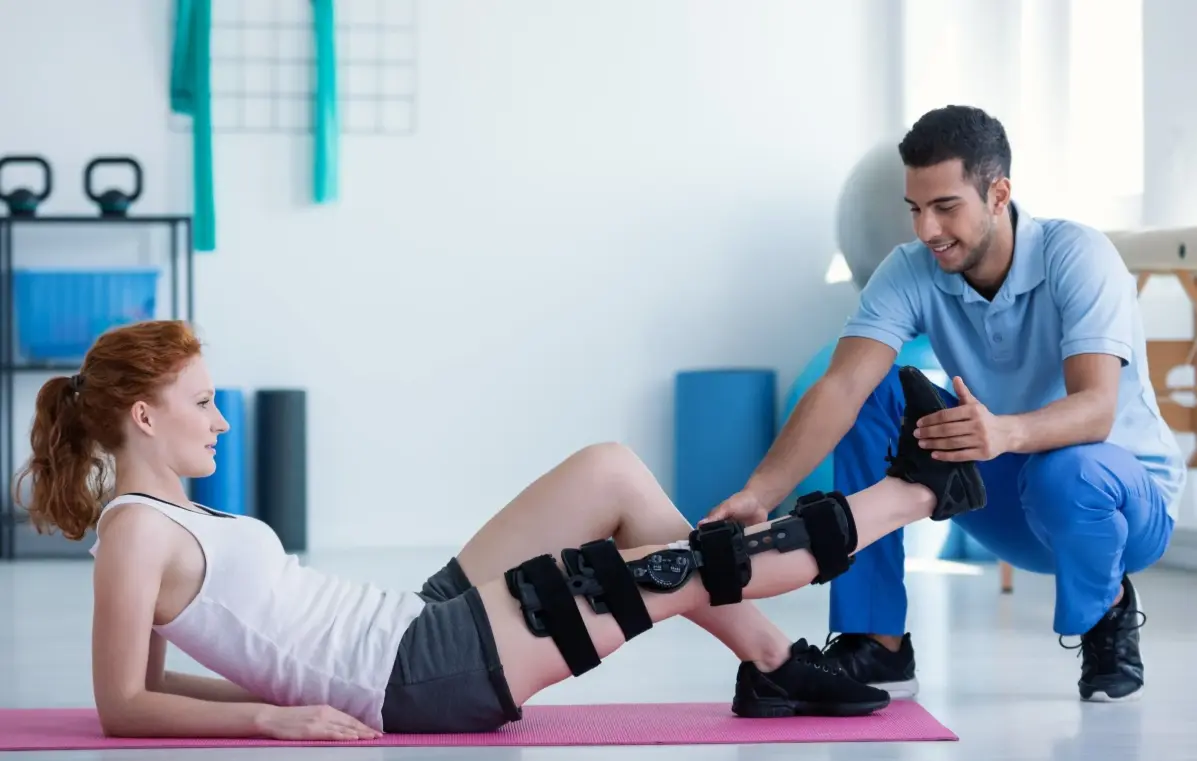
A Sports Therapist is a specialized healthcare professional who focuses on the prevention, assessment, treatment, and rehabilitation of sports-related injuries and conditions. They work closely with athletes of all levels to enhance performance, manage pain, and promote recovery through a combination of manual therapy techniques, exercise prescription, and education on injury prevention. Key responsibilities include conducting physical assessments, developing personalized treatment plans, applying modalities such as massage, electrotherapy, and taping, and collaborating with coaches and other medical professionals to ensure optimal athlete health. Qualifications typically include a degree in sports therapy, physiotherapy, or a related field, along with certifications in first aid, CPR, and specialized training in sports science. This role is essential in sports medicine, helping individuals return to their activities safely while minimizing the risk of re-injury and improving overall physical conditioning.
Table of Contents
- Part 1: Create An Amazing Sports Therapist Quiz Using AI Instantly in OnlineExamMaker
- Part 2: 20 Sports Therapist Quiz Questions & Answers
- Part 3: OnlineExamMaker AI Question Generator: Generate Questions for Any Topic
Part 1: Create An Amazing Sports Therapist Quiz Using AI Instantly in OnlineExamMaker
Nowadays more and more people create Sports Therapist quizzes using AI technologies, OnlineExamMaker a powerful AI-based quiz making tool that can save you time and efforts. The software makes it simple to design and launch interactive quizzes, assessments, and surveys. With the Question Editor, you can create multiple-choice, open-ended, matching, sequencing and many other types of questions for your tests, exams and inventories. You are allowed to enhance quizzes with multimedia elements like images, audio, and video to make them more interactive and visually appealing.
Recommended features for you:
● Prevent cheating by randomizing questions or changing the order of questions, so learners don’t get the same set of questions each time.
● Automatically generates detailed reports—individual scores, question report, and group performance.
● Simply copy a few lines of codes, and add them to a web page, you can present your online quiz in your website, blog, or landing page.
● Offers question analysis to evaluate question performance and reliability, helping instructors optimize their training plan.
Automatically generate questions using AI
Part 2: 20 Sports Therapist Quiz Questions & Answers
or
1. What is the primary goal of a sports therapist in managing acute sports injuries?
A. To immediately return the athlete to competition
B. To reduce pain and inflammation while promoting healing
C. To focus solely on strengthening exercises
D. To prescribe medications for long-term use
Answer: B
Explanation: The primary goal is to reduce pain and inflammation to prevent further injury and promote the healing process, allowing for safe rehabilitation.
2. Which muscle group is most commonly strained in runners?
A. Quadriceps
B. Hamstrings
C. Calves
D. Abdominals
Answer: B
Explanation: Hamstrings are frequently strained in runners due to the repetitive nature of the activity, which involves rapid eccentric contractions.
3. What is the RICE method primarily used for?
A. Building endurance in athletes
B. Treating chronic injuries
C. Initial management of acute soft tissue injuries
D. Enhancing flexibility routines
Answer: C
Explanation: RICE (Rest, Ice, Compression, Elevation) is a standard first-aid approach to minimize swelling and pain in acute injuries.
4. In sports therapy, what does ROM stand for in the context of rehabilitation?
A. Rate of Motion
B. Range of Movement
C. Recovery of Muscles
D. Repetition of Motion
Answer: B
Explanation: ROM refers to Range of Movement, which assesses and improves joint flexibility during the rehabilitation process.
5. Which taping technique is often used to support the ankle in sports like basketball?
A. Kinesiology taping
B. Rigid strapping
C. Elastic bandaging
D. Compression wrapping
Answer: B
Explanation: Rigid strapping provides strong support to prevent excessive movement and reduce the risk of injury in high-impact sports.
6. What is the main benefit of proprioceptive training in sports therapy?
A. Increasing muscle size
B. Improving balance and body awareness
C. Enhancing cardiovascular fitness
D. Reducing body fat
Answer: B
Explanation: Proprioceptive training helps athletes regain coordination and stability, which is crucial for preventing re-injury.
7. Which phase of injury rehabilitation focuses on restoring strength and endurance?
A. Acute phase
B. Sub-acute phase
C. Remodeling phase
D. Functional phase
Answer: D
Explanation: The functional phase involves sport-specific exercises to rebuild strength, endurance, and overall performance.
8. What is a common sign of a grade 2 ligament sprain?
A. No pain or swelling
B. Partial tear with moderate pain and instability
C. Complete tear with severe swelling
D. Full mobility without discomfort
Answer: B
Explanation: A grade 2 sprain involves a partial tear, leading to moderate pain, swelling, and joint instability that requires therapeutic intervention.
9. In sports therapy, why is cryotherapy often applied?
A. To increase blood flow to the injury site
B. To promote muscle hypertrophy
C. To reduce inflammation and numb pain
D. To enhance joint flexibility
Answer: C
Explanation: Cryotherapy, such as ice application, constricts blood vessels to decrease inflammation and provide temporary pain relief.
10. What role does massage play in sports therapy?
A. It replaces the need for rest
B. It helps in reducing muscle tension and improving circulation
C. It is used only for chronic conditions
D. It increases injury risk
Answer: B
Explanation: Massage aids in relaxation, reduces muscle knots, and enhances blood flow, which supports recovery and prevents injuries.
11. Which assessment tool is commonly used to evaluate functional movement in athletes?
A. Blood pressure monitor
B. Functional Movement Screen (FMS)
C. Electrocardiogram
D. Bone density scan
Answer: B
Explanation: The FMS assesses movement patterns to identify imbalances or weaknesses that could lead to injuries.
12. What is the key principle of progressive overload in rehabilitation?
A. Gradually increasing the intensity of exercises
B. Keeping exercises at the same level indefinitely
C. Reducing activity to avoid any strain
D. Focusing only on rest periods
Answer: A
Explanation: Progressive overload systematically increases demands on the body to build strength and endurance without causing harm.
13. In sports therapy, what does ACL stand for in the context of knee injuries?
A. Anterior Cruciate Ligament
B. Achilles Connective Ligament
C. Ankle Collateral Ligament
D. Articular Cartilage Layer
Answer: A
Explanation: The ACL is a major knee ligament often injured in sports, requiring specific therapeutic protocols for recovery.
14. Why is hydration emphasized in sports therapy programs?
A. To increase body weight
B. To maintain optimal performance and aid recovery
C. To reduce the need for warm-up
D. To promote fatigue
Answer: B
Explanation: Proper hydration supports muscle function, prevents cramps, and facilitates the body’s natural healing processes.
15. Which therapeutic modality uses electrical stimulation to reduce pain?
A. Ultrasound therapy
B. Transcutaneous Electrical Nerve Stimulation (TENS)
C. Heat therapy
D. Manual therapy
Answer: B
Explanation: TENS delivers low-voltage electrical currents to block pain signals and promote endorphin release.
16. What is the purpose of a warm-up in preventing sports injuries?
A. To exhaust the muscles before activity
B. To increase heart rate and prepare the body for exertion
C. To cool down the body
D. To replace stretching entirely
Answer: B
Explanation: A warm-up raises body temperature, improves blood flow, and enhances flexibility, reducing the risk of strains and sprains.
17. In sports therapy, how is a stress fracture typically managed?
A. Immediate high-impact training
B. Rest, activity modification, and gradual return to sport
C. Ignoring it until it heals naturally
D. Increasing calcium intake only
Answer: B
Explanation: Management involves rest to allow bone healing, followed by controlled activity to prevent recurrence.
18. What does the term “overtraining syndrome” refer to in athletes?
A. A planned increase in training volume
B. Excessive training leading to physical and mental fatigue
C. A form of rest period
D. Nutritional deficiency
Answer: B
Explanation: Overtraining syndrome results from unbalanced training and recovery, causing decreased performance and requiring therapeutic intervention.
19. Which factor is most important when designing a rehabilitation program for an athlete?
A. The athlete’s favorite sport
B. Individual needs, injury type, and fitness level
C. General fitness trends
D. Cost of equipment
Answer: B
Explanation: Programs must be tailored to the specific injury, the athlete’s goals, and their current physical condition for effective recovery.
20. What is the benefit of incorporating core stability exercises in sports therapy?
A. It only improves appearance
B. It enhances overall body stability and reduces injury risk
C. It focuses solely on arm strength
D. It speeds up weight loss
Answer: B
Explanation: Core exercises strengthen the muscles around the spine and pelvis, improving posture, balance, and injury prevention in sports.
or
Part 3: OnlineExamMaker AI Question Generator: Generate Questions for Any Topic
Automatically generate questions using AI