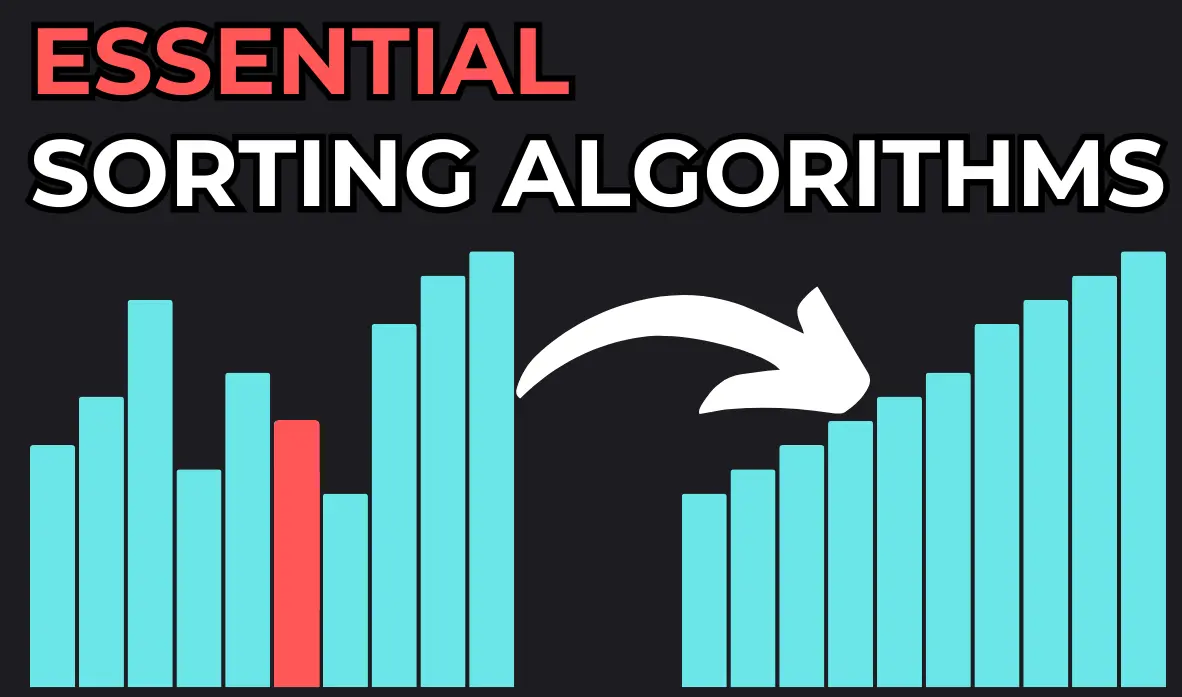
Sorting algorithms are fundamental techniques in computer science used to arrange elements of a list or array in a specific order, such as ascending or descending. They play a crucial role in data processing, enabling efficient searching, organizing, and analyzing information.
At their core, sorting algorithms rearrange items based on a comparison function. For example, in ascending order, each element is compared to determine if it is smaller or larger than another. The efficiency of these algorithms is measured by time complexity (how many operations they require) and space complexity (how much additional memory they use), often expressed in Big O notation.
Common types include:
– Bubble Sort: A simple algorithm that repeatedly steps through the list, compares adjacent elements, and swaps them if they are in the wrong order. It continues until no more swaps are needed. While easy to understand, it’s inefficient for large datasets, with a worst-case time complexity of O(n²).
– Selection Sort: Divides the list into a sorted and an unsorted region. It repeatedly selects the smallest (or largest) element from the unsorted portion and moves it to the sorted portion. This has a time complexity of O(n²), making it straightforward but not ideal for big data.
– Insertion Sort: Builds the final sorted array one item at a time. It takes each element and inserts it into its correct position in the already sorted part of the array. Efficient for small or nearly sorted lists, with a best-case time complexity of O(n).
– Merge Sort: A divide-and-conquer approach that splits the array into halves, sorts them individually, and then merges them back together. It’s stable and has a consistent time complexity of O(n log n), making it suitable for larger datasets.
– Quick Sort: Another divide-and-conquer method that selects a ‘pivot’ element and partitions the other elements into two sub-arrays based on whether they are less than or greater than the pivot. It then recursively sorts the sub-arrays. Quick Sort has an average time complexity of O(n log n) but can degrade to O(n²) in the worst case with poor pivot selection.
Sorting algorithms vary in stability (whether they preserve the relative order of equal elements), adaptability (performance on partially sorted data), and in-memory requirements. For instance, some like Merge Sort are not in-place (requiring extra space), while others like Quick Sort are.
In practice, the choice of algorithm depends on the dataset size, the initial order of elements, and constraints like stability or available memory. Applications range from organizing search engine results and sorting databases to optimizing machine learning datasets and enhancing user interfaces in software. Overall, mastering sorting algorithms builds a strong foundation for more advanced computational problems.
Table of Contents
- Part 1: Best AI Quiz Making Software for Creating A Sorting Algorithms Quiz
- Part 2: 20 Sorting Algorithms Quiz Questions & Answers
- Part 3: AI Question Generator – Automatically Create Questions for Your Next Assessment
Part 1: Best AI Quiz Making Software for Creating A Sorting Algorithms Quiz
OnlineExamMaker is a powerful AI-powered assessment platform to create auto-grading Sorting Algorithms skills assessments. It’s designed for educators, trainers, businesses, and anyone looking to generate engaging quizzes without spending hours crafting questions manually. The AI Question Generator feature allows you to input a topic or specific details, and it generates a variety of question types automatically.
Top features for assessment organizers:
● Combines AI webcam monitoring to capture cheating activities during online exam.
● Enhances assessments with interactive experience by embedding video, audio, image into quizzes and multimedia feedback.
● Once the exam ends, the exam scores, question reports, ranking and other analytics data can be exported to your device in Excel file format.
● API and SSO help trainers integrate OnlineExamMaker with Google Classroom, Microsoft Teams, CRM and more.
Automatically generate questions using AI
Part 2: 20 Sorting Algorithms Quiz Questions & Answers
or
1. Question: What is the worst-case time complexity of Bubble Sort?
A) O(1)
B) O(n)
C) O(n log n)
D) O(n^2)
Answer: D
Explanation: Bubble Sort compares adjacent elements and swaps them if necessary, requiring up to n passes for a reverse-sorted array, resulting in O(n^2) time complexity.
2. Question: Which sorting algorithm is not stable?
A) Merge Sort
B) Insertion Sort
C) Selection Sort
D) Bubble Sort
Answer: C
Explanation: Selection Sort does not maintain the relative order of equal elements because it always swaps the minimum element with the first unsorted element, making it unstable.
3. Question: What is the average time complexity of Quick Sort?
A) O(1)
B) O(n)
C) O(n log n)
D) O(n^2)
Answer: C
Explanation: Quick Sort uses a divide-and-conquer approach with partitioning, leading to an average time complexity of O(n log n) when the pivot selection is balanced.
4. Question: Which sorting algorithm divides the array into two halves and merges them?
A) Heap Sort
B) Merge Sort
C) Bubble Sort
D) Quick Sort
Answer: B
Explanation: Merge Sort works by recursively dividing the array into halves and then merging the sorted halves, ensuring a stable and efficient sort.
5. Question: In Insertion Sort, what happens in each iteration?
A) The largest element is selected and moved
B) Adjacent elements are swapped
C) Elements are inserted into a sorted subarray
D) The array is divided and conquered
Answer: C
Explanation: Insertion Sort builds a sorted subarray by inserting each new element into its correct position within the already sorted portion.
6. Question: What is the space complexity of Merge Sort?
A) O(1)
B) O(n)
C) O(log n)
D) O(n log n)
Answer: B
Explanation: Merge Sort requires additional space for the temporary arrays used during the merging process, resulting in O(n) auxiliary space.
7. Question: Which algorithm uses a binary heap to sort elements?
A) Bubble Sort
B) Heap Sort
C) Selection Sort
D) Radix Sort
Answer: B
Explanation: Heap Sort builds a max-heap from the array and repeatedly extracts the maximum element, making it an in-place sorting algorithm with O(n log n) complexity.
8. Question: What is the best-case time complexity of Insertion Sort?
A) O(1)
B) O(n)
C) O(n log n)
D) O(n^2)
Answer: B
Explanation: If the array is already sorted, Insertion Sort only performs a single pass, comparing each element once, resulting in O(n) time complexity.
9. Question: Which sorting algorithm is an example of a comparison-based sort?
A) Counting Sort
B) Quick Sort
C) Radix Sort
D) Bucket Sort
Answer: B
Explanation: Quick Sort compares elements to determine their order, classifying it as a comparison-based algorithm, unlike non-comparison sorts like Counting Sort.
10. Question: In Selection Sort, how many swaps are made in total?
A) Exactly n-1
B) Depends on the array size only
C) Varies based on the array’s order
D) Zero if already sorted
Answer: A
Explanation: Selection Sort always performs one swap per pass for the first n-1 elements, regardless of the array’s initial order, to place the minimum in its position.
11. Question: What is the worst-case time complexity of Quick Sort?
A) O(n)
B) O(n log n)
C) O(n^2)
D) O(1)
Answer: C
Explanation: Quick Sort can degrade to O(n^2) in the worst case if the pivot is chosen poorly, such as when the array is already sorted and the pivot is the first element.
12. Question: Which algorithm is stable and works well for nearly sorted arrays?
A) Heap Sort
B) Quick Sort
C) Insertion Sort
D) Selection Sort
Answer: C
Explanation: Insertion Sort maintains the relative order of equal elements and performs efficiently on nearly sorted arrays, making it stable.
13. Question: How does Radix Sort work?
A) By comparing keys directly
B) By sorting digits or keys one by one
C) By dividing and merging
D) By building a heap
Answer: B
Explanation: Radix Sort processes individual digits or keys in a specific order (e.g., LSD or MSD), using queues or buckets, without making comparisons.
14. Question: What is the space complexity of Quick Sort?
A) O(1)
B) O(n)
C) O(log n)
D) O(n log n)
Answer: C
Explanation: Quick Sort is in-place but uses a recursion stack for the partitioning process, leading to O(log n) space in the average case due to the call stack.
15. Question: In Bubble Sort, when does the algorithm stop early?
A) If no swaps are made in a pass
B) If the array is sorted
C) After the first pass
D) It never stops early
Answer: A
Explanation: Bubble Sort can terminate early if no swaps occur in a pass, indicating the array is already sorted, which optimizes for best-case scenarios.
16. Question: Which sorting algorithm is not in-place?
A) Selection Sort
B) Merge Sort
C) Quick Sort
D) Heap Sort
Answer: B
Explanation: Merge Sort requires additional auxiliary space to store merged subarrays, making it not in-place, whereas the others use minimal extra space.
17. Question: What is the time complexity of Shell Sort in the worst case?
A) O(n)
B) O(n log n)
C) O(n^2)
D) Depends on the gap sequence
Answer: C
Explanation: Shell Sort’s worst-case time complexity is O(n^2) for poor gap sequences, though it can perform better with optimal sequences like O(n^(3/2)).
18. Question: Which algorithm uses the concept of pivoting?
A) Merge Sort
B) Quick Sort
C) Bubble Sort
D) Insertion Sort
Answer: B
Explanation: Quick Sort selects a pivot element and partitions the array around it, rearranging elements based on their relation to the pivot.
19. Question: For a stable sort, what must be true?
A) It changes the array in-place
B) Equal elements retain their relative order
C) It has O(1) space complexity
D) It is comparison-based
Answer: B
Explanation: A stable sorting algorithm ensures that elements with equal keys appear in the same order in the sorted output as they did in the input.
20. Question: What is the primary advantage of Merge Sort over Quick Sort?
A) Faster in practice
B) Guaranteed O(n log n) time complexity
C) Uses less space
D) In-place sorting
Answer: B
Explanation: Merge Sort always has a time complexity of O(n log n), even in the worst case, while Quick Sort can degrade to O(n^2), making Merge Sort more predictable.
or
Part 3: AI Question Generator – Automatically Create Questions for Your Next Assessment
Automatically generate questions using AI