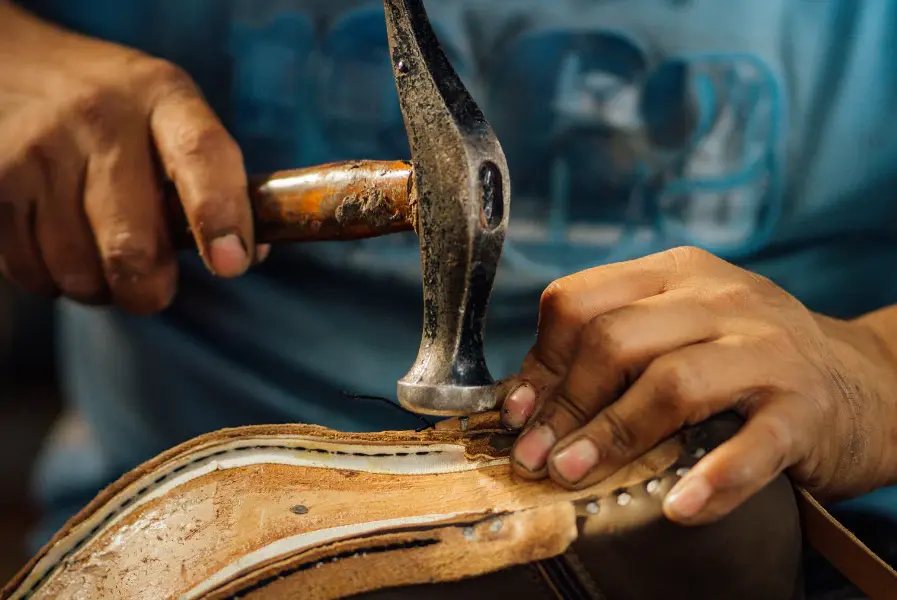
Shoemaking is an ancient craft that transforms humble materials into functional works of art, blending precision, creativity, and tradition. At its core, it involves shaping leather, fabrics, and other durable materials into footwear that supports the foot, withstands daily wear, and reflects personal style. The process begins with pattern design, where skilled artisans measure and sketch to ensure a perfect fit, followed by cutting the materials with sharp knives and dies. Next, components like soles, uppers, and linings are stitched or glued together using specialized tools such as awls, hammers, and lasting machines. Historically rooted in medieval guilds, shoemaking evolved from handcrafted bespoke pieces to modern industrial production, yet artisanal methods persist, emphasizing quality and comfort. Whether crafting elegant leather boots or athletic sneakers, this timeless trade demands patience, expertise, and an eye for detail, turning each pair into a testament to human ingenuity.
Table of Contents
- Part 1: OnlineExamMaker AI Quiz Generator – The Easiest Way to Make Quizzes Online
- Part 2: 20 Shoemaking Quiz Questions & Answers
- Part 3: Save Time and Energy: Generate Quiz Questions with AI Technology
Part 1: OnlineExamMaker AI Quiz Generator – The Easiest Way to Make Quizzes Online
Are you looking for an online assessment to test the Shoemaking skills of your learners? OnlineExamMaker uses artificial intelligence to help quiz organizers to create, manage, and analyze exams or tests automatically. Apart from AI features, OnlineExamMaker advanced security features such as full-screen lockdown browser, online webcam proctoring, and face ID recognition.
Take a product tour of OnlineExamMaker:
● Includes a safe exam browser (lockdown mode), webcam and screen recording, live monitoring, and chat oversight to prevent cheating.
● AI Exam Grader for efficiently grading quizzes and assignments, offering inline comments, automatic scoring, and “fudge points” for manual adjustments.
● Embed quizzes on websites, blogs, or share via email, social media (Facebook, Twitter), or direct links.
● Handles large-scale testing (thousands of exams/semester) without internet dependency, backed by cloud infrastructure.
Automatically generate questions using AI
Part 2: 20 Shoemaking Quiz Questions & Answers
or
1. Question: What is the primary function of a last in shoemaking?
A) To cut leather
B) To shape the shoe
C) To attach the sole
D) To polish the finish
Answer: B) To shape the shoe
Explanation: A last is a form around which the shoe is built, ensuring the correct fit and structure.
2. Question: Which material is most commonly used for the sole of durable work shoes?
A) Canvas
B) Rubber
C) Suede
D) Silk
Answer: B) Rubber
Explanation: Rubber provides excellent grip, durability, and resistance to wear, making it ideal for work shoe soles.
3. Question: What is the purpose of skiving in shoemaking?
A) To add color
B) To thin leather edges
C) To stitch patterns
D) To waterproof material
Answer: B) To thin leather edges
Explanation: Skiving involves shaving leather to make it thinner, allowing for smoother seams and better flexibility.
4. Question: Which stitch is typically used for joining the upper and sole of a shoe?
A) Lockstitch
B) Chain stitch
C) Blake stitch
D) Overlock stitch
Answer: C) Blake stitch
Explanation: The Blake stitch securely attaches the upper to the sole while allowing for flexibility and repairability.
5. Question: What tool is used to punch holes in leather for stitching?
A) Awl
B) Hammer
C) Pliers
D) Scissors
Answer: A) Awl
Explanation: An awl creates precise holes in leather, preventing tearing and ensuring even stitching.
6. Question: In shoemaking, what does “welt” refer to?
A) The shoe’s color
B) A strip of material for attaching the sole
C) The inner lining
D) The decorative pattern
Answer: B) A strip of material for attaching the sole
Explanation: A welt is a narrow strip sewn around the edge of the upper, providing a base for attaching the sole.
7. Question: Which type of leather is best for waterproof shoes?
A) Nubuck
B) Full-grain
C) Suede
D) Chrome-tanned
Answer: B) Full-grain
Explanation: Full-grain leather is dense and untreated, offering natural water resistance when properly sealed.
8. Question: What is the first step in the shoemaking process?
A) Attaching the sole
B) Cutting the patterns
C) Stitching the upper
D) Polishing the shoe
Answer: B) Cutting the patterns
Explanation: Patterns are cut from materials first to form the basic shape before assembly.
9. Question: Which adhesive is commonly used for bonding shoe parts?
A) Wood glue
B) Contact cement
C) White glue
D) Epoxy resin
Answer: B) Contact cement
Explanation: Contact cement provides a strong, flexible bond that withstands the stresses of walking.
10. Question: What is the role of a shoe tree?
A) To design patterns
B) To maintain shoe shape and absorb moisture
C) To cut soles
D) To apply finishes
Answer: B) To maintain shoe shape and absorb moisture
Explanation: A shoe tree helps preserve the shoe’s form and draws out moisture, preventing deformation.
11. Question: Which part of the shoe provides arch support?
A) Vamp
B) Insole
C) Toe box
D) Heel counter
Answer: B) Insole
Explanation: The insole is the inner layer that supports the foot’s arch and provides cushioning.
12. Question: In historical shoemaking, what was the main tool of a cordwainer?
A) Sewing machine
B) Awl and knife
C) Electric drill
D) Laser cutter
Answer: B) Awl and knife
Explanation: Cordwainers traditionally used basic tools like an awl for holes and a knife for cutting leather.
13. Question: What type of shoe construction is known for its flexibility and ease of repair?
A) Cemented
B) Stitched
C) Molded
D) Glued
Answer: B) Stitched
Explanation: Stitched construction, like Goodyear welt, allows for resoling and maintains flexibility.
14. Question: Which factor determines the fit of a shoe?
A) Color
B) Last shape
C) Sole thickness
D) Lacing style
Answer: B) Last shape
Explanation: The last’s shape directly influences how the shoe conforms to the foot’s contours.
15. Question: What is burnishing in shoemaking?
A) Adding patterns
B) Polishing edges for a smooth finish
C) Cutting material
D) Stitching seams
Answer: B) Polishing edges for a smooth finish
Explanation: Burnishing uses friction and wax to seal and shine the leather edges, enhancing durability.
16. Question: Which material is used for lining the inside of shoes to reduce friction?
A) Canvas
B) Pigskin
C) Nylon
D) Mesh
Answer: B) Pigskin
Explanation: Pigskin is soft and breathable, reducing blisters by minimizing friction against the foot.
17. Question: What does “tanning” do to leather in shoemaking?
A) Colors it
B) Preserves and softens it
C) Stretches it
D) Cuts it
Answer: B) Preserves and softens it
Explanation: Tanning treats animal hides to make them resistant to decay and more pliable for use.
18. Question: Which stitch is used for decorative purposes on shoe uppers?
A) Saddle stitch
B) Blind stitch
C) Top stitch
D) Lock stitch
Answer: C) Top stitch
Explanation: Top stitching is visible and adds both decoration and reinforcement to the upper.
19. Question: What safety measure is essential when using sharp tools in shoemaking?
A) Wearing gloves
B) Working in dim light
C) Using dull blades
D) Standing on a hard surface
Answer: A) Wearing gloves
Explanation: Gloves protect hands from cuts and injuries when handling sharp tools like knives and awls.
20. Question: Which famous shoemaker invented the modern sewing machine for leather?
A) Thomas Edison
B) Elias Howe
C) Levi Strauss
D) Isaac Singer
Answer: B) Elias Howe
Explanation: Elias Howe patented the first practical sewing machine, which revolutionized leatherwork including shoemaking.
or
Part 3: Save Time and Energy: Generate Quiz Questions with AI Technology
Automatically generate questions using AI