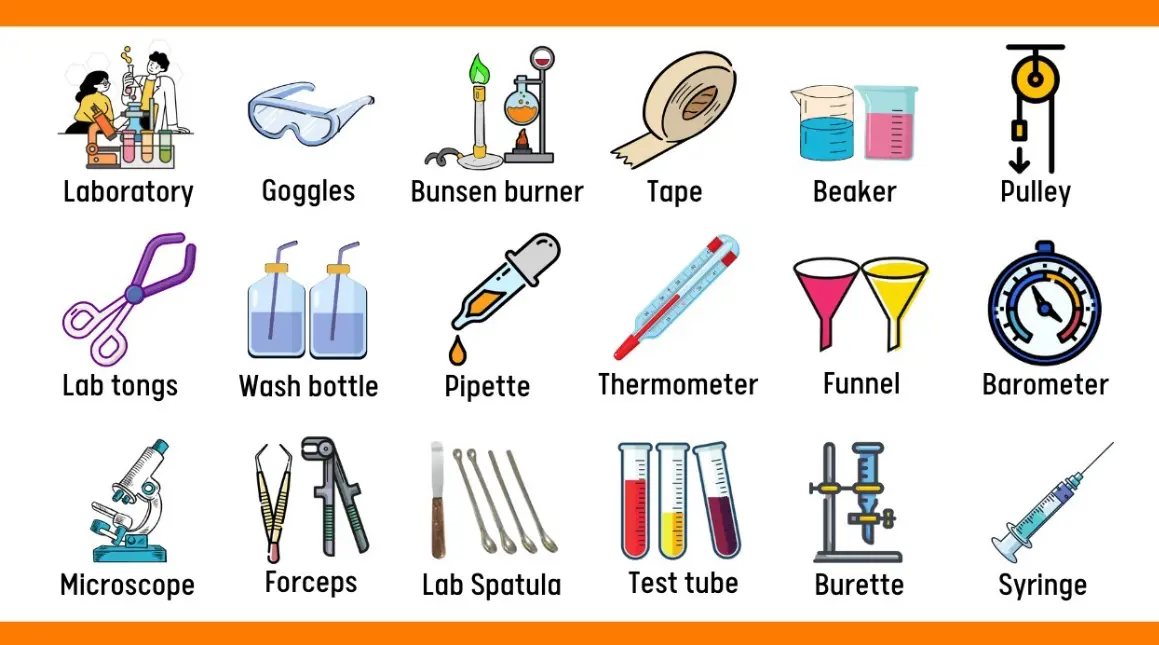
Scientific instruments are essential tools designed to observe, measure, and analyze phenomena in the natural world, enabling precise investigations across various fields of science. These devices range from simple tools like thermometers and rulers, which measure temperature and length, to advanced equipment such as electron microscopes, spectrometers, and particle accelerators.
A microscope, for instance, magnifies tiny structures at the cellular level, revealing the intricate details of biology, while a telescope extends our vision to distant stars and galaxies, unlocking secrets of the universe. Spectrometers identify chemical compositions by analyzing light spectra, aiding in material science and environmental studies.
Historically, innovations in scientific instruments have driven major breakthroughs, such as the discovery of microorganisms through early microscopes or the mapping of atomic structures via X-ray crystallography. Made from high-precision materials like glass, metals, and electronics, these instruments ensure accuracy, reliability, and reproducibility in experiments.
Today, they incorporate cutting-edge technologies like digital sensors, AI integration, and automation, making them indispensable in laboratories, field research, and industrial applications. From healthcare diagnostics to space exploration, scientific instruments empower humanity to explore the unknown, solve complex problems, and advance knowledge for the betterment of society.
Table of Contents
- Part 1: Create A Scientific Instruments Quiz in Minutes Using AI with OnlineExamMaker
- Part 2: 20 Scientific Instruments Quiz Questions & Answers
- Part 3: Save Time and Energy: Generate Quiz Questions with AI Technology
Part 1: Create A Scientific Instruments Quiz in Minutes Using AI with OnlineExamMaker
Are you looking for an online assessment to test the Scientific Instruments skills of your learners? OnlineExamMaker uses artificial intelligence to help quiz organizers to create, manage, and analyze exams or tests automatically. Apart from AI features, OnlineExamMaker advanced security features such as full-screen lockdown browser, online webcam proctoring, and face ID recognition.
Recommended features for you:
● Includes a safe exam browser (lockdown mode), webcam and screen recording, live monitoring, and chat oversight to prevent cheating.
● Enhances assessments with interactive experience by embedding video, audio, image into quizzes and multimedia feedback.
● Once the exam ends, the exam scores, question reports, ranking and other analytics data can be exported to your device in Excel file format.
● Offers question analysis to evaluate question performance and reliability, helping instructors optimize their training plan.
Automatically generate questions using AI
Part 2: 20 Scientific Instruments Quiz Questions & Answers
or
1. Question: What is the primary function of a microscope?
Options:
A) Measuring temperature
B) Magnifying small objects
C) Detecting radiation
D) Measuring atmospheric pressure
Answer: B
Explanation: A microscope uses lenses to enlarge images of small objects, enabling detailed observation of specimens at a cellular level.
2. Question: Which instrument is used to measure atmospheric pressure?
Options:
A) Thermometer
B) Barometer
C) Hygrometer
D) Spectrometer
Answer: B
Explanation: A barometer measures the pressure exerted by the atmosphere, which is essential for weather forecasting and altitude determination.
3. Question: What does a thermometer primarily measure?
Options:
A) Humidity
B) Temperature
C) Pressure
D) pH levels
Answer: B
Explanation: A thermometer measures temperature by detecting changes in physical properties like the expansion of mercury or electrical resistance.
4. Question: Which instrument is used to measure the acidity or alkalinity of a solution?
Options:
A) pH meter
B) Voltmeter
C) Spectrometer
D) Ammeter
Answer: A
Explanation: A pH meter measures the hydrogen ion concentration in a solution, providing a numerical value on the pH scale from 0 to 14.
5. Question: What is the main purpose of a telescope?
Options:
A) Viewing microscopic organisms
B) Observing distant celestial objects
C) Measuring electrical current
D) Detecting earthquakes
Answer: B
Explanation: A telescope collects and magnifies light from distant objects, allowing astronomers to study stars, planets, and galaxies.
6. Question: Which instrument measures electrical voltage?
Options:
A) Ammeter
B) Ohmmeter
C) Voltmeter
D) Galvanometer
Answer: C
Explanation: A voltmeter measures the potential difference between two points in an electrical circuit, typically in volts.
7. Question: What does a spectrometer analyze?
Options:
A) Temperature variations
B) The spectrum of light or other electromagnetic radiation
C) Atmospheric humidity
D) Mass of objects
Answer: B
Explanation: A spectrometer separates and measures the wavelengths of light, helping identify chemical composition through absorption or emission spectra.
8. Question: Which instrument is used to measure the density of liquids?
Options:
A) Hydrometer
B) Balance
C) Caliper
D) Centrifuge
Answer: A
Explanation: A hydrometer floats in a liquid and measures its specific gravity, which indicates density relative to water.
9. Question: What is the function of an ammeter?
Options:
A) Measuring resistance
B) Measuring electrical current
C) Measuring voltage
D) Measuring pH
Answer: B
Explanation: An ammeter is connected in series in a circuit to measure the flow of electric current, typically in amperes.
10. Question: Which instrument is used to separate mixtures based on density?
Options:
A) Microscope
B) Centrifuge
C) Telescope
D) Barometer
Answer: B
Explanation: A centrifuge spins samples at high speeds, causing denser particles to separate from lighter ones through centrifugal force.
11. Question: What does a hygrometer measure?
Options:
A) Temperature
B) Humidity in the air
C) Pressure
D) Light intensity
Answer: B
Explanation: A hygrometer measures the amount of moisture in the atmosphere, which is crucial for weather monitoring and comfort control.
12. Question: Which instrument is used to measure the mass of an object?
Options:
A) Ruler
B) Balance
C) Thermometer
D) Compass
Answer: B
Explanation: A balance compares the weight of an object against known masses, providing an accurate measurement of mass in grams or kilograms.
13. Question: What is the primary use of a Geiger counter?
Options:
A) Detecting radiation
B) Measuring temperature
C) Observing stars
D) Analyzing chemicals
Answer: A
Explanation: A Geiger counter detects and measures ionizing radiation, such as alpha, beta, and gamma rays, by counting particle interactions.
14. Question: Which instrument measures the speed of wind?
Options:
A) Anemometer
B) Barometer
C) Thermometer
D) Seismograph
Answer: A
Explanation: An anemometer uses rotating cups or propellers to measure wind speed, often in miles per hour or kilometers per hour.
15. Question: What does a seismograph record?
Options:
A) Earthquakes and vibrations
B) Temperature changes
C) Light waves
D) Chemical reactions
Answer: A
Explanation: A seismograph detects and records the ground motions caused by seismic waves, helping in the study of earthquakes.
16. Question: Which instrument is used to measure the volume of a liquid?
Options:
A) Graduated cylinder
B) Ruler
C) Microscope
D) Spectrometer
Answer: A
Explanation: A graduated cylinder has markings that allow for precise measurement of liquid volume in milliliters or liters.
17. Question: What is the function of a caliper?
Options:
A) Measuring electrical current
B) Measuring the distance between two points accurately
C) Detecting radiation
D) Observing microscopic details
Answer: B
Explanation: A caliper is a precision tool that measures the dimensions of an object, such as diameter or thickness, with high accuracy.
18. Question: Which instrument is used in chemistry to measure small volumes of liquids?
Options:
A) Beaker
B) Pipette
C) Test tube
D) Funnel
Answer: B
Explanation: A pipette delivers a precise volume of liquid, often used in experiments requiring accurate measurements in microliters or milliliters.
19. Question: What does an ohmmeter measure?
Options:
A) Electrical current
B) Voltage
C) Electrical resistance
D) Temperature
Answer: C
Explanation: An ohmmeter measures the opposition to current flow in a circuit, quantifying resistance in ohms.
20. Question: Which instrument is used to observe and measure the properties of sound waves?
Options:
A) Oscilloscope
B) Telescope
C) Microscope
D) Barometer
Answer: A
Explanation: An oscilloscope displays electrical signals as waveforms, allowing for the analysis of sound waves and other signals in real time.
or
Part 3: Save Time and Energy: Generate Quiz Questions with AI Technology
Automatically generate questions using AI