Robot Learning refers to the field within artificial intelligence (AI) and robotics where machines autonomously acquire skills, adapt to environments, and improve performance through data-driven methods. This interdisciplinary area combines machine learning, control theory, and robotics engineering to enable robots to learn from interactions, sensory inputs, and feedback.
#Key Concepts and Approaches
– Supervised Learning: Robots learn from labeled datasets, such as using neural networks to recognize objects or navigate based on pre-defined examples. For instance, a robot might be trained on images to identify obstacles in real-time.
– Unsupervised Learning: This involves discovering patterns in unlabeled data, allowing robots to cluster similar environments or detect anomalies without human intervention. It’s useful for exploration tasks, like mapping unknown spaces.
– Reinforcement Learning (RL): Robots learn optimal behaviors through trial and error, receiving rewards or penalties for actions. A classic example is a robot arm learning to grasp objects by maximizing success rates, as seen in applications like autonomous driving.
– Imitation Learning: Robots mimic human demonstrations, often via techniques like inverse reinforcement learning, to quickly adopt complex tasks such as surgical procedures or assembly line operations.
#Historical Evolution
Robot Learning emerged in the 1990s with early experiments in adaptive control systems. The integration of deep learning in the 2010s, powered by advancements in computing, accelerated progress. Milestones include AlphaGo’s victories in 2016, demonstrating RL’s potential, and ongoing developments in humanoid robots like Boston Dynamics’ Atlas.
#Applications
– Industrial Automation: In factories, robots learn to optimize workflows, predict maintenance needs, and adapt to production changes, enhancing efficiency and safety.
– Healthcare: Surgical robots use learning algorithms to assist in precise operations, while rehabilitation robots adapt to patient movements for therapy.
– Autonomous Systems: Self-driving cars and drones employ robot learning for real-time decision-making, environmental perception, and path planning.
– Exploration and Research: In space or disaster zones, robots learn to navigate hazardous terrains, making them invaluable for search and rescue.
#Challenges and Future Trends
Challenges include handling uncertainty in dynamic environments, ensuring ethical decision-making, and managing data privacy. Future trends involve integrating multi-modal learning (e.g., combining vision and tactile sensors), edge computing for faster on-device learning, and collaborative robots (cobots) that learn alongside humans. As AI evolves, robot learning promises to make machines more intuitive, versatile, and integrated into daily life.
Table of Contents
- Part 1: OnlineExamMaker AI Quiz Maker – Make A Free Quiz in Minutes
- Part 2: 20 Robot Learning Quiz Questions & Answers
- Part 3: OnlineExamMaker AI Question Generator: Generate Questions for Any Topic
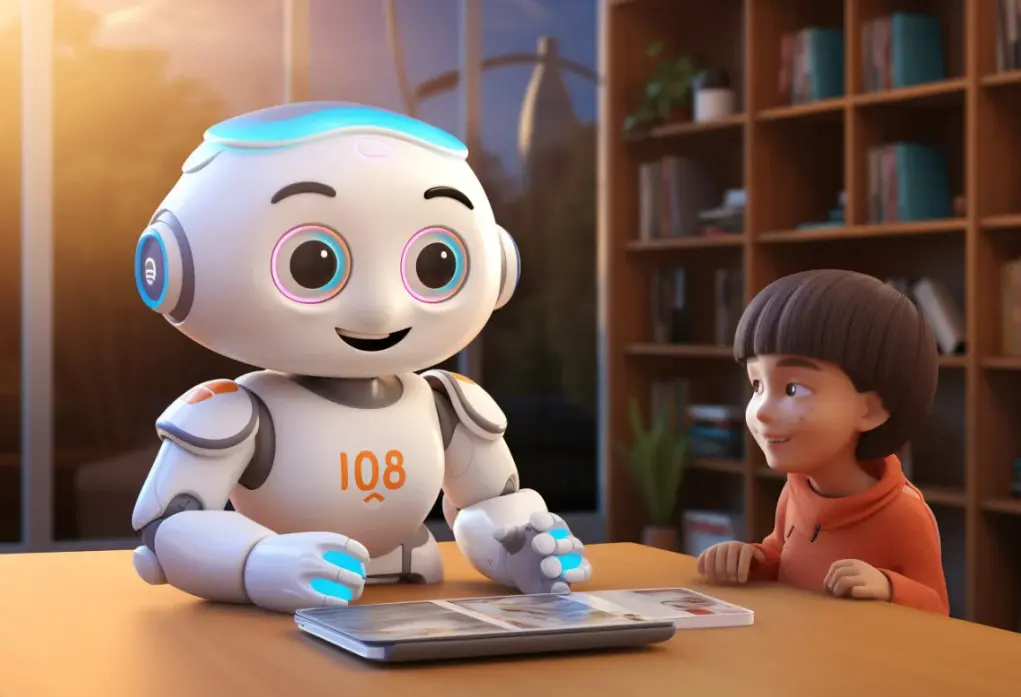
Part 1: OnlineExamMaker AI Quiz Maker – Make A Free Quiz in Minutes
What’s the best way to create a Robot Learning quiz online? OnlineExamMaker is the best AI quiz making software for you. No coding, and no design skills required. If you don’t have the time to create your online quiz from scratch, you are able to use OnlineExamMaker AI Question Generator to create question automatically, then add them into your online assessment. What is more, the platform leverages AI proctoring and AI grading features to streamline the process while ensuring exam integrity.
Key features of OnlineExamMaker:
● Create up to 10 question types, including multiple-choice, true/false, fill-in-the-blank, matching, short answer, and essay questions.
● Build and store questions in a centralized portal, tagged by categories and keywords for easy reuse and organization.
● Automatically scores multiple-choice, true/false, and even open-ended/audio responses using AI, reducing manual work.
● Create certificates with personalized company logo, certificate title, description, date, candidate’s name, marks and signature.
Automatically generate questions using AI
Part 2: 20 Robot Learning Quiz Questions & Answers
or
1. Question: What is the primary function of sensors in a robot?
Options:
A. To provide power to the robot
B. To detect and respond to environmental changes
C. To store data for processing
D. To control the robot’s movement directly
Answer: B
Explanation: Sensors allow robots to perceive their surroundings, such as light, sound, or obstacles, enabling them to make informed decisions and interact with the environment effectively.
2. Question: Which programming language is commonly used for robot operating systems like ROS?
Options:
A. Java
B. C++
C. Python
D. HTML
Answer: C
Explanation: Python is widely used in ROS due to its simplicity and extensive libraries, making it ideal for prototyping and developing robotic applications quickly.
3. Question: What does the term “kinematics” refer to in robotics?
Options:
A. The study of robot forces and torques
B. The motion of robots without considering forces
C. The electrical components of a robot
D. The programming algorithms for robots
Answer: B
Explanation: Kinematics focuses on the geometry of motion, describing how robot parts move in space, which is essential for path planning and control.
4. Question: In reinforcement learning for robots, what is a “reward”?
Options:
A. A punishment for incorrect actions
B. A signal that indicates the desirability of an action
C. A predefined path for the robot
D. The robot’s energy source
Answer: B
Explanation: Rewards guide the robot’s learning process by providing feedback on actions, helping it maximize positive outcomes over time.
5. Question: What is the role of actuators in a robotic system?
Options:
A. To process data from sensors
B. To convert energy into motion
C. To store the robot’s memory
D. To communicate with humans
Answer: B
Explanation: Actuators, such as motors and servos, enable robots to perform physical tasks by translating electrical signals into mechanical movement.
6. Question: Which type of robot is designed to mimic human behavior and interactions?
Options:
A. Industrial robots
B. Humanoid robots
C. Mobile robots
D. Service robots
Answer: B
Explanation: Humanoid robots are built with a human-like form and capabilities, allowing them to perform tasks in environments designed for humans, such as assistance in homes or research.
7. Question: What is path planning in robotics?
Options:
A. Designing the robot’s physical structure
B. Determining the sequence of movements to reach a goal
C. Programming the robot’s sensors
D. Testing the robot’s durability
Answer: B
Explanation: Path planning involves algorithms that calculate efficient and safe routes for robots, avoiding obstacles and optimizing energy use.
8. Question: In machine learning for robots, what is supervised learning?
Options:
A. Learning from trial and error without labels
B. Learning from labeled data to predict outcomes
C. Unsupervised grouping of data
D. Reinforcing behaviors through rewards
Answer: B
Explanation: Supervised learning uses input-output pairs to train robots, enabling them to recognize patterns, such as object identification in computer vision tasks.
9. Question: What is the purpose of computer vision in robotics?
Options:
A. To enable robots to hear sounds
B. To allow robots to process and interpret visual information
C. To control the robot’s speed
D. To manage internal memory
Answer: B
Explanation: Computer vision helps robots “see” and understand their environment through cameras and image processing, facilitating tasks like navigation and object manipulation.
10. Question: Which component is essential for a robot to achieve autonomy?
Options:
A. A power source
B. Artificial intelligence algorithms
C. Wheels for movement
D. A remote control
Answer: B
Explanation: AI algorithms enable robots to make decisions independently based on data, allowing for autonomous operation without constant human intervention.
11. Question: What is swarm robotics?
Options:
A. Robots working individually on complex tasks
B. A group of robots coordinating to achieve a common goal
C. Robots designed for underwater exploration
D. Single robots with multiple arms
Answer: B
Explanation: Swarm robotics involves multiple simple robots collaborating, inspired by natural swarms like ants, to solve problems more efficiently than a single robot could.
12. Question: In robotics, what does SLAM stand for?
Options:
A. Simple Learning and Mapping
B. Simultaneous Localization and Mapping
C. System for Local Area Monitoring
D. Sequential Logic and Mechanics
Answer: B
Explanation: SLAM is a technique that allows robots to build a map of an unknown environment while simultaneously tracking their own location within it.
13. Question: What is the main advantage of using neural networks in robotic learning?
Options:
A. They require less data for training
B. They can learn complex patterns from data
C. They eliminate the need for sensors
D. They simplify hardware design
Answer: B
Explanation: Neural networks excel at recognizing patterns and adapting to new data, making them powerful for tasks like image recognition and predictive control in robots.
14. Question: Which ethical issue is commonly associated with robotics?
Options:
A. Overheating of components
B. Job displacement due to automation
C. Excessive speed in movement
D. Color selection for robots
Answer: B
Explanation: The rise of robots in industries can lead to job losses, raising ethical concerns about employment, inequality, and the need for retraining programs.
15. Question: What is inverse kinematics in robotics?
Options:
A. Calculating joint angles from a desired end-effector position
B. Measuring the robot’s forward motion
C. Designing the robot’s external appearance
D. Programming the robot’s startup sequence
Answer: A
Explanation: Inverse kinematics solves for the joint configurations needed to achieve a specific position, which is crucial for controlling robotic arms accurately.
16. Question: How does a robot learn through imitation learning?
Options:
A. By randomly exploring actions
B. By observing and replicating human demonstrations
C. By receiving direct commands
D. By ignoring external inputs
Answer: B
Explanation: Imitation learning allows robots to learn tasks by mimicking human actions, speeding up training for complex behaviors like grasping objects.
17. Question: What is the function of a robotic end-effector?
Options:
A. To process sensory data
B. To interact with the environment, like gripping or cutting
C. To provide power to the robot
D. To store software programs
Answer: B
Explanation: The end-effector is the tool at the end of a robotic arm, such as a gripper or welder, that performs the actual task interaction.
18. Question: In deep learning for robots, what is a convolutional neural network (CNN) primarily used for?
Options:
A. Processing sequential data
B. Analyzing image data
C. Controlling motor speeds
D. Generating random movements
Answer: B
Explanation: CNNs are designed to handle visual data effectively, making them ideal for tasks like object detection and scene understanding in robotics.
19. Question: What challenges do robots face in unstructured environments?
Options:
A. Predictable obstacles and layouts
B. Unpredictable changes and variability
C. Overabundance of power sources
D. Excessive human supervision
Answer: B
Explanation: Unstructured environments, like natural settings, present challenges such as varying terrain and unexpected obstacles, requiring advanced adaptability in robots.
20. Question: What is the future potential of collaborative robots (cobots)?
Options:
A. To replace all human workers
B. To work safely alongside humans in shared spaces
C. To focus solely on entertainment
D. To eliminate the need for AI
Answer: B
Explanation: Cobots are designed for safe human-robot collaboration, enhancing productivity in industries like manufacturing by handling repetitive tasks while allowing human oversight.
or
Part 3: OnlineExamMaker AI Question Generator: Generate Questions for Any Topic
Automatically generate questions using AI