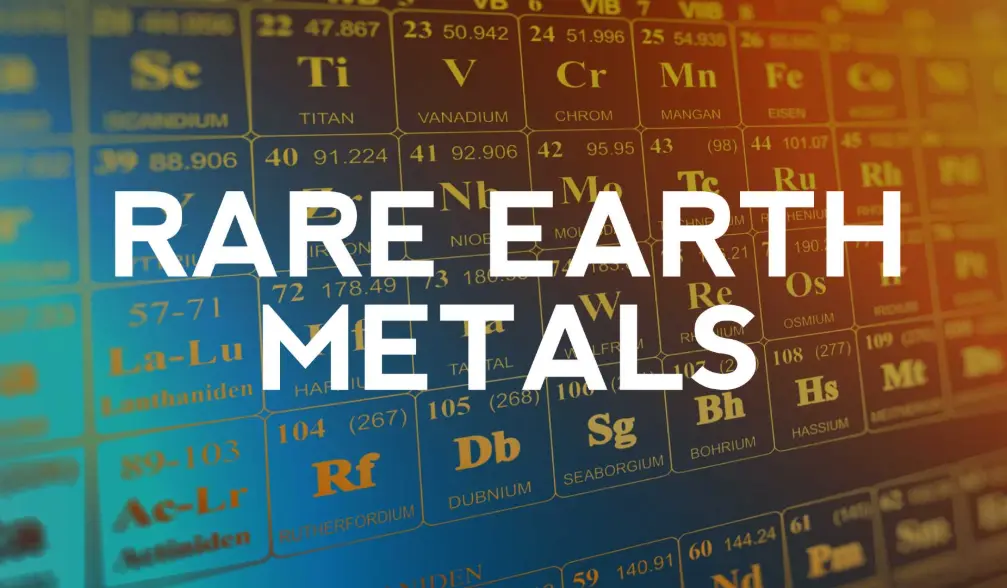
Rare-earth metals, comprising 17 elements in the periodic table—including scandium, yttrium, and the 15 lanthanides (from lanthanum to lutetium)—are a group of metals prized for their unique magnetic, luminescent, and catalytic properties. Despite their name, these elements are not particularly rare in the Earth’s crust but are challenging to extract and separate due to their similar chemical behaviors and low concentrations.
Discovered primarily in the 19th century, rare-earth metals gained prominence in the 20th century with advancements in technology. They were first identified in minerals like monazite and bastnäsite, with significant deposits found in regions such as China, Australia, the United States, and Brazil.
These metals exhibit high electrical conductivity, strong magnetism, and the ability to absorb neutrons, making them essential in various applications. Key uses include:
– Electronics: Neodymium and praseodymium in permanent magnets for smartphones, hard drives, and electric vehicle motors.
– Renewable Energy: Dysprosium and terbium in wind turbines and solar panels for efficient energy conversion.
– Defense and Aerospace: Erbium and ytterbium in laser systems, night-vision devices, and missile guidance.
– Healthcare: Gadolinium in MRI contrast agents and europium in phosphors for medical imaging.
– Catalysts: Cerium and lanthanum in petroleum refining and automotive catalytic converters to reduce emissions.
Globally, China dominates production, accounting for over 80% of the supply, which raises concerns about supply chain vulnerabilities and geopolitical tensions. Extraction and processing are environmentally intensive, involving acid mining techniques that can lead to soil and water pollution.
The demand for rare-earth metals is projected to grow with the shift toward green technologies and electrification. However, recycling efforts and alternative materials are being explored to mitigate dependency and environmental impacts. As of 2023, prices fluctuate based on market dynamics, with elements like neodymium seeing increases due to electric vehicle demand. Sustainable mining practices and international regulations are crucial for balancing economic benefits with ecological preservation.
Table of Contents
- Part 1: OnlineExamMaker AI Quiz Maker – Make A Free Quiz in Minutes
- Part 2: 20 Rare-Earth Metals Quiz Questions & Answers
- Part 3: Automatically Generate Quiz Questions Using AI Question Generator
Part 1: OnlineExamMaker AI Quiz Maker – Make A Free Quiz in Minutes
Still spend a lot of time in editing questions for your next Rare-Earth Metals assessment? OnlineExamMaker is an AI quiz maker that leverages artificial intelligence to help users create quizzes, tests, and assessments quickly and efficiently. You can start by inputting a topic or specific details into the OnlineExamMaker AI Question Generator, and the AI will generate a set of questions almost instantly. It also offers the option to include answer explanations, which can be short or detailed, helping learners understand their mistakes.
What you may like:
● Automatic grading and insightful reports. Real-time results and interactive feedback for quiz-takers.
● The exams are automatically graded with the results instantly, so that teachers can save time and effort in grading.
● LockDown Browser to restrict browser activity during quizzes to prevent students searching answers on search engines or other software.
● Create certificates with personalized company logo, certificate title, description, date, candidate’s name, marks and signature.
Automatically generate questions using AI
Part 2: 20 Rare-Earth Metals Quiz Questions & Answers
or
1. What are rare-earth metals?
A. A group of 17 elements including the lanthanides, scandium, and yttrium
B. Metals found only in rare geological formations
C. Precious metals like gold and silver
D. Transition metals in the d-block
Answer: A
Explanation: Rare-earth metals are a specific group of 17 chemical elements that include the 15 lanthanides plus scandium and yttrium, valued for their unique properties in various applications.
2. Which of the following is NOT a rare-earth metal?
A. Neodymium
B. Europium
C. Titanium
D. Yttrium
Answer: C
Explanation: Titanium is a transition metal, not part of the rare-earth elements, which consist of the lanthanides, scandium, and yttrium.
3. What is the primary use of neodymium in technology?
A. In batteries
B. In high-strength magnets
C. In catalysts for oil refining
D. In fluorescent lighting
Answer: B
Explanation: Neodymium is commonly used in neodymium-iron-boron magnets, which are essential for electric motors, wind turbines, and hard drives due to their strong magnetic properties.
4. Where are most rare-earth metals mined today?
A. Australia
B. China
C. The United States
D. Canada
Answer: B
Explanation: China dominates the global production of rare-earth metals, accounting for over 80% of the world’s supply, due to its large deposits and established mining operations.
5. Which rare-earth element is often used in the production of phosphors for TV screens?
A. Lanthanum
B. Europium
C. Cerium
D. Gadolinium
Answer: B
Explanation: Europium is used in red phosphors for color televisions and computer screens, enabling the emission of red light when excited by electrons.
6. What property makes rare-earth metals valuable in electronics?
A. High conductivity
B. Magnetic and luminescent properties
C. Low density
D. Corrosion resistance
Answer: B
Explanation: Rare-earth metals exhibit unique magnetic, luminescent, and catalytic properties that are crucial for components in smartphones, LEDs, and other electronic devices.
7. How are rare-earth metals typically extracted from ores?
A. Through simple melting
B. Via solvent extraction and ion exchange
C. By electrolysis
D. Through distillation
Answer: B
Explanation: The extraction process involves solvent extraction and ion exchange to separate the individual elements from their ores, as they are often found mixed together.
8. Which rare-earth metal is used in the alloy for lighter flints?
A. Praseodymium
B. Cerium
C. Samarium
D. Terbium
Answer: B
Explanation: Cerium is a key component in mischmetal alloys used for lighter flints, as it produces sparks when struck due to its pyrophoric nature.
9. What environmental challenge is associated with rare-earth metal mining?
A. High water usage
B. Radioactive waste production
C. Soil erosion
D. All of the above
Answer: D
Explanation: Rare-earth mining often involves radioactive byproducts, high water consumption, and soil erosion, leading to significant environmental impacts if not managed properly.
10. Which rare-earth element is crucial for the production of high-efficiency glass?
A. Yttrium
B. Dysprosium
C. Lanthanum
D. Erbium
Answer: C
Explanation: Lanthanum is used in the production of high-refractive-index glass for camera lenses and optical fibers due to its ability to enhance optical clarity.
11. What role do rare-earth metals play in renewable energy?
A. In solar panels
B. In wind turbine generators
C. In hydroelectric dams
D. In geothermal energy
Answer: B
Explanation: Elements like neodymium and dysprosium are used in the permanent magnets of wind turbine generators, improving efficiency and power output.
12. Which of the following is a lanthanide?
A. Scandium
B. Yttrium
C. Promethium
D. All of the above
Answer: C
Explanation: Promethium is one of the 15 lanthanide elements, while scandium and yttrium are also considered rare-earth metals but are not lanthanides.
13. Why are rare-earth metals considered “rare” despite being relatively abundant?
A. They are hard to extract and purify
B. Their deposits are geographically limited
C. Global demand exceeds supply
D. All of the above
Answer: D
Explanation: Although rare-earth elements are more abundant than many other metals, their rarity in economically viable concentrations and the complexity of extraction make them challenging to obtain.
14. Which rare-earth metal is used in nuclear reactors as a control material?
A. Gadolinium
B. Holmium
C. Thulium
D. Lutetium
Answer: A
Explanation: Gadolinium is used in nuclear reactors for its high neutron absorption capacity, helping to control the fission reaction.
15. What is the most abundant rare-earth element?
A. Cerium
B. Neodymium
C. Yttrium
D. Europium
Answer: A
Explanation: Cerium is the most abundant rare-earth element in the Earth’s crust, making up a significant portion of rare-earth mineral deposits.
16. In which industry are rare-earth metals like terbium and europium used for lighting?
A. Automotive
B. Energy
C. Phosphors for energy-efficient lights
D. Aerospace
Answer: C
Explanation: Terbium and europium are used in phosphors for compact fluorescent lamps and LEDs, enhancing green and red light emissions for better energy efficiency.
17. What economic factor has led to China’s dominance in rare-earth production?
A. Lower labor costs
B. Government subsidies
C. Export restrictions
D. All of the above
Answer: D
Explanation: China’s dominance stems from lower production costs, government support, and strategic export policies that control global supply.
18. Which rare-earth element is essential for the polishing of glass and lenses?
A. Cerium oxide
B. Neodymium oxide
C. Yttrium oxide
D. Samarium oxide
Answer: A
Explanation: Cerium oxide is widely used as a polishing agent for glass and precision lenses due to its mild abrasive properties.
19. How do rare-earth metals contribute to electric vehicle technology?
A. In battery electrodes
B. In electric motor magnets
C. In charging systems
D. In vehicle frames
Answer: B
Explanation: Rare-earth elements like neodymium are critical for the powerful magnets in electric vehicle motors, enabling efficient and compact designs.
20. What is the primary reason for the increasing demand for rare-earth metals?
A. Advancements in consumer electronics
B. Growth in green technologies
C. Medical applications
D. All of the above
Answer: D
Explanation: Demand is rising due to their use in electronics, renewable energy, and medical devices, driven by technological advancements and sustainability efforts.
or
Part 3: Automatically generate quiz questions using OnlineExamMaker AI Question Generator
Automatically generate questions using AI