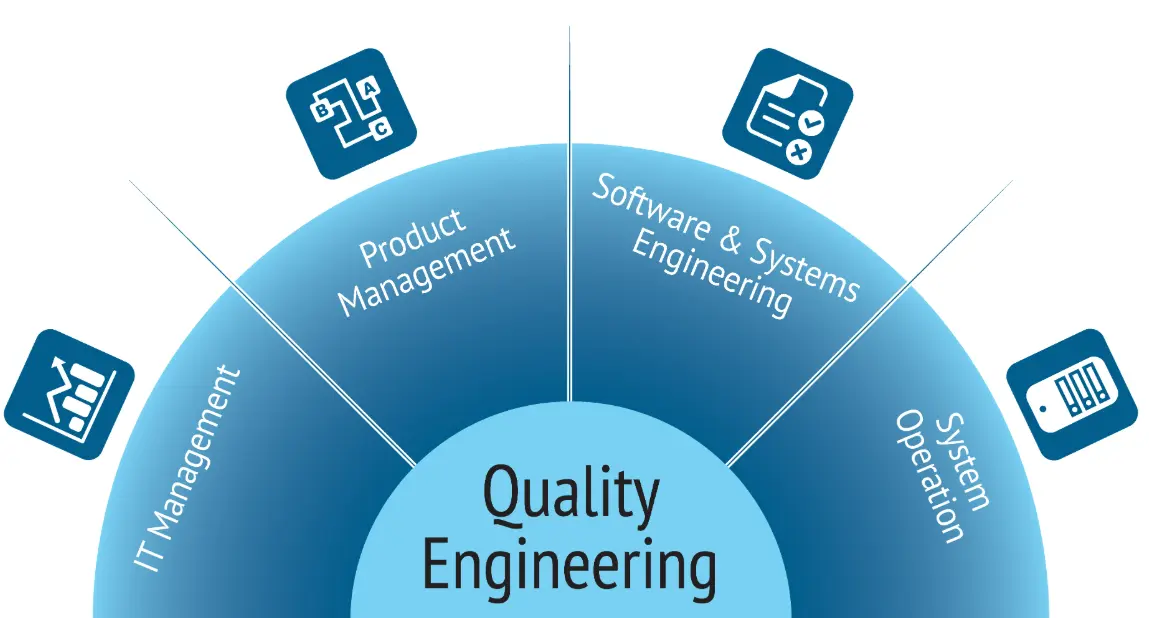
Quality Engineering is a multidisciplinary field that applies engineering principles to design, develop, and maintain systems ensuring products and services meet or exceed quality standards. It focuses on preventing defects, optimizing processes, and driving continuous improvement through tools like Six Sigma, statistical analysis, and risk management. In industries such as manufacturing, software development, and healthcare, Quality Engineers play a key role in identifying potential issues early, enhancing efficiency, and delivering reliable outcomes that boost customer satisfaction and business performance.
Table of Contents
- Part 1: OnlineExamMaker AI Quiz Generator – The Easiest Way to Make Quizzes Online
- Part 2: 20 Quality Engineering Quiz Questions & Answers
- Part 3: Automatically Generate Quiz Questions Using AI Question Generator
Part 1: OnlineExamMaker AI Quiz Generator – The Easiest Way to Make Quizzes Online
Are you looking for an online assessment to test the Quality Engineering skills of your learners? OnlineExamMaker uses artificial intelligence to help quiz organizers to create, manage, and analyze exams or tests automatically. Apart from AI features, OnlineExamMaker advanced security features such as full-screen lockdown browser, online webcam proctoring, and face ID recognition.
Take a product tour of OnlineExamMaker:
● Includes a safe exam browser (lockdown mode), webcam and screen recording, live monitoring, and chat oversight to prevent cheating.
● AI Exam Grader for efficiently grading quizzes and assignments, offering inline comments, automatic scoring, and “fudge points” for manual adjustments.
● Embed quizzes on websites, blogs, or share via email, social media (Facebook, Twitter), or direct links.
● Handles large-scale testing (thousands of exams/semester) without internet dependency, backed by cloud infrastructure.
Automatically generate questions using AI
Part 2: 20 Quality Engineering Quiz Questions & Answers
or
1. Question: What is the primary goal of Quality Engineering?
A) To minimize production costs
B) To ensure products meet specified requirements and standards
C) To maximize production speed
D) To focus solely on customer satisfaction
Answer: B
Explanation: Quality Engineering aims to prevent defects and ensure products or services meet predefined standards, emphasizing proactive measures over reactive fixes.
2. Question: Which of the following best describes Quality Assurance (QA)?
A) Identifying defects after production
B) Processes that ensure quality is built into the product
C) Conducting final inspections
D) Measuring product performance
Answer: B
Explanation: QA focuses on processes and systems to prevent defects, differing from Quality Control which detects them.
3. Question: In Six Sigma, what does the DMAIC methodology stand for?
A) Define, Measure, Analyze, Improve, Control
B) Design, Monitor, Assess, Implement, Check
C) Develop, Manage, Audit, Inspect, Confirm
D) Define, Monitor, Analyze, Implement, Control
Answer: A
Explanation: DMAIC is a data-driven improvement cycle used in Six Sigma to systematically solve problems and reduce variations.
4. Question: What is the Pareto Principle in Quality Engineering?
A) 80% of effects come from 20% of causes
B) All causes contribute equally to effects
C) 50% of defects are due to random errors
D) Quality improves linearly with effort
Answer: A
Explanation: The Pareto Principle helps prioritize problems by identifying the vital few causes that lead to the majority of issues, enabling efficient resource allocation.
5. Question: Which tool is used to identify potential causes of a problem in Quality Engineering?
A) Histogram
B) Fishbone Diagram
C) Scatter Diagram
D) Control Chart
Answer: B
Explanation: The Fishbone Diagram, also known as the Ishikawa Diagram, organizes and visualizes potential causes of a defect in categories like people, process, and equipment.
6. Question: What does ISO 9001 primarily address?
A) Environmental management
B) Quality management systems
C) Occupational health and safety
D) Information security
Answer: B
Explanation: ISO 9001 is an international standard that outlines requirements for a quality management system to ensure consistent product and service quality.
7. Question: In Statistical Process Control, what does a control chart monitor?
A) Employee performance
B) Variations in a process over time
C) Raw material costs
D) Customer feedback
Answer: B
Explanation: Control charts track process stability by plotting data points and identifying when a process goes out of control, allowing for timely corrections.
8. Question: What is the main purpose of Root Cause Analysis (RCA)?
A) To blame individuals for errors
B) To identify and eliminate the underlying cause of a problem
C) To document all defects
D) To speed up production
Answer: B
Explanation: RCA investigates the fundamental reasons for defects to prevent recurrence, rather than just addressing symptoms.
9. Question: Failure Mode and Effects Analysis (FMEA) is used to:
A) Predict future sales
B) Analyze potential failure points in a system
C) Measure employee productivity
D) Conduct market research
Answer: B
Explanation: FMEA is a proactive tool that evaluates possible failure modes, their effects, and causes to prioritize risk mitigation.
10. Question: What is the PDCA cycle?
A) Plan, Do, Check, Act
B) Produce, Deliver, Confirm, Adjust
C) Process, Design, Control, Analyze
D) Plan, Develop, Check, Approve
Answer: A
Explanation: PDCA is a continuous improvement model that involves planning a change, implementing it, checking the results, and acting on lessons learned.
11. Question: Which metric is commonly used in Quality Engineering to measure defects per million opportunities?
A) Cycle Time
B) Defects Per Million Opportunities (DPMO)
C) Return on Investment (ROI)
D) Net Promoter Score (NPS)
Answer: B
Explanation: DPMO quantifies the number of defects relative to opportunities, helping assess process performance in Six Sigma contexts.
12. Question: Kaizen emphasizes:
A) Radical overhauls of processes
B) Continuous, incremental improvements
C) Reducing workforce size
D) Increasing product variety
Answer: B
Explanation: Kaizen promotes small, ongoing changes involving all employees to enhance efficiency and quality over time.
13. Question: What is benchmarking in Quality Engineering?
A) Comparing processes against industry best practices
B) Setting minimum quality standards
C) Ignoring competitors’ strategies
D) Focusing on internal metrics only
Answer: A
Explanation: Benchmarking involves analyzing and comparing an organization’s processes with those of leaders to identify improvement areas.
14. Question: A quality audit typically involves:
A) Random product testing
B) Systematic review of quality management systems
C) Employee training sessions
D) Marketing strategy evaluation
Answer: B
Explanation: Quality audits assess compliance with standards and procedures to ensure the effectiveness of the quality management system.
15. Question: In supplier quality management, what is the key focus?
A) Reducing supplier numbers
B) Ensuring suppliers meet quality requirements
C) Increasing supplier costs
D) Limiting communication with suppliers
Answer: B
Explanation: Supplier quality management verifies that materials and components from suppliers adhere to specifications, preventing defects in the final product.
16. Question: Lean Manufacturing aims to:
A) Eliminate waste and improve efficiency
B) Increase inventory levels
C) Complicate production processes
D) Focus on mass production
Answer: A
Explanation: Lean principles identify and remove non-value-added activities to streamline operations and enhance quality.
17. Question: The Taguchi Methods are primarily concerned with:
A) Robust design against variations
B) Cost reduction only
C) Employee motivation
D) Short-term sales strategies
Answer: A
Explanation: Taguchi Methods use experimental design to make products robust to noise factors, improving quality and reliability.
18. Question: What is the Cost of Quality (COQ)?
A) The price of raw materials
B) The total cost incurred due to poor quality and quality assurance activities
C) Only the cost of defective products
D) Employee salaries in quality departments
Answer: B
Explanation: COQ includes prevention, appraisal, internal failure, and external failure costs, helping organizations balance quality investments.
19. Question: Continuous Improvement in Quality Engineering is often associated with:
A) One-time fixes
B) Ongoing efforts to enhance processes
C) Halting production for reviews
D) Reducing quality standards
Answer: B
Explanation: Continuous Improvement fosters a culture of regular enhancements to processes, products, and services for sustained quality gains.
20. Question: What role does a histogram play in Quality Engineering?
A) It shows relationships between variables
B) It displays the distribution of data
C) It tracks process changes over time
D) It identifies cause-and-effect links
Answer: B
Explanation: A histogram graphically represents the frequency distribution of data, helping identify patterns, such as common defects or variations.
or
Part 3: Automatically generate quiz questions using OnlineExamMaker AI Question Generator
Automatically generate questions using AI