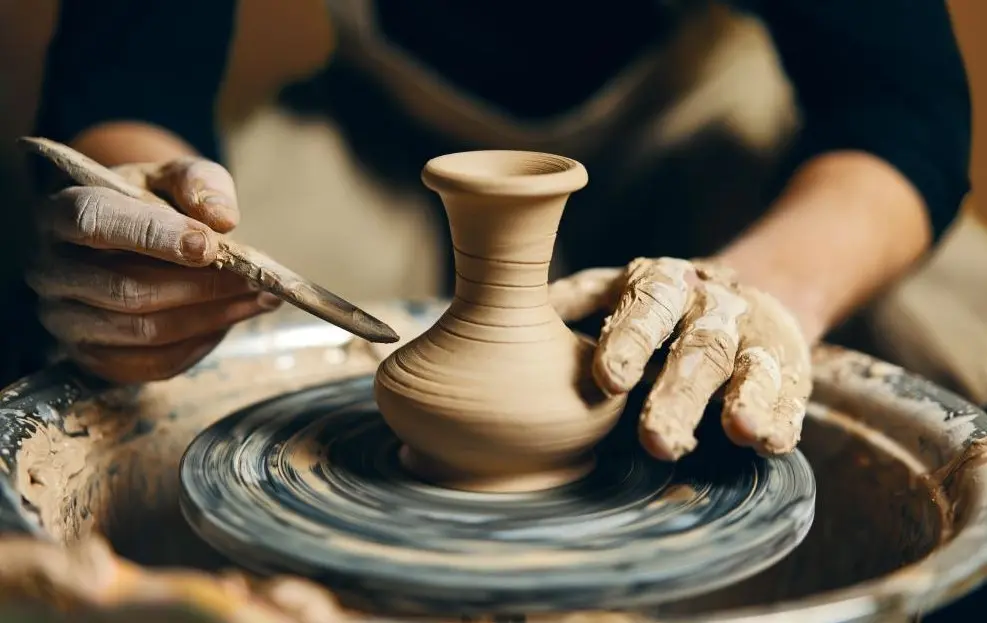
Pottery is an ancient art form that transforms humble clay into enduring vessels of beauty and utility. Shaped by skilled hands on a spinning wheel or molded by hand, each piece begins as a soft, malleable mass, coaxed into forms like bowls, vases, or intricate sculptures. Fired in a kiln, the clay emerges hardened and resilient, often glazed with vibrant colors or subtle textures that catch the light. From the rustic earthenware of rural traditions to the refined porcelain of royal courts, pottery whispers stories of culture, history, and human ingenuity, bridging the past and present in every curve and line.
Table of Contents
- Part 1: OnlineExamMaker AI Quiz Maker – Make A Free Quiz in Minutes
- Part 2: 20 Pottery Quiz Questions & Answers
- Part 3: Save Time and Energy: Generate Quiz Questions with AI Technology
Part 1: OnlineExamMaker AI Quiz Maker – Make A Free Quiz in Minutes
Still spend a lot of time in editing questions for your next Pottery assessment? OnlineExamMaker is an AI quiz maker that leverages artificial intelligence to help users create quizzes, tests, and assessments quickly and efficiently. You can start by inputting a topic or specific details into the OnlineExamMaker AI Question Generator, and the AI will generate a set of questions almost instantly. It also offers the option to include answer explanations, which can be short or detailed, helping learners understand their mistakes.
What you may like:
● Automatic grading and insightful reports. Real-time results and interactive feedback for quiz-takers.
● The exams are automatically graded with the results instantly, so that teachers can save time and effort in grading.
● LockDown Browser to restrict browser activity during quizzes to prevent students searching answers on search engines or other software.
● Create certificates with personalized company logo, certificate title, description, date, candidate’s name, marks and signature.
Automatically generate questions using AI
Part 2: 20 Pottery Quiz Questions & Answers
or
1. Question: What is the primary material used in pottery?
Options:
A) Glass
B) Clay
C) Metal
D) Wood
Answer: B
Explanation: Clay is the fundamental material for pottery because it is malleable when wet and hardens when fired, allowing for the creation of durable ceramic objects.
2. Question: Which ancient civilization is known for its black-figure pottery technique?
Options:
A) Egyptian
B) Greek
C) Roman
D) Chinese
Answer: B
Explanation: The ancient Greeks developed the black-figure technique, where figures were painted in black silhouette on red clay, allowing for detailed depictions in their vases and pottery.
3. Question: What is the purpose of glazing in pottery?
Options:
A) To add weight
B) To make it waterproof and decorative
C) To speed up drying
D) To reduce firing temperature
Answer: B
Explanation: Glazing creates a glass-like surface on pottery that seals the pores, making it waterproof and adding aesthetic appeal through colors and textures.
4. Question: Which type of clay is fired at the highest temperature?
Options:
A) Earthenware
B) Stoneware
C) Porcelain
D) Terracotta
Answer: C
Explanation: Porcelain clay is fired at temperatures above 1,200°C, resulting in a dense, translucent material that is stronger and more refined than other clays.
5. Question: What tool is essential for wheel throwing in pottery?
Options:
A) Kiln
B) Potter’s wheel
C) Slab roller
D) Extruder
Answer: B
Explanation: The potter’s wheel allows clay to be shaped symmetrically by spinning it, enabling the creation of vessels like bowls and vases through centrifugal force.
6. Question: In pottery, what does “bisque firing” refer to?
Options:
A) The final glaze firing
B) The initial firing of unfired clay
C) Adding color to clay
D) Shaping the clay
Answer: B
Explanation: Bisque firing hardens the clay at a lower temperature, making it more durable for glazing and preventing it from cracking during subsequent firings.
7. Question: Who is often considered the father of modern studio pottery?
Options:
A) Pablo Picasso
B) Bernard Leach
C) Vincent van Gogh
D) Leonardo da Vinci
Answer: B
Explanation: Bernard Leach popularized functional and artistic pottery in the 20th century, influencing the studio pottery movement with his emphasis on craftsmanship and simplicity.
8. Question: What is the main difference between pinching and coiling techniques?
Options:
A) Pinching uses a wheel, coiling does not
B) Pinching shapes small forms by hand, coiling builds up walls with ropes of clay
C) Coiling adds glaze, pinching does not
D) Pinching requires firing, coiling does not
Answer: B
Explanation: Pinching involves squeezing clay into shapes with fingers, while coiling builds structures by stacking and smoothing ropes of clay, allowing for larger forms.
9. Question: Which firing method uses an oxygen-rich environment?
Options:
A) Reduction firing
B) Oxidation firing
C) Pit firing
D) Raku firing
Answer: B
Explanation: Oxidation firing introduces oxygen into the kiln, resulting in brighter colors and a more predictable outcome for glazes compared to reduction methods.
10. Question: What is the typical composition of a basic glaze?
Options:
A) Water and pigments only
B) Silica, fluxes, and alumina
C) Clay and water
D) Metal and glass
Answer: B
Explanation: A basic glaze consists of silica (for glass formation), fluxes (to lower melting point), and alumina (for stability), which fuse during firing to create a smooth coating.
11. Question: Which pottery style features blue and white designs, originating from China?
Options:
A) Majolica
B) Blue and white porcelain
C) Terra sigillata
D) Raku
Answer: B
Explanation: Blue and white porcelain, developed in China during the Ming Dynasty, uses cobalt oxide for blue designs under a clear glaze, symbolizing elegance and cultural heritage.
12. Question: What happens if pottery is fired too quickly?
Options:
A) It becomes stronger
B) It may crack or explode
C) The color intensifies
D) It shrinks evenly
Answer: B
Explanation: Rapid firing can cause thermal shock, leading to cracks or explosions due to uneven moisture evaporation and expansion within the clay.
13. Question: In pottery, what is “slip”?
Options:
A) A type of glaze
B) A liquid mixture of clay and water
C) A firing tool
D) A decorative pattern
Answer: B
Explanation: Slip is a watery clay suspension used for joining pieces, decorating surfaces, or casting molds, acting as a adhesive or coating material.
14. Question: Which ancient pottery technique involves impressing designs with stamps?
Options:
A) Sgraffito
B) Impressing
C) Wheel throwing
D) Slab building
Answer: B
Explanation: Impressing uses stamps or tools to create textured designs on wet clay, a technique seen in prehistoric and ancient pottery for added decoration.
15. Question: What is the role of a kiln in pottery?
Options:
A) To shape clay
B) To harden and fuse clay through heat
C) To mix glazes
D) To store finished pieces
Answer: B
Explanation: A kiln applies high heat to permanently harden clay and set glazes, transforming raw materials into durable ceramics through chemical changes.
16. Question: Which type of pottery is typically porous and low-fired?
Options:
A) Porcelain
B) Stoneware
C) Earthenware
D) Bone china
Answer: C
Explanation: Earthenware is fired at lower temperatures (around 1,000°C), resulting in a porous material that is often used for everyday items like flower pots.
17. Question: What is the Japanese art of tea ceremony pottery called?
Options:
A) Raku
B) Ming
C) Art Deco
D) Baroque
Answer: A
Explanation: Raku is a Japanese pottery technique involving low-temperature firing and rapid cooling, traditionally used for tea bowls in ceremonies for its rustic aesthetic.
18. Question: How does reduction firing affect pottery glazes?
Options:
A) It makes them brighter
B) It can create metallic or varied colors by limiting oxygen
C) It prevents cracking
D) It speeds up the process
Answer: B
Explanation: In reduction firing, limited oxygen causes chemical reactions in the glaze, often producing richer, more unpredictable colors like reds and blues.
19. Question: What is the first step in the hand-building pottery process?
Options:
A) Firing
B) Wedging the clay
C) Glazing
D) Painting
Answer: B
Explanation: Wedging kneads and removes air bubbles from clay, ensuring it is uniform and ready for shaping without cracking during building or firing.
20. Question: Which famous artist experimented with pottery in the 20th century?
Options:
A) Michelangelo
B) Pablo Picasso
C) Rembrandt
D) Claude Monet
Answer: B
Explanation: Pablo Picasso explored pottery in the 1940s and 1950s, creating innovative ceramic pieces that combined his artistic style with functional forms.
or
Part 3: Save Time and Energy: Generate Quiz Questions with AI Technology
Automatically generate questions using AI