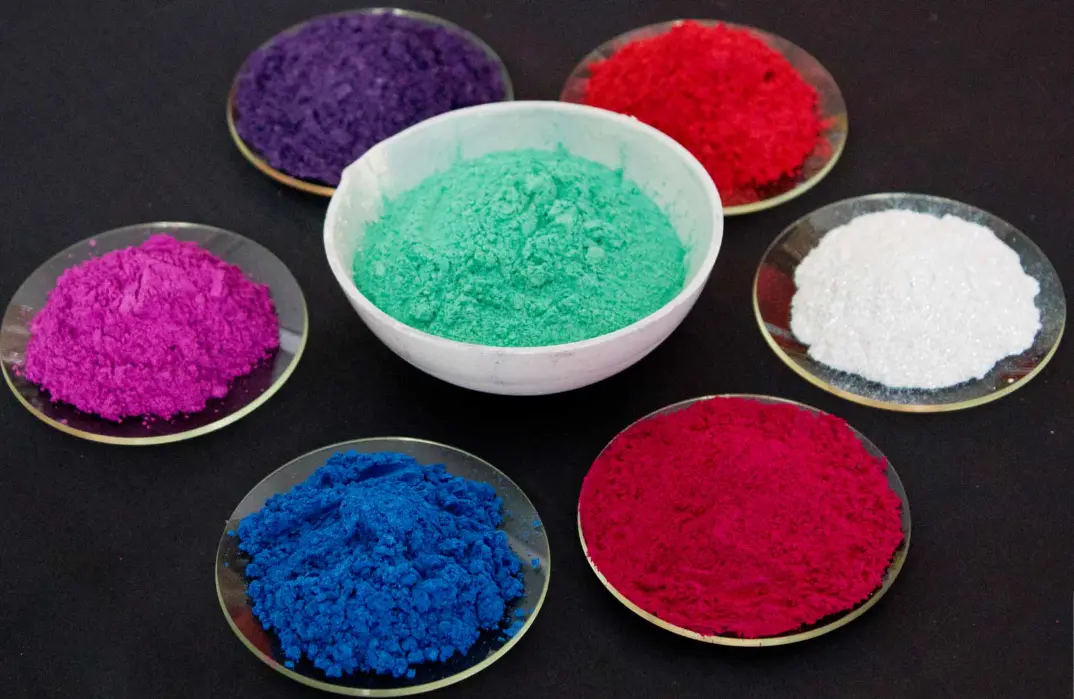
Pigments are finely ground, insoluble substances that impart color to various materials, such as paints, inks, plastics, and cosmetics. They differ from dyes in that pigments do not dissolve but remain suspended in a medium, providing opacity and permanence.
Types of Pigments
– Natural Pigments: Derived from minerals, plants, or animals. Examples include ochre (iron oxide-based, ranging from yellow to red), ultramarine (from lapis lazuli), and indigo (from plants). These have been used since prehistoric times in cave paintings and ancient art.
– Synthetic Pigments: Created through chemical processes, offering greater consistency, vibrancy, and durability. Common ones include titanium dioxide (white, highly opaque), cadmium reds and yellows, and phthalocyanine blues and greens. They emerged during the Industrial Revolution and dominate modern applications.
Properties and Characteristics
– Color and Lightfastness: Pigments vary in hue, saturation, and resistance to fading from light exposure. High-quality pigments, like those rated for archival use, maintain color integrity over time.
– Opacity and Transparency: Some pigments are opaque (e.g., carbon black), blocking light completely, while others are transparent (e.g., certain azo pigments), allowing light to pass through.
– Particle Size and Dispersion: Finer particles create smoother finishes, while larger ones add texture. Proper dispersion in a binder ensures even color distribution.
Applications
– Art and Design: Essential in oil, acrylic, and watercolor paints, enabling artists to achieve desired effects in fine art, murals, and graphic design.
– Industrial Uses: Used in automotive coatings, printing inks, textiles, and plastics for aesthetic and functional purposes, such as UV protection.
– Other Fields: In cosmetics for makeup and in electronics for displays, pigments enhance visual appeal and performance.
Historical Significance
Pigments have played a key role in human expression and technology. From ancient Egyptian tombs to Renaissance masterpieces, they reflect cultural and scientific advancements. Modern innovations, like nanotechnology, continue to improve pigment efficiency and environmental safety.
Pigments must be chosen based on specific requirements, such as toxicity (e.g., avoiding lead-based pigments) and environmental impact, to ensure safe and sustainable use.
Table of Contents
- Part 1: OnlineExamMaker AI Quiz Generator – The Easiest Way to Make Quizzes Online
- Part 2: 20 Pigments Quiz Questions & Answers
- Part 3: OnlineExamMaker AI Question Generator: Generate Questions for Any Topic
Part 1: OnlineExamMaker AI Quiz Generator – The Easiest Way to Make Quizzes Online
When it comes to ease of creating a Pigments skills assessment, OnlineExamMaker is one of the best AI-powered quiz making software for your institutions or businesses. With its AI Question Generator, just upload a document or input keywords about your assessment topic, you can generate high-quality quiz questions on any topic, difficulty level, and format.
What you will like:
● AI Question Generator to help you save time in creating quiz questions automatically.
● Share your online exam with audiences on social platforms like Facebook, Twitter, Reddit and more.
● Display the feedback for correct or incorrect answers instantly after a question is answered.
● Create a lead generation form to collect an exam taker’s information, such as email, mobile phone, work title, company profile and so on.
Automatically generate questions using AI
Part 2: 20 Pigments Quiz Questions & Answers
or
Question 1:
What is the primary pigment responsible for the green color in plants?
A. Chlorophyll
B. Carotenoids
C. Hemoglobin
D. Melanin
Answer: A
Explanation: Chlorophyll is the main pigment in plants that absorbs light for photosynthesis, giving leaves their green color.
Question 2:
Which pigment is responsible for the red color in blood?
A. Chlorophyll
B. Melanin
C. Hemoglobin
D. Carotenoids
Answer: C
Explanation: Hemoglobin is the iron-containing pigment in red blood cells that carries oxygen and gives blood its red hue.
Question 3:
What type of pigment protects skin from UV radiation?
A. Chlorophyll
B. Melanin
C. Anthocyanins
D. Bilirubin
Answer: B
Explanation: Melanin is produced by skin cells to absorb UV light, reducing damage and preventing sunburn.
Question 4:
In autumn, which pigments cause leaves to turn yellow and orange?
A. Chlorophyll
B. Anthocyanins
C. Carotenoids
D. Phycocyanin
Answer: C
Explanation: Carotenoids are accessory pigments that become visible in leaves when chlorophyll breaks down, resulting in yellow and orange colors.
Question 5:
Which pigment is found in cyanobacteria and gives them a blue-green color?
A. Chlorophyll
B. Phycocyanin
C. Hemoglobin
D. Xanthophyll
Answer: B
Explanation: Phycocyanin is a phycobilin pigment that absorbs light in the red spectrum, contributing to the blue-green appearance of cyanobacteria.
Question 6:
What is the function of anthocyanins in plants?
A. Absorb light for photosynthesis
B. Provide protection against herbivores
C. Attract pollinators with colors
D. Store energy
Answer: C
Explanation: Anthocyanins are water-soluble pigments that produce red, purple, and blue colors in plants, often to attract insects for pollination.
Question 7:
Which pigment is involved in the browning of fruits like apples?
A. Chlorophyll
B. Carotenoids
C. Polyphenols
D. Bilirubin
Answer: C
Explanation: Polyphenols, when oxidized, form melanin-like compounds that cause enzymatic browning in fruits, leading to discoloration.
Question 8:
In humans, what pigment is responsible for eye color?
A. Melanin
B. Hemoglobin
C. Retinal
D. Carotenoids
Answer: A
Explanation: Melanin in the iris determines eye color by varying in amount and type, from brown to blue depending on concentration.
Question 9:
Which pigment is essential for photosynthesis in algae?
A. Chlorophyll a
B. Anthocyanins
C. Melanin
D. Biliverdin
Answer: A
Explanation: Chlorophyll a is the primary pigment in algae that captures light energy and drives the photosynthetic process.
Question 10:
What causes the yellow color in jaundice?
A. Chlorophyll
B. Bilirubin
C. Carotenoids
D. Hemoglobin
Answer: B
Explanation: Bilirubin, a breakdown product of hemoglobin, accumulates in the blood and tissues, causing the yellow discoloration seen in jaundice.
Question 11:
Which pigment is found in carrots and contributes to their orange color?
A. Chlorophyll
B. Beta-carotene
C. Anthocyanins
D. Phycocyanin
Answer: B
Explanation: Beta-carotene is a type of carotenoid pigment that provides the orange color in carrots and serves as a precursor to vitamin A.
Question 12:
In plants, what role do carotenoids play during photosynthesis?
A. They replace chlorophyll
B. They absorb excess light energy
C. They produce oxygen
D. They store water
Answer: B
Explanation: Carotenoids act as accessory pigments that absorb light energy and protect chlorophyll from photodamage by dissipating excess energy.
Question 13:
Which pigment is responsible for the red color in tomatoes?
A. Lycopene
B. Chlorophyll
C. Melanin
D. Hemoglobin
Answer: A
Explanation: Lycopene is a carotenoid pigment that gives tomatoes their red color and acts as an antioxidant in the human body.
Question 14:
What pigment makes flamingos pink?
A. Anthocyanins
B. Carotenoids
C. Bilirubin
D. Phycocyanin
Answer: B
Explanation: Carotenoids, obtained from their diet, are deposited in the feathers and skin of flamingos, resulting in their pink coloration.
Question 15:
Which pigment is involved in the process of vision in the human eye?
A. Retinal
B. Chlorophyll
C. Melanin
D. Hemoglobin
Answer: A
Explanation: Retinal, derived from vitamin A, is the light-sensitive pigment in rod and cone cells that enables vision by changing shape when exposed to light.
Question 16:
In flowers, what purpose do pigments like betalains serve?
A. Conduct water
B. Attract animals for seed dispersal
C. Produce energy
D. Fight diseases
Answer: B
Explanation: Betalains are pigments that provide red and yellow colors in flowers, helping to attract pollinators and aid in seed dispersal.
Question 17:
Which pigment is a breakdown product of heme in the liver?
A. Biliverdin
B. Carotenoids
C. Anthocyanins
D. Chlorophyll
Answer: A
Explanation: Biliverdin is an intermediate pigment formed during the breakdown of heme from red blood cells, eventually leading to bilirubin.
Question 18:
What is the main pigment in red algae?
A. Phycoerythrin
B. Chlorophyll
C. Melanin
D. Hemoglobin
Answer: A
Explanation: Phycoerythrin is a red pigment in red algae that absorbs blue light, allowing them to photosynthesize in deep water.
Question 19:
Which pigment protects plants from oxidative stress?
A. Flavonoids
B. Hemoglobin
C. Retinal
D. Bilirubin
Answer: A
Explanation: Flavonoids are pigments that act as antioxidants, protecting plants from damage caused by reactive oxygen species.
Question 20:
In birds, what pigment causes the blue color in feathers?
A. Structural coloration combined with melanin
B. Carotenoids
C. Anthocyanins
D. Chlorophyll
Answer: A
Explanation: Blue color in bird feathers results from structural coloration, where light scatters off feather structures, often enhanced by melanin pigments.
or
Part 3: OnlineExamMaker AI Question Generator: Generate Questions for Any Topic
Automatically generate questions using AI