Physics laboratories involve various hazards such as electrical equipment, chemicals, lasers, and mechanical devices, making safety a top priority to prevent accidents and ensure a productive environment.
Key Safety Guidelines:
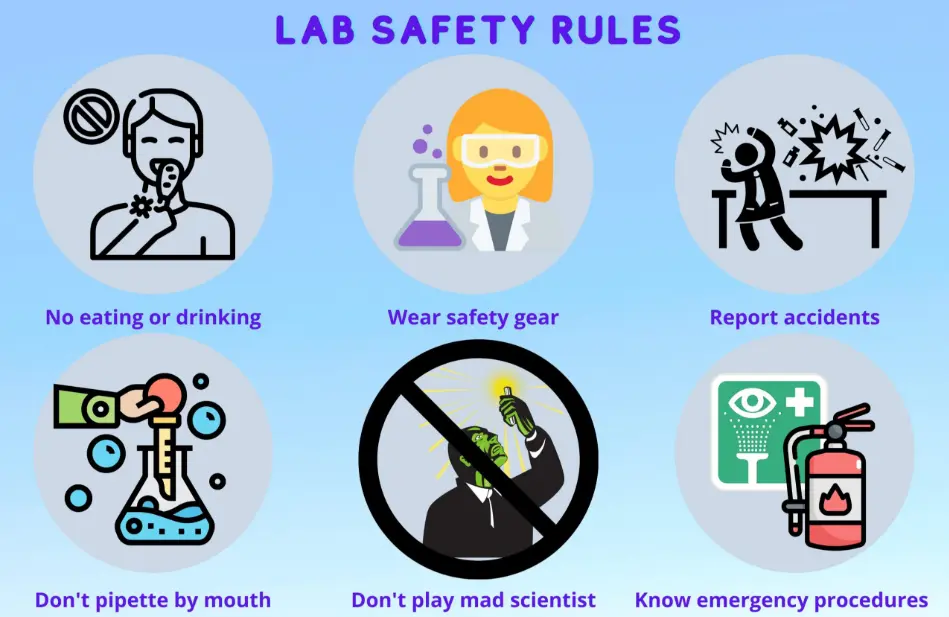
1. Personal Protective Equipment (PPE): Always wear safety goggles, lab coats, closed-toe shoes, and gloves when handling potentially hazardous materials. Tie back long hair and avoid loose clothing to prevent entanglement.
2. General Lab Conduct: Follow all instructions from instructors or lab manuals carefully. Never work alone in the lab; always have a supervisor present. Keep the workspace clean and organized to avoid trips or spills.
3. Handling Equipment and Materials: Inspect equipment for damage before use. Handle glassware, chemicals, and electrical devices with care—never touch live wires or mix chemicals without guidance. Use tools like tongs for hot objects and ensure proper storage of flammable substances.
4. Electrical Safety: Avoid contact with exposed wires or wet surfaces when dealing with circuits. Use grounded outlets and never override safety features like fuses. Turn off and unplug equipment when not in use.
5. Chemical and Radiation Safety: Wear appropriate PPE when working with chemicals or radioactive materials. Know the Material Safety Data Sheets (MSDS) for all substances. In case of spills, evacuate the area and alert authorities immediately.
6. Emergency Procedures: Familiarize yourself with the location of fire extinguishers, eyewash stations, safety showers, and first-aid kits. In case of injury, report it immediately. Know evacuation routes and emergency contact numbers.
7. Specific Hazards: For experiments involving lasers, use protective eyewear and avoid direct exposure. When working with high voltages or moving parts, maintain a safe distance and use barriers.
Best Practices:
– Report any unsafe conditions or accidents to the lab supervisor right away.
– Never eat, drink, or apply cosmetics in the lab to avoid contamination.
– Wash hands thoroughly after handling materials and before leaving the lab.
Adhering to these guidelines promotes a safe learning environment, allowing for effective experimentation and discovery in physics. Always prioritize safety first.
Table of Contents
- Part 1: Best AI Quiz Making Software for Creating A Physics Lab Safety Quiz
- Part 2: 20 Physics Lab Safety Quiz Questions & Answers
- Part 3: Save Time and Energy: Generate Quiz Questions with AI Technology
Part 1: Best AI Quiz Making Software for Creating A Physics Lab Safety Quiz
OnlineExamMaker is a powerful AI-powered assessment platform to create auto-grading Physics Lab Safety skills assessments. It’s designed for educators, trainers, businesses, and anyone looking to generate engaging quizzes without spending hours crafting questions manually. The AI Question Generator feature allows you to input a topic or specific details, and it generates a variety of question types automatically.
Top features for assessment organizers:
● Combines AI webcam monitoring to capture cheating activities during online exam.
● Enhances assessments with interactive experience by embedding video, audio, image into quizzes and multimedia feedback.
● Once the exam ends, the exam scores, question reports, ranking and other analytics data can be exported to your device in Excel file format.
● API and SSO help trainers integrate OnlineExamMaker with Google Classroom, Microsoft Teams, CRM and more.
Automatically generate questions using AI
Part 2: 20 Physics Lab Safety Quiz Questions & Answers
or
1. Question: What is the primary purpose of wearing safety goggles in a physics lab?
A. To protect eyes from dust and debris
B. To enhance visibility under bright lights
C. To protect eyes from chemical splashes and flying objects
D. To keep eyes warm in cold environments
Answer: C
Explanation: Safety goggles are essential to shield the eyes from potential hazards like chemical splashes, particles, or projectiles, preventing injuries that could lead to permanent damage.
2. Question: Which of the following should you do if you spill a small amount of acid on your skin in the lab?
A. Wipe it off with a paper towel
B. Rinse the affected area with plenty of water and inform the instructor
C. Ignore it if it doesn’t hurt
D. Apply a neutralizer immediately
Answer: B
Explanation: Rinsing with water dilutes and removes the acid, minimizing damage, and informing the instructor ensures proper medical attention if needed.
3. Question: What is the correct way to handle electrical equipment in a physics lab?
A. Use it with wet hands for better grip
B. Ensure all cords are frayed for flexibility
C. Plug in and unplug with dry hands and check for damage first
D. Leave it running unattended
Answer: C
Explanation: Dry hands prevent electrical shocks, and checking for damage reduces the risk of fires or malfunctions.
4. Question: When working with lasers in a physics experiment, what safety measure is most important?
A. Stare directly into the laser beam to align it
B. Use protective eyewear designed for the laser’s wavelength
C. Point the laser at reflective surfaces for better results
D. Leave the laser on when not in use
Answer: B
Explanation: Laser-specific eyewear blocks harmful wavelengths, protecting eyes from potential burns or vision damage.
5. Question: What should you do before starting any experiment involving chemicals?
A. Read the material safety data sheet (MSDS) and wear appropriate PPE
B. Mix all chemicals together first
C. Work alone without supervision
D. Skip the safety briefing
Answer: A
Explanation: Reviewing the MSDS provides information on hazards, and wearing PPE like gloves and goggles prevents exposure.
6. Question: In a physics lab, why is it important to tie back long hair and loose clothing?
A. To look neat and professional
B. To prevent them from catching fire or getting caught in equipment
C. To improve air circulation
D. To follow fashion trends
Answer: B
Explanation: Loose items can ignite near flames or get entangled in moving parts, causing accidents or injuries.
7. Question: What is the proper procedure for disposing of broken glassware in a physics lab?
A. Throw it in the regular trash bin
B. Sweep it under the table for later
C. Place it in a designated sharps container or wrap it securely
D. Reuse it if it’s not too damaged
Answer: C
Explanation: Designated containers prevent injuries from sharp edges and ensure safe handling by cleanup staff.
8. Question: If a fire starts in the lab, what is the first action you should take?
A. Try to extinguish it yourself immediately
B. Evacuate the area and pull the fire alarm
C. Open all windows to let it burn out
D. Continue working and monitor it
Answer: B
Explanation: Evacuating and alerting others prioritizes safety, as untrained individuals may worsen the situation.
9. Question: Why should you never eat or drink in a physics lab?
A. It could contaminate experiments
B. Food might interfere with equipment
C. It prevents ingestion of harmful substances
D. All of the above
Answer: D
Explanation: Eating or drinking can lead to accidental ingestion of chemicals, contamination of samples, or interference with lab tools.
10. Question: What type of footwear is recommended in a physics lab?
A. Open sandals for comfort
B. High heels for stability
C. Closed-toe shoes to protect feet
D. Bare feet for better grip
Answer: C
Explanation: Closed-toe shoes protect against spills, falling objects, or electrical hazards, reducing the risk of injury.
11. Question: When using a Bunsen burner, what safety step must be followed?
A. Light it near flammable materials
B. Ensure the gas is turned off when not in use
C. Leave the flame unattended
D. Use it without a heat-resistant mat
Answer: B
Explanation: Turning off the gas prevents gas leaks and potential explosions or fires.
12. Question: How should you report an accident or injury in the lab?
A. Wait until the end of the session
B. Inform the instructor immediately
C. Handle it yourself without telling anyone
D. Email the details later
Answer: B
Explanation: Immediate reporting allows for quick medical intervention and proper documentation to prevent further risks.
13. Question: What is the main reason for having an emergency eyewash station in the lab?
A. To clean equipment
B. To rinse eyes exposed to chemicals
C. To store extra goggles
D. To wash hands
Answer: B
Explanation: It provides a way to flush out irritants quickly, minimizing damage to the eyes.
14. Question: In a physics lab dealing with magnets, what precaution should be taken?
A. Keep credit cards and pacemakers away from strong magnets
B. Wave magnets around freely
C. Store them near electronic devices
D. Use them without gloves
Answer: A
Explanation: Strong magnets can erase data on cards or interfere with medical devices, posing health and data risks.
15. Question: Why is it important to label all containers in a physics lab?
A. For aesthetic purposes
B. To prevent mix-ups of substances that could cause reactions
C. To save time during experiments
D. To make the lab look organized
Answer: B
Explanation: Proper labeling avoids accidental combinations of incompatible materials, which could lead to explosions or toxic releases.
16. Question: What should you do if you smell gas in the lab?
A. Ignite a flame to burn it off
B. Open all doors and windows and evacuate
C. Continue working quietly
D. Turn on all electrical equipment
Answer: B
Explanation: Evacuating disperses the gas and prevents ignition, reducing the risk of an explosion.
17. Question: When lifting heavy equipment in a physics lab, what is the correct technique?
A. Bend at the waist and lift quickly
B. Bend at the knees and keep the back straight
C. Lift with one hand for speed
D. Drag it across the floor
Answer: B
Explanation: Bending at the knees protects the back from strain and prevents injuries from improper lifting.
18. Question: Why must you wash your hands after handling chemicals in a physics lab?
A. To keep them clean for the next experiment
B. To remove residual chemicals that could cause skin irritation or poisoning
C. To prevent bad odors
D. To follow a routine
Answer: B
Explanation: Washing removes contaminants, preventing absorption through the skin or accidental ingestion.
19. Question: What is the purpose of a fume hood in a physics lab?
A. To store extra materials
B. To vent harmful vapors away from the breathing area
C. To provide extra lighting
D. To heat experiments
Answer: B
Explanation: Fume hoods protect users by drawing away toxic fumes, maintaining a safe breathing environment.
20. Question: How should you store flammable liquids in a physics lab?
A. In direct sunlight
B. In a cool, designated flammable storage cabinet
C. Near heat sources for quick access
D. In open containers
Answer: B
Explanation: A designated cabinet keeps them away from ignition sources, reducing the risk of fires or explosions.
or
Part 3: Save Time and Energy: Generate Quiz Questions with AI Technology
Automatically generate questions using AI