The paper industry encompasses the production of paper and paperboard products from raw materials like wood pulp, recycled paper, and non-wood fibers. It plays a vital role in packaging, printing, hygiene, and industrial applications, with global demand driven by e-commerce, consumer goods, and education sectors.
#Historical Evolution
Originating in ancient China around 105 AD with the invention of paper by Cai Lun, the industry spread globally through trade routes. The 19th century saw industrialization in Europe and North America, with mechanized processes like the Fourdrinier machine enabling mass production. Post-World War II, the sector expanded rapidly due to urbanization and rising literacy rates, but faced environmental scrutiny in the late 20th century over deforestation and pollution.
#Market Size and Key Players
In 2023, the global paper market was valued at approximately $400 billion, with projections to reach $500 billion by 2030, growing at a CAGR of 2-3%. Major regions include Asia-Pacific (led by China and India), North America, and Europe. Leading companies are International Paper, Procter & Gamble, Kimberly-Clark, and Stora Enso, which dominate in packaging, tissue, and specialty papers. The industry is fragmented, with large integrated firms coexisting with smaller regional producers.
#Production Processes
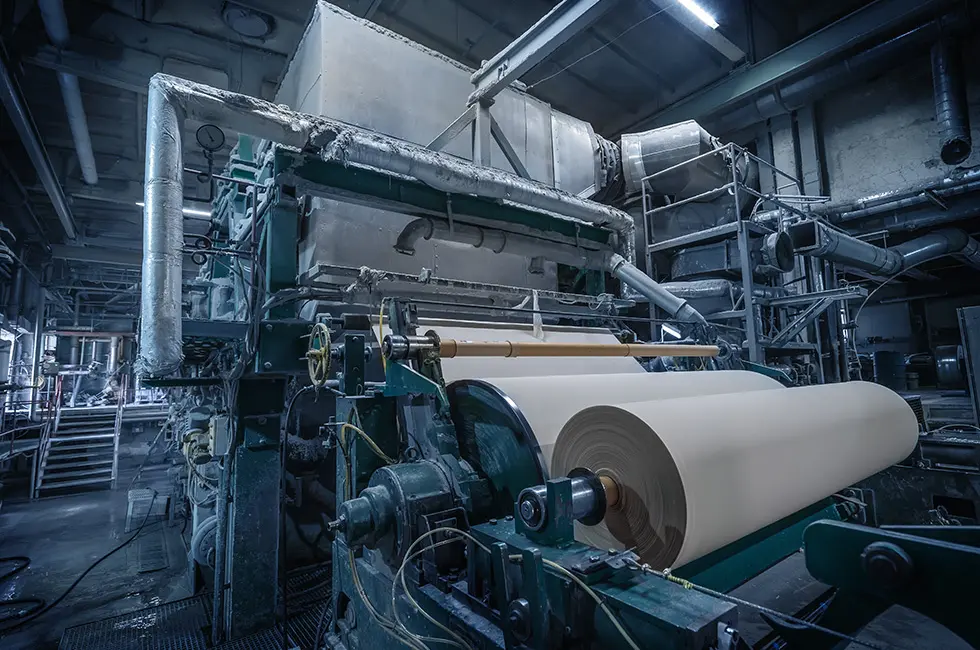
Paper manufacturing involves pulping raw materials, either mechanically or chemically, to break down fibers. The pulp is then bleached, refined, and formed into sheets on machines like the Fourdrinier or twin-wire formers. Key inputs include wood from sustainable forests, water, and chemicals. Recycling has become integral, with over 60% of paper in developed markets derived from recovered materials, reducing environmental impact.
#Trends and Challenges
Sustainability is a dominant trend, with a shift toward eco-friendly practices like using recycled content, FSC-certified forests, and bio-based alternatives. Digitalization has reduced demand for traditional printing paper, but packaging and tissue segments are growing due to online shopping and hygiene awareness. Challenges include volatile raw material prices, water scarcity, and regulatory pressures on emissions and waste. Innovations like nanotechnology and biodegradable packaging are emerging to address these issues.
#Environmental and Economic Impact
The industry contributes to deforestation and greenhouse gas emissions, accounting for about 1-2% of global CO2 output. However, advancements in energy-efficient mills and closed-loop systems are mitigating effects. Economically, it supports millions of jobs and generates significant export revenues, particularly in emerging economies.
#Future Outlook
The paper industry is evolving toward circular economy models, with opportunities in sustainable packaging and bio-products like biofuels from pulp waste. Technological advancements, such as AI-driven optimization and 3D printing of paper-based materials, will enhance efficiency. Despite threats from digital media, the sector’s adaptability positions it for steady growth, focusing on innovation and green initiatives to meet global sustainability goals by 2030.
Table of Contents
- Part 1: Best AI Quiz Making Software for Creating A Paper Industry Quiz
- Part 2: 20 Paper Industry Quiz Questions & Answers
- Part 3: OnlineExamMaker AI Question Generator: Generate Questions for Any Topic
Part 1: Best AI Quiz Making Software for Creating A Paper Industry Quiz
Nowadays more and more people create Paper Industry quizzes using AI technologies, OnlineExamMaker a powerful AI-based quiz making tool that can save you time and efforts. The software makes it simple to design and launch interactive quizzes, assessments, and surveys. With the Question Editor, you can create multiple-choice, open-ended, matching, sequencing and many other types of questions for your tests, exams and inventories. You are allowed to enhance quizzes with multimedia elements like images, audio, and video to make them more interactive and visually appealing.
Take a product tour of OnlineExamMaker:
● Create a question pool through the question bank and specify how many questions you want to be randomly selected among these questions.
● Build and store questions in a centralized portal, tagged by categories and keywords for easy reuse and organization.
● Simply copy a few lines of codes, and add them to a web page, you can present your online quiz in your website, blog, or landing page.
● Randomize questions or change the order of questions to ensure exam takers don’t get the same set of questions each time.
Automatically generate questions using AI
Part 2: 20 Paper Industry Quiz Questions & Answers
or
1. What is the primary raw material used in the paper industry?
A. Plastic
B. Wood fibers
C. Cotton
D. Metal
Answer: B
Explanation: Wood fibers are the most common raw material for paper production, as they provide the cellulose needed for pulping.
2. Which process involves breaking down wood into pulp?
A. Bleaching
B. Pulping
C. Coating
D. Calendering
Answer: B
Explanation: Pulping is the mechanical or chemical process that separates fibers from wood, creating a pulp slurry for paper making.
3. What is the main environmental concern associated with the paper industry?
A. Overproduction of plastic
B. Deforestation
C. Excessive mining
D. Oil spills
Answer: B
Explanation: Deforestation occurs due to the large-scale harvesting of trees for pulp, leading to habitat loss and carbon emissions.
4. Which type of paper is commonly used for newspapers?
A. Coated paper
B. Newsprint
C. Kraft paper
D. Tissue paper
Answer: B
Explanation: Newsprint is a low-cost, uncoated paper made from mechanical pulp, ideal for high-volume printing like newspapers.
5. What role does bleaching play in paper production?
A. Adds color to paper
B. Removes impurities and whitens pulp
C. Strengthens the paper fibers
D. Reduces paper thickness
Answer: B
Explanation: Bleaching uses chemicals to remove lignin and other substances from pulp, making the paper brighter and cleaner.
6. Which machine is used to form paper sheets from pulp?
A. Calender
B. Fourdrinier machine
C. Pulper
D. Dryer
Answer: B
Explanation: The Fourdrinier machine spreads pulp onto a moving screen to form a continuous sheet of paper.
7. What is recycled paper primarily made from?
A. Fresh wood pulp only
B. Waste paper and cardboard
C. Synthetic fibers
D. Agricultural waste
Answer: B
Explanation: Recycled paper is produced from collected waste paper, which is processed to remove inks and contaminants.
8. Which factor has led to the growth of sustainable paper practices?
A. Increased demand for disposable products
B. Government regulations on emissions
C. Higher costs of plastic
D. Reduced need for packaging
Answer: B
Explanation: Government regulations on environmental impact have pushed the industry towards sustainable practices like using recycled materials.
9. What is the purpose of sizing in paper production?
A. To make paper waterproof
B. To add color
C. To increase thickness
D. To improve printability
Answer: A
Explanation: Sizing involves adding substances to paper to resist water absorption, making it suitable for writing or printing.
10. Which country is the largest producer of paper globally?
A. United States
B. China
C. Canada
D. Germany
Answer: B
Explanation: China leads in paper production due to its large manufacturing base and high demand for packaging materials.
11. What is the chemical process called that uses sulfites to make pulp?
A. Kraft process
B. Sulfite process
C. Mechanical pulping
D. Soda process
Answer: B
Explanation: The sulfite process uses sulfurous acid to dissolve lignin, producing a high-quality pulp for fine papers.
12. How does the paper industry contribute to water pollution?
A. Through chemical discharges
B. By releasing oil
C. Via air emissions
D. From noise pollution
Answer: A
Explanation: The industry often discharges chemicals from bleaching and pulping processes into waterways, affecting aquatic life.
13. What type of paper is used for heavy-duty packaging?
A. Tissue paper
B. Kraft paper
C. Bond paper
D. Glossy paper
Answer: B
Explanation: Kraft paper is strong and brown, made from unbleached pulp, and is commonly used for bags and boxes.
14. Which innovation has helped reduce waste in the paper industry?
A. Increased use of virgin forests
B. Deinking technology
C. Faster logging methods
D. Single-use packaging
Answer: B
Explanation: Deinking technology removes inks from recycled paper, allowing for higher quality reuse and less waste.
15. What is the main byproduct of paper mills?
A. Plastic waste
B. Sludge
C. Glass fragments
D. Metal scraps
Answer: B
Explanation: Sludge, a mixture of fibers and chemicals, is a common byproduct that requires proper management to avoid environmental harm.
16. Which paper grade is used for printing books?
A. Wallpaper
B. Offset paper
C. Filter paper
D. Wrapping paper
Answer: B
Explanation: Offset paper is designed for high-quality printing, with a smooth surface that holds ink well for books and magazines.
17. What effect does recycling have on paper quality?
A. Always improves it
B. Can shorten fiber length, reducing strength
C. Makes it completely indestructible
D. Increases color vibrancy
Answer: B
Explanation: Repeated recycling shortens the fibers in paper, which can lead to weaker and less durable products over time.
18. Which process involves pressing and smoothing paper?
A. Pulping
B. Calendering
C. Bleaching
D. Coating
Answer: B
Explanation: Calendering uses heated rollers to compress and smooth the paper surface, improving its finish and print quality.
19. What drives the demand for paper in the packaging sector?
A. Decline in e-commerce
B. Growth of online shopping
C. Reduced global trade
D. Shift to digital media
Answer: B
Explanation: The rise of e-commerce has increased the need for packaging materials like cardboard boxes, boosting paper demand.
20. How does the paper industry promote sustainability?
A. By increasing deforestation
B. Through reforestation and recycling programs
C. By using more non-recyclable materials
D. Avoiding technological upgrades
Answer: B
Explanation: Many companies in the industry implement reforestation efforts and recycling initiatives to minimize their environmental footprint.
or
Part 3: OnlineExamMaker AI Question Generator: Generate Questions for Any Topic
Automatically generate questions using AI