Nvidia GeForce is a renowned line of graphics processing units (GPUs) developed by Nvidia Corporation, primarily designed for gaming, content creation, and high-performance computing. First introduced in 1999 with the GeForce 256, which was marketed as the world’s first GPU, it revolutionized the industry by integrating 3D graphics acceleration into a single chip.
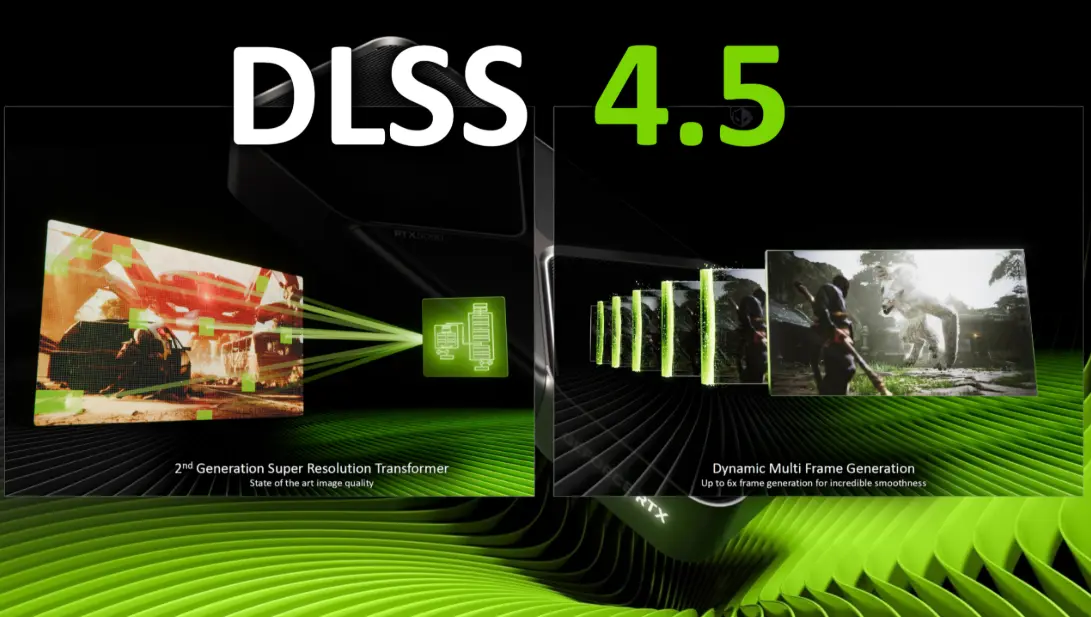
Over the years, GeForce has evolved through multiple generations, incorporating advanced technologies such as CUDA cores for parallel processing, ray tracing for realistic lighting and shadows, and DLSS (Deep Learning Super Sampling) for enhanced image quality and performance. Key series include the GeForce RTX for real-time ray tracing and AI capabilities, and the GTX for more budget-friendly options.
GeForce GPUs are powered by Nvidia’s proprietary architectures like Turing, Ampere, and the latest Ada Lovelace, which deliver superior frame rates, efficient power consumption, and support for features like G-Sync for smoother gameplay. They are widely used in gaming PCs, laptops, and workstations for tasks ranging from video editing and 3D rendering to machine learning and virtual reality.
In the market, GeForce holds a dominant position, with millions of units shipped annually, driven by partnerships with game developers and hardware manufacturers. The ecosystem is supported by Nvidia’s GeForce Experience software, which optimizes game settings and provides driver updates, ensuring users get the best performance from their hardware. As AI and graphics demands grow, GeForce continues to innovate, making it a cornerstone for both enthusiasts and professionals.
Table of Contents
- Part 1: Create An Amazing Nvidia GeForce Quiz Using AI Instantly in OnlineExamMaker
- Part 2: 20 Nvidia GeForce Quiz Questions & Answers
- Part 3: OnlineExamMaker AI Question Generator: Generate Questions for Any Topic
Part 1: Create An Amazing Nvidia GeForce Quiz Using AI Instantly in OnlineExamMaker
The quickest way to assess the Nvidia GeForce knowledge of candidates is using an AI assessment platform like OnlineExamMaker. With OnlineExamMaker AI Question Generator, you are able to input content—like text, documents, or topics—and then automatically generate questions in various formats (multiple-choice, true/false, short answer). Its AI Exam Grader can automatically grade the exam and generate insightful reports after your candidate submit the assessment.
Overview of its key assessment-related features:
● Create up to 10 question types, including multiple-choice, true/false, fill-in-the-blank, matching, short answer, and essay questions.
● Automatically generates detailed reports—individual scores, question report, and group performance.
● Instantly scores objective questions and subjective answers use rubric-based scoring for consistency.
● API and SSO help trainers integrate OnlineExamMaker with Google Classroom, Microsoft Teams, CRM and more.
Automatically generate questions using AI
Part 2: 20 Nvidia GeForce Quiz Questions & Answers
or
1. Question: What is the primary function of Nvidia GeForce GPUs?
Options:
A) Data storage
B) Graphics rendering
C) CPU processing
D) Network security
Answer: B) Graphics rendering
Explanation: Nvidia GeForce GPUs are designed to handle high-performance graphics tasks, such as rendering images and videos for gaming and professional applications.
2. Question: Which Nvidia GeForce series introduced real-time ray tracing technology?
Options:
A) GeForce 10 series
B) GeForce 20 series
C) GeForce GTX series
D) GeForce RTX series
Answer: D) GeForce RTX series
Explanation: The GeForce RTX series was the first to feature dedicated hardware for real-time ray tracing, enhancing lighting and reflections in games.
3. Question: What does CUDA stand for in the context of Nvidia GeForce?
Options:
A) Central Unified Data Architecture
B) Compute Unified Device Architecture
C) Core Unified Dynamic Application
D) Central User Data Access
Answer: B) Compute Unified Device Architecture
Explanation: CUDA is Nvidia’s parallel computing platform that allows developers to use GeForce GPUs for general-purpose computing tasks beyond graphics.
4. Question: Which of the following is a feature of Nvidia GeForce RTX cards?
Options:
A) Only supports 1080p resolution
B) Includes DLSS technology
C) Limited to 2 GB of VRAM
D) Does not support VR gaming
Answer: B) Includes DLSS technology
Explanation: DLSS (Deep Learning Super Sampling) uses AI to upscale images, improving performance and visuals on GeForce RTX cards.
5. Question: What type of memory is commonly used in high-end Nvidia GeForce GPUs?
Options:
A) HDD storage
B) GDDR6
C) DDR4 RAM
D) SSD caching
Answer: B) GDDR6
Explanation: GDDR6 is a high-speed memory type used in GeForce GPUs to handle the demands of modern gaming and graphics-intensive applications.
6. Question: Which Nvidia GeForce model is known for being budget-friendly and entry-level?
Options:
A) GeForce RTX 3090
B) GeForce GTX 1660
C) GeForce RTX 4090
D) GeForce GTX 1080 Ti
Answer: B) GeForce GTX 1660
Explanation: The GeForce GTX 1660 is positioned as an affordable option for 1080p gaming without requiring the latest features like ray tracing.
7. Question: How does Nvidia’s G-Sync technology improve gaming?
Options:
A) Increases CPU speed
B) Reduces screen tearing
C) Boosts internet speed
D) Enhances audio quality
Answer: B) Reduces screen tearing
Explanation: G-Sync synchronizes the monitor’s refresh rate with the GPU’s frame rate, eliminating visual artifacts like screen tearing for smoother gameplay.
8. Question: What is the main difference between GeForce GTX and RTX series?
Options:
A) RTX has more cores
B) GTX supports ray tracing
C) RTX includes hardware-accelerated ray tracing
D) GTX is for laptops only
Answer: C) RTX includes hardware-accelerated ray tracing
Explanation: While both series are for gaming, RTX adds dedicated cores for ray tracing, which GTX lacks, making RTX better for advanced visual effects.
9. Question: Which Nvidia GeForce GPU was released as part of the Ampere architecture?
Options:
A) GeForce GTX 1060
B) GeForce RTX 3060
C) GeForce GTX 970
D) GeForce 210
Answer: B) GeForce RTX 3060
Explanation: The GeForce RTX 3000 series, including the RTX 3060, is based on Nvidia’s Ampere architecture, which improved efficiency and performance.
10. Question: What does VRAM stand for in Nvidia GeForce specifications?
Options:
A) Virtual Random Access Memory
B) Video Random Access Memory
C) Visual Rendering Access Module
D) Volatile RAM Allocation
Answer: B) Video Random Access Memory
Explanation: VRAM is dedicated memory on GeForce GPUs for storing and accessing graphical data quickly, essential for high-resolution gaming.
11. Question: Which feature allows Nvidia GeForce cards to support multiple monitors?
Options:
A) Single output port
B) Multi-GPU rendering
C) HDMI and DisplayPort support
D) Limited to one display
Answer: C) HDMI and DisplayPort support
Explanation: GeForce cards use multiple output ports like HDMI and DisplayPort to connect and manage several monitors simultaneously.
12. Question: What is the purpose of Nvidia’s Ansel technology?
Options:
A) Overclocking the GPU
B) Capturing in-game screenshots
C) Monitoring system temperature
D) Optimizing network performance
Answer: B) Capturing in-game screenshots
Explanation: Ansel is a screenshot tool that allows users to take high-quality, customizable photos from within supported games on GeForce hardware.
13. Question: Which Nvidia GeForce series is successor to the 20 series?
Options:
A) GeForce 10 series
B) GeForce 30 series
C) GeForce GTX series
D) GeForce 40 series
Answer: D) GeForce 40 series
Explanation: The GeForce 40 series, like the RTX 4070, succeeds the 30 series and builds on previous advancements with better performance.
14. Question: How does Nvidia’s NVENC improve video encoding?
Options:
A) By slowing down rendering
B) Through hardware acceleration
C) Only for audio files
D) By reducing video quality
Answer: B) Through hardware acceleration
Explanation: NVENC uses dedicated hardware on GeForce GPUs to encode videos faster and more efficiently than software-based methods.
15. Question: What resolution is commonly targeted by mid-range Nvidia GeForce cards?
Options:
A) 4K ultra HD
B) 1080p full HD
C) 8K
D) 720p
Answer: B) 1080p full HD
Explanation: Mid-range GeForce cards, such as the GTX 1660, are optimized for smooth performance at 1080p resolution for most games.
16. Question: Which Nvidia technology enhances frame rates using AI?
Options:
A) G-Sync
B) DLSS
C) CUDA
D) PhysX
Answer: B) DLSS
Explanation: DLSS uses artificial intelligence to generate higher frame rates by upscaling lower-resolution images on compatible GeForce RTX cards.
17. Question: What is the core component that processes shaders in Nvidia GeForce GPUs?
Options:
A) Tensor cores
B) Streaming multiprocessors
C) Memory controllers
D) Fan controllers
Answer: B) Streaming multiprocessors
Explanation: Streaming multiprocessors in GeForce GPUs handle parallel processing tasks, including shaders, for efficient graphics rendering.
18. Question: Which Nvidia GeForce card is designed for high-end 4K gaming?
Options:
A) GeForce GTX 1050
B) GeForce RTX 3080
C) GeForce GT 1030
D) GeForce GTX 750
Answer: B) GeForce RTX 3080
Explanation: The GeForce RTX 3080 offers the power and features needed for smooth 4K gaming with ray tracing and high frame rates.
19. Question: What does Nvidia’s SLI technology allow?
Options:
A) Combining multiple GPUs
B) Overclocking the CPU
C) Wireless connectivity
D) External storage expansion
Answer: A) Combining multiple GPUs
Explanation: SLI (Scalable Link Interface) enables linking two or more GeForce GPUs to improve performance in supported games and applications.
20. Question: Which factor most affects the performance of an Nvidia GeForce GPU?
Options:
A) Case design
B) Clock speed and CUDA cores
C) Monitor brand
D) Keyboard type
Answer: B) Clock speed and CUDA cores
Explanation: Clock speed determines processing frequency, while CUDA cores handle parallel tasks, directly impacting the GPU’s overall performance in graphics-intensive work.
or
Part 3: OnlineExamMaker AI Question Generator: Generate Questions for Any Topic
Automatically generate questions using AI