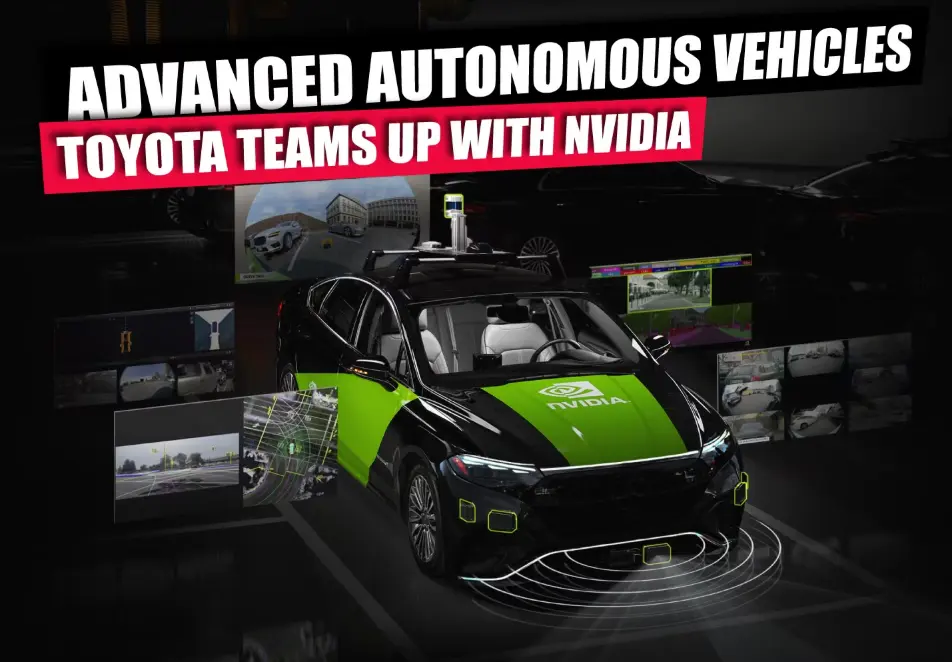
Nvidia has emerged as a leader in autonomous vehicle (AV) technology, leveraging its expertise in AI, GPU computing, and deep learning to advance self-driving systems. The company’s DRIVE platform serves as a comprehensive ecosystem for AV development, encompassing hardware, software, and simulation tools.
Key Technologies and Products:
– DRIVE AGX: A high-performance computing platform that powers real-time AI processing for AVs, featuring scalable GPUs like the Orin processor for sensor fusion, perception, and decision-making.
– DRIVE Hyperion: An end-to-end AV development kit that includes sensors, software, and validation tools, enabling automakers to build and test autonomous systems efficiently.
– Deep Learning and AI: Nvidia’s CUDA platform accelerates neural networks for tasks such as object detection, path planning, and environmental mapping, using models trained on vast datasets.
Applications and Partnerships:
– Nvidia collaborates with major automakers and tech firms, including Audi, Mercedes-Benz, Volvo, and Waymo, to integrate AV technology into production vehicles.
– The platform supports various levels of autonomy, from advanced driver-assistance systems (ADAS) in Level 2 vehicles to full self-driving capabilities in Level 4 and 5.
– Real-world applications include ride-hailing fleets, logistics, and smart cities, with a focus on enhancing safety, reducing emissions, and improving traffic flow.
Challenges and Future Outlook:
– Nvidia addresses key AV challenges like edge cases and regulatory hurdles through advanced simulation tools, such as DRIVE Sim, which allows for virtual testing in diverse scenarios.
– Looking ahead, the company is expanding into AI-driven innovations like electric vehicle integration and 5G connectivity, positioning Nvidia to shape the future of mobility with safer, more intelligent transportation systems.
Table of Contents
- Part 1: Best AI Quiz Making Software for Creating A Nvidia Autonomous Vehicles Quiz
- Part 2: 20 Nvidia Autonomous Vehicles Quiz Questions & Answers
- Part 3: OnlineExamMaker AI Question Generator: Generate Questions for Any Topic
Part 1: Best AI Quiz Making Software for Creating A Nvidia Autonomous Vehicles Quiz
Nowadays more and more people create Nvidia Autonomous Vehicles quizzes using AI technologies, OnlineExamMaker a powerful AI-based quiz making tool that can save you time and efforts. The software makes it simple to design and launch interactive quizzes, assessments, and surveys. With the Question Editor, you can create multiple-choice, open-ended, matching, sequencing and many other types of questions for your tests, exams and inventories. You are allowed to enhance quizzes with multimedia elements like images, audio, and video to make them more interactive and visually appealing.
Take a product tour of OnlineExamMaker:
● Create a question pool through the question bank and specify how many questions you want to be randomly selected among these questions.
● Build and store questions in a centralized portal, tagged by categories and keywords for easy reuse and organization.
● Simply copy a few lines of codes, and add them to a web page, you can present your online quiz in your website, blog, or landing page.
● Randomize questions or change the order of questions to ensure exam takers don’t get the same set of questions each time.
Automatically generate questions using AI
Part 2: 20 Nvidia Autonomous Vehicles Quiz Questions & Answers
or
1. What is Nvidia’s primary platform for developing autonomous vehicle technology?
A. TensorFlow
B. DRIVE AGX
C. CUDA Core
D. GeForce RTX
Answer: B
Explanation: Nvidia’s DRIVE AGX is a scalable AI computing platform designed specifically for autonomous vehicles, providing the necessary hardware for processing sensor data and running AI algorithms in real-time.
2. Which Nvidia technology is essential for training deep learning models used in autonomous driving?
A. RTX graphics
B. CUDA
C. Tegra
D. Jetson Nano
Answer: B
Explanation: CUDA is Nvidia’s parallel computing platform and programming model that accelerates deep learning tasks, enabling faster training of neural networks for tasks like object detection in autonomous vehicles.
3. What role does the Nvidia DRIVE Hyperion play in autonomous vehicles?
A. It is a sensor suite
B. It is a software operating system
C. It is an AI chip
D. It is a full autonomous vehicle development platform
Answer: D
Explanation: DRIVE Hyperion is Nvidia’s end-to-end autonomous vehicle development platform that integrates sensors, software, and computing hardware to accelerate the development and testing of self-driving systems.
4. In Nvidia’s autonomous vehicle ecosystem, what does the term “AV” typically stand for?
A. Advanced Vision
B. Autonomous Vehicle
C. Artificial Vision
D. Automated Variant
Answer: B
Explanation: “AV” in Nvidia’s context refers to Autonomous Vehicle, encompassing their technologies for self-driving cars that use AI to navigate without human intervention.
5. Which level of autonomy does Nvidia’s technology primarily target for production vehicles?
A. Level 1 (Driver Assistance)
B. Level 2 (Partial Automation)
C. Level 3 (Conditional Automation)
D. Level 4 or 5 (High or Full Automation)
Answer: D
Explanation: Nvidia’s platforms like DRIVE are designed to support Level 4 and 5 autonomy, allowing vehicles to operate without human input in most or all conditions through advanced AI and sensor fusion.
6. What type of processor is at the core of Nvidia’s DRIVE Pegasus for autonomous driving?
A. CPU-only
B. GPU-based
C. FPGA
D. ASIC
Answer: B
Explanation: DRIVE Pegasus uses GPU-based processors, which excel in parallel processing for handling the massive data from sensors in real-time autonomous driving scenarios.
7. How does Nvidia’s Deep Learning Accelerator (DLA) benefit autonomous vehicles?
A. It improves battery life
B. It accelerates neural network inferences
C. It handles GPS navigation
D. It manages vehicle suspension
Answer: B
Explanation: The DLA in Nvidia’s hardware is dedicated to speeding up deep learning inferences, allowing autonomous vehicles to quickly process and respond to environmental data for safer driving.
8. Which Nvidia tool is used for simulating autonomous driving scenarios?
A. Unity
B. DRIVE Sim
C. Blender
D. AutoCAD
Answer: B
Explanation: DRIVE Sim is Nvidia’s simulation tool that creates realistic virtual environments for testing autonomous vehicle algorithms, reducing the need for real-world testing and improving safety.
9. What is the main advantage of using Nvidia’s Omniverse in autonomous vehicle development?
A. It enhances social media integration
B. It provides 3D simulation and collaboration tools
C. It optimizes fuel efficiency
D. It controls infotainment systems
Answer: B
Explanation: Omniverse is Nvidia’s platform for 3D simulation and digital twins, enabling developers to collaborate on and test autonomous vehicle designs in a shared virtual space.
10. In Nvidia’s autonomous systems, what does sensor fusion involve?
A. Combining data from multiple sensors
B. Fusing vehicle parts during manufacturing
C. Merging software code
D. Integrating audio systems
Answer: A
Explanation: Sensor fusion in Nvidia’s technology combines data from cameras, radar, lidar, and other sensors to create a comprehensive view of the environment, improving accuracy in decision-making for autonomous vehicles.
11. Which partnership has Nvidia formed to advance autonomous trucking?
A. With Tesla
B. With Volvo
C. With Waymo
D. With Uber
Answer: B
Explanation: Nvidia has partnered with Volvo to develop autonomous trucking solutions, leveraging Nvidia’s AI hardware for fleet management and safe, efficient long-haul operations.
12. What is the primary function of Nvidia’s DRIVE OS in autonomous vehicles?
A. Managing entertainment features
B. Providing the operating system for AI workloads
C. Handling manual driving controls
D. Optimizing engine performance
Answer: B
Explanation: DRIVE OS is Nvidia’s Linux-based operating system tailored for autonomous vehicles, supporting real-time AI processing and integration of various software components for safe operation.
13. How does Nvidia’s AI assist in object detection for autonomous vehicles?
A. By using traditional rule-based algorithms
B. Through deep neural networks
C. Via simple image filters
D. With random data generation
Answer: B
Explanation: Nvidia’s AI relies on deep neural networks to identify and classify objects like pedestrians and vehicles in real-time, enhancing the safety and reliability of autonomous driving systems.
14. What hardware component is critical for Nvidia’s edge computing in autonomous vehicles?
A. Cloud servers
B. On-board GPUs
C. External hard drives
D. Bluetooth modules
Answer: B
Explanation: On-board GPUs from Nvidia enable edge computing, allowing autonomous vehicles to process data locally without relying on cloud connectivity, which is essential for low-latency decisions.
15. Which Nvidia feature helps in mapping and localization for self-driving cars?
A. HD Mapping
B. Basic GPS
C. Audio recognition
D. Thermal imaging
Answer: A
Explanation: Nvidia’s HD Mapping provides high-definition maps that integrate with vehicle sensors for precise localization, helping autonomous vehicles navigate complex environments accurately.
16. In Nvidia’s ecosystem, what does the term “end-to-end” learning mean for autonomous driving?
A. Learning from start to finish without human intervention
B. Training AI models directly from raw sensor data
C. Ending the vehicle’s journey automatically
D. Connecting to the cloud at the end of a drive
Answer: B
Explanation: End-to-end learning in Nvidia’s approach involves training AI models on raw sensor data to directly output driving decisions, simplifying the development process for autonomous vehicles.
17. What is the key benefit of Nvidia’s Xavier processor in autonomous vehicles?
A. It reduces vehicle weight
B. It offers high-performance computing with low power consumption
C. It provides wireless charging
D. It integrates with smartphones
Answer: B
Explanation: The Xavier processor is designed for autonomous vehicles, delivering powerful AI capabilities while consuming less power, making it ideal for efficient, long-duration operations.
18. How does Nvidia address cybersecurity in autonomous vehicles?
A. By ignoring it as a non-issue
B. Through secure boot and encrypted communications
C. By using open-source software only
D. With physical locks on hardware
Answer: B
Explanation: Nvidia incorporates features like secure boot and hardware-based encryption in their platforms to protect autonomous vehicles from cyber threats, ensuring data integrity and safety.
19. What type of data does Nvidia’s autonomous vehicle platform primarily process?
A. Text data from user inputs
B. Sensor data like images and lidar points
C. Music streaming data
D. Weather forecast data
Answer: B
Explanation: Nvidia’s platform focuses on processing sensor data, such as from cameras and lidar, to enable real-time environmental understanding and decision-making in autonomous vehicles.
20. Which Nvidia initiative supports the global adoption of autonomous vehicles?
A. Gaming conferences
B. The DRIVE Constellation program
C. Smartphone apps
D. Virtual reality headsets
Answer: B
Explanation: The DRIVE Constellation program is Nvidia’s ecosystem for partners and developers, fostering collaboration to accelerate the deployment and standardization of autonomous vehicle technology worldwide.
or
Part 3: OnlineExamMaker AI Question Generator: Generate Questions for Any Topic
Automatically generate questions using AI