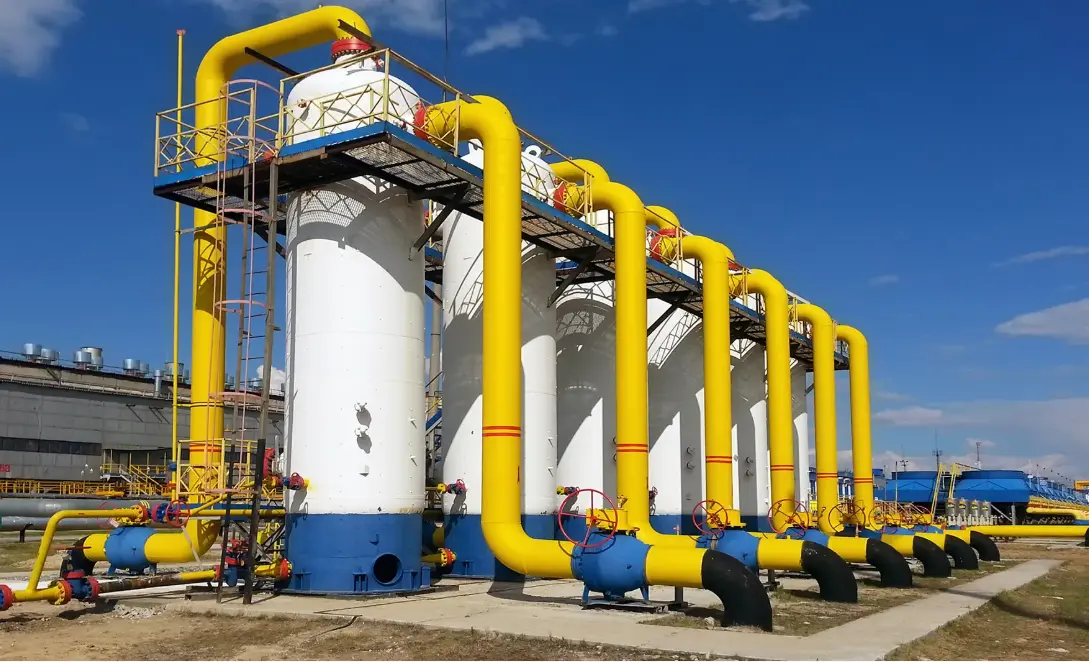
Natural gas is a naturally occurring hydrocarbon gas mixture, primarily composed of methane (CH4), along with smaller amounts of other gases like ethane, propane, and butane. It forms from the decomposition of organic matter over millions of years under high pressure and temperature, typically found in underground reservoirs alongside oil deposits.
As a fossil fuel, natural gas is extracted through methods such as conventional drilling, hydraulic fracturing (fracking), or offshore platforms. It serves as a major energy source worldwide, used for electricity generation, heating homes and buildings, powering industrial processes, and as a fuel for vehicles and cooking.
Key advantages include its relatively clean combustion compared to coal and oil, emitting lower levels of carbon dioxide, sulfur dioxide, and particulate matter, which helps reduce air pollution and greenhouse gas emissions. However, it still contributes to climate change through methane leaks during extraction and transport.
Globally, natural gas plays a critical role in the energy transition, bridging the gap between fossil fuels and renewables. Major producers include the United States, Russia, and Qatar, with distribution occurring via pipelines or as liquefied natural gas (LNG) for international trade. Demand is driven by economic growth, population needs, and efforts to decarbonize energy systems, though challenges like resource depletion and environmental impacts persist.
Table of Contents
- Part 1: Create An Amazing Natural Gas Quiz Using AI Instantly in OnlineExamMaker
- Part 2: 20 Natural Gas Quiz Questions & Answers
- Part 3: Automatically Generate Quiz Questions Using AI Question Generator
Part 1: Create An Amazing Natural Gas Quiz Using AI Instantly in OnlineExamMaker
Nowadays more and more people create Natural Gas quizzes using AI technologies, OnlineExamMaker a powerful AI-based quiz making tool that can save you time and efforts. The software makes it simple to design and launch interactive quizzes, assessments, and surveys. With the Question Editor, you can create multiple-choice, open-ended, matching, sequencing and many other types of questions for your tests, exams and inventories. You are allowed to enhance quizzes with multimedia elements like images, audio, and video to make them more interactive and visually appealing.
Recommended features for you:
● Prevent cheating by randomizing questions or changing the order of questions, so learners don’t get the same set of questions each time.
● Automatically generates detailed reports—individual scores, question report, and group performance.
● Simply copy a few lines of codes, and add them to a web page, you can present your online quiz in your website, blog, or landing page.
● Offers question analysis to evaluate question performance and reliability, helping instructors optimize their training plan.
Automatically generate questions using AI
Part 2: 20 Natural Gas Quiz Questions & Answers
or
1. Question: What is the primary component of natural gas?
Options:
A) Methane
B) Ethane
C) Propane
D) Butane
Answer: A) Methane
Explanation: Natural gas is primarily composed of methane, which makes up about 70-90% of its volume, as it is a simple hydrocarbon formed from ancient organic matter.
2. Question: How is natural gas typically extracted from the earth?
Options:
A) Open-pit mining
B) Drilling and fracking
C) Solar evaporation
D) Wind extraction
Answer: B) Drilling and fracking
Explanation: Natural gas is extracted through drilling into underground reservoirs and hydraulic fracking, which involves injecting high-pressure fluids to release the gas from rock formations.
3. Question: What is one of the main uses of natural gas in residential settings?
Options:
A) Generating electricity
B) Heating homes
C) Manufacturing plastics
D) Fueling automobiles
Answer: B) Heating homes
Explanation: Natural gas is commonly used for heating homes due to its efficiency and clean-burning properties compared to other fossil fuels.
4. Question: Which process converts natural gas into a liquid form for easier transportation?
Options:
A) Refining
B) Liquefaction
C) Compression
D) Distillation
Answer: B) Liquefaction
Explanation: Liquefaction cools natural gas to around -162°C to turn it into liquefied natural gas (LNG), reducing its volume for efficient shipping.
5. Question: What environmental concern is associated with natural gas extraction?
Options:
A) Deforestation
B) Methane leaks
C) Ocean acidification
D) Soil erosion
Answer: B) Methane leaks
Explanation: Methane leaks during extraction and transportation contribute to greenhouse gas emissions, as methane is a potent contributor to climate change.
6. Question: Natural gas is classified as what type of fossil fuel?
Options:
A) Solid
B) Liquid
C) Gaseous
D) Renewable
Answer: C) Gaseous
Explanation: Natural gas is a gaseous fossil fuel, formed from the decomposition of organic matter over millions of years, and is stored and transported as a gas.
7. Question: Which country is the largest producer of natural gas?
Options:
A) United States
B) Russia
C) Saudi Arabia
D) China
Answer: B) Russia
Explanation: Russia has been the largest producer of natural gas for several years, due to its vast reserves in Siberia and exports via pipelines.
8. Question: What byproduct is often released when natural gas is burned?
Options:
A) Carbon dioxide
B) Sulfur dioxide
C) Nitrogen oxides
D) All of the above
Answer: A) Carbon dioxide
Explanation: Burning natural gas primarily releases carbon dioxide, a greenhouse gas, though it produces less pollution than coal or oil.
9. Question: How does natural gas compare to coal in terms of carbon emissions?
Options:
A) Natural gas emits more carbon
B) Natural gas emits the same amount
C) Natural gas emits less carbon
D) Natural gas emits no carbon
Answer: C) Natural gas emits less carbon
Explanation: Natural gas produces about 50-60% less carbon dioxide than coal when used for electricity generation, making it a relatively cleaner fossil fuel.
10. Question: What is fracking in the context of natural gas?
Options:
A) A method of refining gas
B) A technique to extract gas from shale
C) A process to store gas underground
D) A way to transport gas via pipelines
Answer: B) A technique to extract gas from shale
Explanation: Fracking, or hydraulic fracturing, involves injecting fluid into shale rock to release trapped natural gas, enabling extraction from previously inaccessible reserves.
11. Question: Which infrastructure is essential for transporting natural gas over long distances?
Options:
A) Railroads
B) Pipelines
C) Ships only
D) Trucks
Answer: B) Pipelines
Explanation: Pipelines are the most efficient and common method for transporting natural gas over land, minimizing losses and ensuring steady supply.
12. Question: What role does natural gas play in electricity generation?
Options:
A) It is not used for electricity
B) It powers turbines in power plants
C) It is only used for backup
D) It generates solar energy
Answer: B) It powers turbines in power plants
Explanation: Natural gas is burned in turbines to generate electricity quickly and efficiently, often in combined-cycle power plants.
13. Question: Why is natural gas considered a bridge fuel?
Options:
A) It bridges gaps in renewable energy
B) It is a temporary replacement for coal
C) It connects oil and coal reserves
D) It is used only in bridges
Answer: A) It bridges gaps in renewable energy
Explanation: Natural gas is seen as a bridge fuel because it emits less CO2 than coal while providing reliable energy during the transition to renewables.
14. Question: What is the main risk associated with natural gas storage?
Options:
A) Explosion hazards
B) Water contamination
C) Air pollution
D) Noise pollution
Answer: A) Explosion hazards
Explanation: Natural gas is highly flammable, so improper storage can lead to explosions, requiring strict safety measures.
15. Question: In what form is natural gas often exported internationally?
Options:
A) As a solid
B) As liquefied natural gas (LNG)
C) As compressed gas in cylinders
D) As raw ore
Answer: B) As liquefied natural gas (LNG)
Explanation: Natural gas is exported as LNG to reduce its volume for overseas shipping, making it economically viable for global trade.
16. Question: What geological formation is a common source of natural gas?
Options:
A) Volcanic rock
B) Sedimentary rock
C) Metamorphic rock
D) Igneous rock
Answer: B) Sedimentary rock
Explanation: Natural gas is typically found in porous sedimentary rock formations, such as sandstone or shale, where it accumulates over time.
17. Question: How does natural gas impact global energy markets?
Options:
A) It has no impact
B) It stabilizes prices due to abundance
C) It increases dependency on imports
D) It only affects oil prices
Answer: B) It stabilizes prices due to abundance
Explanation: The global supply of natural gas helps stabilize energy prices by providing an alternative to oil and coal, especially with new extraction technologies.
18. Question: What is the approximate energy content of one cubic meter of natural gas?
Options:
A) 1-2 MJ
B) 30-40 MJ
C) 100-150 MJ
D) 500-600 MJ
Answer: B) 30-40 MJ
Explanation: One cubic meter of natural gas typically contains about 30-40 megajoules of energy, depending on its composition, making it a high-energy fuel.
19. Question: Which technology uses natural gas to produce hydrogen?
Options:
A) Steam reforming
B) Electrolysis
C) Photosynthesis
D) Combustion
Answer: A) Steam reforming
Explanation: Steam reforming reacts natural gas with steam at high temperatures to produce hydrogen, which is used in fuel cells and industrial processes.
20. Question: What is a key advantage of using natural gas over gasoline in vehicles?
Options:
A) It is cheaper and cleaner
B) It provides more power
C) It requires less maintenance
D) It is renewable
Answer: A) It is cheaper and cleaner
Explanation: Natural gas as a vehicle fuel is often cheaper than gasoline and produces lower emissions, reducing air pollution in transportation.
or
Part 3: Automatically generate quiz questions using OnlineExamMaker AI Question Generator
Automatically generate questions using AI