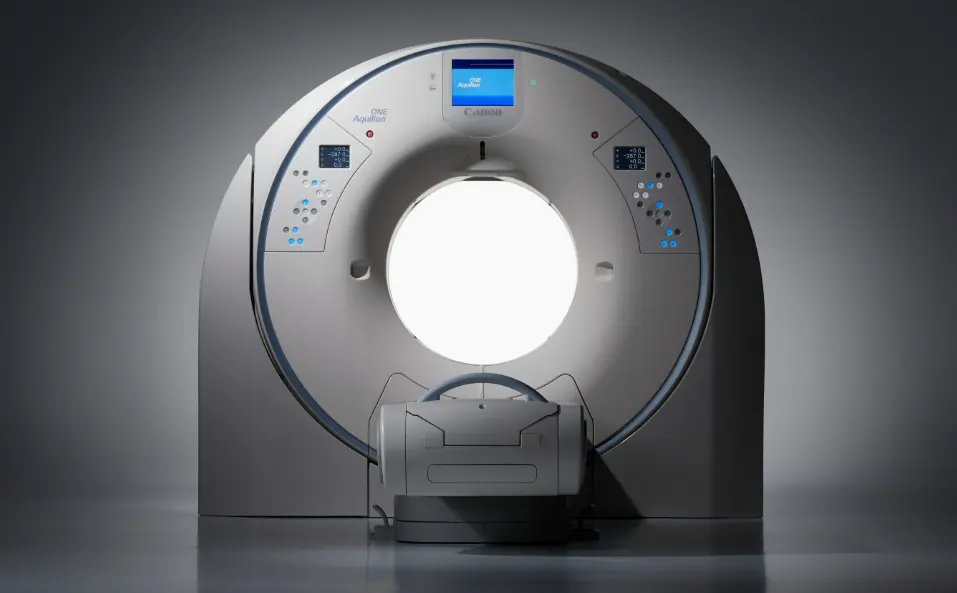
Medical imaging systems are advanced technologies designed to create visual representations of the internal structures and functions of the body, aiding in the diagnosis, treatment, and monitoring of diseases. These systems encompass a variety of modalities, including X-ray radiography for detecting bone fractures and abnormalities; computed tomography (CT) scans for detailed cross-sectional images of organs and tissues; magnetic resonance imaging (MRI) for high-resolution views without ionizing radiation; ultrasound for real-time imaging of soft tissues and fetal development; and nuclear medicine techniques like positron emission tomography (PET) for assessing metabolic activity. By converting energy forms such as X-rays, sound waves, or magnetic fields into digital images, these systems enable healthcare professionals to identify conditions like tumors, infections, or cardiovascular issues with precision. The integration of artificial intelligence and digital enhancements has further improved image quality, reduced radiation exposure, and accelerated diagnostic processes, making medical imaging indispensable in modern healthcare.
Table of Contents
- Part 1: Create An Amazing Medical Imaging Systems Quiz Using AI Instantly in OnlineExamMaker
- Part 2: 20 Medical Imaging Systems Quiz Questions & Answers
- Part 3: Save Time and Energy: Generate Quiz Questions with AI Technology
Part 1: Create An Amazing Medical Imaging Systems Quiz Using AI Instantly in OnlineExamMaker
Nowadays more and more people create Medical Imaging Systems quizzes using AI technologies, OnlineExamMaker a powerful AI-based quiz making tool that can save you time and efforts. The software makes it simple to design and launch interactive quizzes, assessments, and surveys. With the Question Editor, you can create multiple-choice, open-ended, matching, sequencing and many other types of questions for your tests, exams and inventories. You are allowed to enhance quizzes with multimedia elements like images, audio, and video to make them more interactive and visually appealing.
Recommended features for you:
● Prevent cheating by randomizing questions or changing the order of questions, so learners don’t get the same set of questions each time.
● Automatically generates detailed reports—individual scores, question report, and group performance.
● Simply copy a few lines of codes, and add them to a web page, you can present your online quiz in your website, blog, or landing page.
● Offers question analysis to evaluate question performance and reliability, helping instructors optimize their training plan.
Automatically generate questions using AI
Part 2: 20 Medical Imaging Systems Quiz Questions & Answers
or
1. What is the primary principle of X-ray imaging?
A) Use of magnetic fields
B) Absorption of ionizing radiation
C) Reflection of sound waves
D) Emission of gamma rays
Answer: B
Explanation: X-ray imaging relies on the differential absorption of X-rays by body tissues, where denser structures like bones absorb more radiation, creating contrast in the image.
2. Which imaging modality uses magnetic fields and radio waves to produce images?
A) Ultrasound
B) CT scan
C) MRI
D) PET scan
Answer: C
Explanation: MRI uses strong magnetic fields and radio frequency pulses to align and excite hydrogen atoms in the body, generating detailed images based on the signals emitted.
3. What is the main advantage of computed tomography (CT) over traditional X-rays?
A) Lower radiation exposure
B) Ability to produce cross-sectional images
C) Use of non-ionizing radiation
D) Real-time imaging capability
Answer: B
Explanation: CT scans provide detailed cross-sectional slices of the body, allowing for better visualization of internal structures compared to the 2D images from traditional X-rays.
4. In ultrasound imaging, what does the Doppler effect measure?
A) Tissue density
B) Blood flow velocity
C) Radiation levels
D) Bone structure
Answer: B
Explanation: The Doppler effect in ultrasound measures the speed and direction of blood flow by detecting changes in frequency of sound waves reflected from moving red blood cells.
5. Which medical imaging system is most commonly used for detecting bone fractures?
A) MRI
B) PET
C) X-ray
D) Ultrasound
Answer: C
Explanation: X-ray is preferred for bone fractures due to its ability to quickly show differences in density between bones and soft tissues with minimal equipment.
6. What is a key limitation of MRI scans?
A) High radiation exposure
B) Contraindicated for patients with metal implants
C) Poor resolution for soft tissues
D) Inability to image in real-time
Answer: B
Explanation: MRI uses strong magnetic fields, which can interact with metal objects in the body, making it unsafe for patients with pacemakers or certain implants.
7. Which imaging technique involves the injection of a radioactive tracer to detect metabolic activity?
A) CT scan
B) Ultrasound
C) PET scan
D) X-ray
Answer: C
Explanation: PET scans use radioactive tracers that emit positrons, allowing visualization of metabolic processes, such as in cancer detection, by tracking tracer uptake.
8. What type of radiation is used in a CT scan?
A) Non-ionizing ultrasound waves
B) Ionizing X-rays
C) Magnetic resonance waves
D) Gamma rays
Answer: B
Explanation: CT scans utilize ionizing X-rays to create detailed images, which requires careful consideration of radiation dose to minimize patient risk.
9. Why is contrast medium sometimes used in medical imaging?
A) To block sound waves
B) To enhance visibility of specific structures
C) To reduce image resolution
D) To increase radiation exposure
Answer: B
Explanation: Contrast agents improve the contrast of images by highlighting blood vessels, organs, or tissues, making abnormalities easier to detect in modalities like CT or MRI.
10. Which imaging system is best for evaluating soft tissue injuries, such as ligament tears?
A) X-ray
B) MRI
C) PET scan
D) Ultrasound
Answer: B
Explanation: MRI excels at imaging soft tissues due to its high contrast resolution, providing clear details of muscles, ligaments, and tendons without using ionizing radiation.
11. What is the primary use of fluoroscopy in medical imaging?
A) Static bone imaging
B) Real-time moving images
C) Brain metabolism analysis
D) Fetal development monitoring
Answer: B
Explanation: Fluoroscopy provides continuous X-ray images in real-time, commonly used for procedures like guiding catheters or monitoring joint movements.
12. In digital radiography, what replaces traditional film?
A) Magnetic tape
B) Digital detectors
C) Ultrasound gel
D) Radioactive isotopes
Answer: B
Explanation: Digital radiography uses electronic detectors to capture and store images digitally, allowing for immediate viewing and manipulation without chemical processing.
13. Which factor primarily affects the resolution in ultrasound imaging?
A) Patient’s age
B) Frequency of the transducer
C) Room temperature
D) Type of contrast agent
Answer: B
Explanation: Higher frequency transducers in ultrasound provide better resolution but penetrate less deeply, making frequency a key determinant of image quality.
14. What is a common artifact in MRI images caused by patient movement?
A) Ghosting
B) Streaking
C) Ring artifacts
D) Shadowing
Answer: A
Explanation: Patient movement during MRI can cause ghosting artifacts, where blurred or repeated images appear, degrading the overall quality and diagnostic accuracy.
15. Which imaging modality is non-invasive and does not use radiation?
A) CT scan
B) X-ray
C) Ultrasound
D) PET scan
Answer: C
Explanation: Ultrasound uses sound waves and is completely non-invasive, making it safe for repeated use, such as in pregnancy monitoring.
16. How does PET imaging differ from CT imaging?
A) PET focuses on anatomy, while CT focuses on function
B) PET assesses metabolic activity, while CT provides structural details
C) PET uses sound waves, while CT uses X-rays
D) PET is faster than CT
Answer: B
Explanation: PET imaging evaluates physiological processes like glucose metabolism, whereas CT provides high-resolution anatomical images of the body’s structures.
17. What is the role of a collimator in X-ray systems?
A) To amplify the X-ray beam
B) To narrow and direct the X-ray beam
C) To detect the X-ray signals
D) To store digital images
Answer: B
Explanation: A collimator restricts the X-ray beam to a specific area, reducing scatter radiation and improving image quality by focusing on the region of interest.
18. Which imaging technique is most useful for detecting breast cancer?
A) MRI
B) Mammography
C) Ultrasound
D) PET scan
Answer: B
Explanation: Mammography, a specialized X-ray technique, is specifically designed for breast imaging and is effective in detecting early signs of breast cancer through microcalcifications.
19. What precaution is essential when performing a CT scan on a pediatric patient?
A) Increasing radiation dose for better images
B) Minimizing radiation exposure due to higher sensitivity
C) Using magnetic fields instead
D) Avoiding contrast agents
Answer: B
Explanation: Children are more sensitive to radiation, so CT protocols must use the lowest possible dose to reduce the risk of long-term effects while still obtaining necessary images.
20. In nuclear medicine imaging, what is the purpose of a gamma camera?
A) To generate X-rays
B) To detect gamma rays emitted from radiotracers
C) To produce magnetic fields
D) To amplify sound waves
Answer: B
Explanation: A gamma camera in nuclear medicine detects gamma rays from radioactive tracers in the body, creating images that show organ function and tracer distribution.
or
Part 3: Save Time and Energy: Generate Quiz Questions with AI Technology
Automatically generate questions using AI