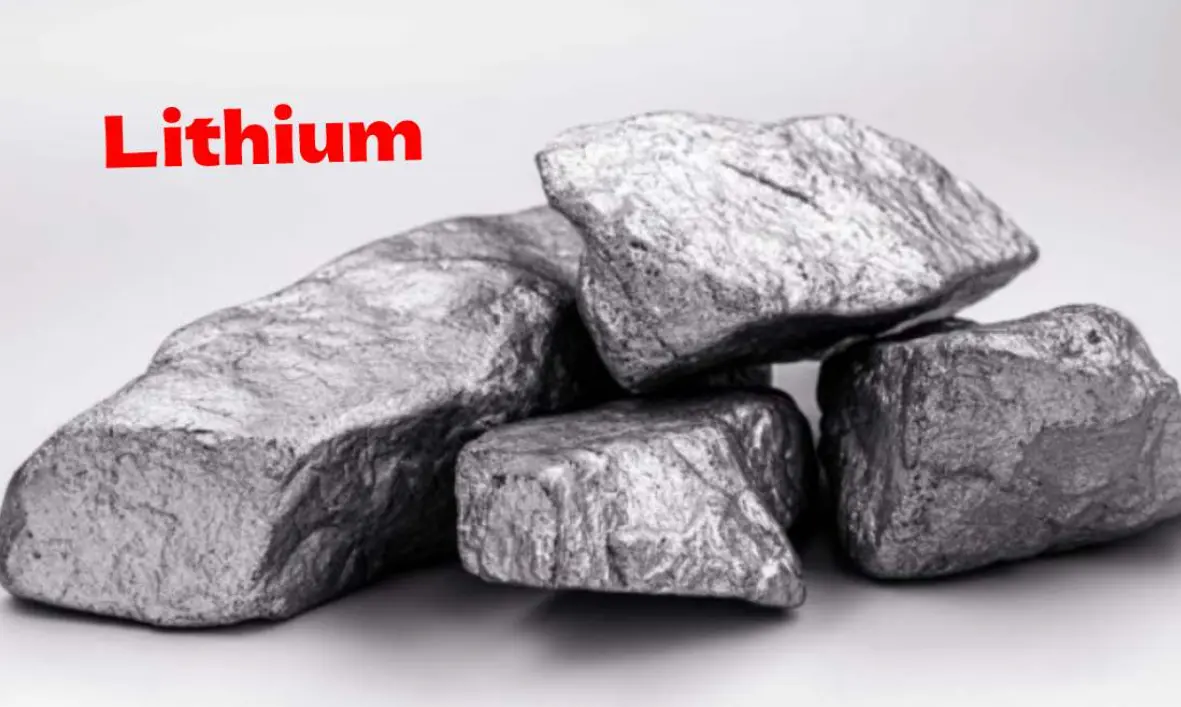
Lithium is a soft, silvery-white alkali metal with the atomic number 3 and symbol Li on the periodic table. It is the lightest solid element and the least dense metal, making it highly reactive with water and air. Discovered in 1817 by Johan August Arfwedson, lithium is primarily extracted from brine pools and hard rock mines, with major reserves in countries like Chile, Australia, and Argentina.
Chemically, lithium forms compounds used in various industries. It has a low electrochemical potential, which makes it ideal for rechargeable batteries, powering everything from smartphones and laptops to electric vehicles. Lithium-ion batteries dominate the market due to their high energy density, long cycle life, and lightweight properties.
Beyond batteries, lithium is used in ceramics, glass production, and as a flux in welding. In medicine, lithium carbonate treats bipolar disorder by stabilizing mood. It also appears in alloys for aircraft parts and in nuclear reactors for tritium production.
The global demand for lithium has surged with the rise of renewable energy and electric mobility, positioning it as a critical resource in the transition to sustainable technologies. However, mining and processing raise environmental concerns, including water usage and potential ecosystem disruption. Efforts are underway to develop more sustainable extraction methods and recycling programs to meet future needs.
Table of Contents
- Part 1: OnlineExamMaker – Generate and Share Lithium Quiz with AI Automatically
- Part 2: 20 Lithium Quiz Questions & Answers
- Part 3: Automatically Generate Quiz Questions Using AI Question Generator
Part 1: OnlineExamMaker – Generate and Share Lithium Quiz with AI Automatically
The quickest way to assess the Lithium knowledge of candidates is using an AI assessment platform like OnlineExamMaker. With OnlineExamMaker AI Question Generator, you are able to input content—like text, documents, or topics—and then automatically generate questions in various formats (multiple-choice, true/false, short answer). Its AI Exam Grader can automatically grade the exam and generate insightful reports after your candidate submit the assessment.
What you will like:
● Create a question pool through the question bank and specify how many questions you want to be randomly selected among these questions.
● Allow the quiz taker to answer by uploading video or a Word document, adding an image, and recording an audio file.
● Display the feedback for correct or incorrect answers instantly after a question is answered.
● Create a lead generation form to collect an exam taker’s information, such as email, mobile phone, work title, company profile and so on.
Automatically generate questions using AI
Part 2: 20 Lithium Quiz Questions & Answers
or
1. What is the atomic number of lithium?
A) 1
B) 2
C) 3
D) 4
Answer: C) 3
Explanation: Lithium is the third element in the periodic table, so its atomic number is 3.
2. Which group in the periodic table does lithium belong to?
A) Group 1
B) Group 2
C) Group 17
D) Group 18
Answer: A) Group 1
Explanation: Lithium is an alkali metal, which places it in Group 1 of the periodic table.
3. What is the most common oxidation state of lithium?
A) +1
B) +2
C) -1
D) 0
Answer: A) +1
Explanation: Lithium typically loses one electron to form a +1 ion due to its single valence electron.
4. Lithium is primarily extracted from which source?
A) Seawater
B) Brine pools
C) Granite rocks
D) Coal deposits
Answer: B) Brine pools
Explanation: Lithium is commonly extracted from brine pools, such as those in salt flats, through evaporation processes.
5. What is the electron configuration of a lithium atom?
A) 1s² 2s¹
B) 1s² 2s²
C) 1s¹ 2s²
D) 1s² 2p¹
Answer: A) 1s² 2s¹
Explanation: Lithium has three electrons, with the configuration 1s² 2s¹, filling the first energy level completely and adding one to the second.
6. Which property makes lithium suitable for use in batteries?
A) High density
B) Low electronegativity
C) Light weight and high electrochemical potential
D) High melting point
Answer: C) Light weight and high electrochemical potential
Explanation: Lithium’s low density and high electrochemical potential allow it to store and release energy efficiently in batteries.
7. What is the melting point of lithium in degrees Celsius?
A) 180.5°C
B) 660°C
C) 98°C
D) 1538°C
Answer: A) 180.5°C
Explanation: Lithium has a relatively low melting point of 180.5°C compared to other metals, making it useful in various applications.
8. Lithium reacts with water to produce which gas?
A) Hydrogen
B) Oxygen
C) Carbon dioxide
D) Nitrogen
Answer: A) Hydrogen
Explanation: Lithium reacts with water to form lithium hydroxide and hydrogen gas, a characteristic reaction of alkali metals.
9. Who is credited with the discovery of lithium?
A) Humphry Davy
B) Johan August Arfwedson
C) Marie Curie
D) Dmitri Mendeleev
Answer: B) Johan August Arfwedson
Explanation: Johan August Arfwedson discovered lithium in 1817 while analyzing petalite, a mineral.
10. What is the primary use of lithium in medicine?
A) Treating bipolar disorder
B) Relieving pain
C) Fighting infections
D) Lowering blood pressure
Answer: A) Treating bipolar disorder
Explanation: Lithium is commonly prescribed as a mood stabilizer for treating bipolar disorder and manic episodes.
11. Which isotope of lithium is most abundant in nature?
A) Lithium-6
B) Lithium-7
C) Lithium-5
D) Lithium-8
Answer: B) Lithium-7
Explanation: Lithium-7 makes up about 92.5% of natural lithium, while Lithium-6 is less common.
12. Lithium forms compounds primarily with which type of bonding?
A) Ionic
B) Covalent
C) Metallic
D) Hydrogen
Answer: A) Ionic
Explanation: As an alkali metal, lithium tends to form ionic bonds by losing its valence electron to non-metals.
13. What color flame does lithium produce when burned?
A) Crimson red
B) Yellow
C) Green
D) Blue
Answer: A) Crimson red
Explanation: Lithium imparts a crimson red color to flames due to its specific emission spectrum.
14. In which year was lithium first isolated as a pure metal?
A) 1817
B) 1821
C) 1898
D) 1900
Answer: B) 1821
Explanation: William Thomas Brande isolated lithium metal in 1821 through electrolysis.
15. What is the density of lithium compared to water?
A) Less than water
B) Equal to water
C) Greater than water
D) Twice that of water
Answer: A) Less than water
Explanation: Lithium has a density of about 0.534 g/cm³, which is less than water’s 1 g/cm³, making it one of the lightest metals.
16. Lithium is used in the production of which alloy?
A) Aluminum-lithium alloys
B) Steel alloys
C) Copper alloys
D) Gold alloys
Answer: A) Aluminum-lithium alloys
Explanation: Lithium is added to aluminum to create lighter, stronger alloys for aerospace applications.
17. What is the chemical formula for lithium carbonate?
A) Li2CO3
B) LiCO3
C) LiHCO3
D) Li2O
Answer: A) Li2CO3
Explanation: Lithium carbonate is represented as Li2CO3, commonly used in ceramics and medicine.
18. How does lithium compare to other alkali metals in terms of reactivity?
A) Less reactive than sodium
B) More reactive than potassium
C) Equally reactive as rubidium
D) The most reactive
Answer: A) Less reactive than sodium
Explanation: Lithium is the least reactive among the alkali metals due to its small size and higher ionization energy.
19. What role does lithium play in nuclear fusion?
A) It is used as a fuel in some fusion reactions
B) It acts as a coolant
C) It stabilizes the reactor
D) It produces neutrons
Answer: A) It is used as a fuel in some fusion reactions
Explanation: Lithium is involved in deuterium-tritium fusion as a potential source of tritium through neutron absorption.
20. Which environmental concern is associated with lithium mining?
A) Water pollution
B) Air pollution
C) Soil erosion
D) Noise pollution
Answer: A) Water pollution
Explanation: Lithium mining, especially from brine, can lead to water depletion and contamination of local water sources.
or
Part 3: Automatically generate quiz questions using OnlineExamMaker AI Question Generator
Automatically generate questions using AI