Lens grinding is a precision manufacturing process used to shape optical lenses from raw glass or plastic blanks. It involves several key steps:
– Material Preparation: Selecting high-quality glass or polymer blanks, which are inspected for defects and cut to approximate size.
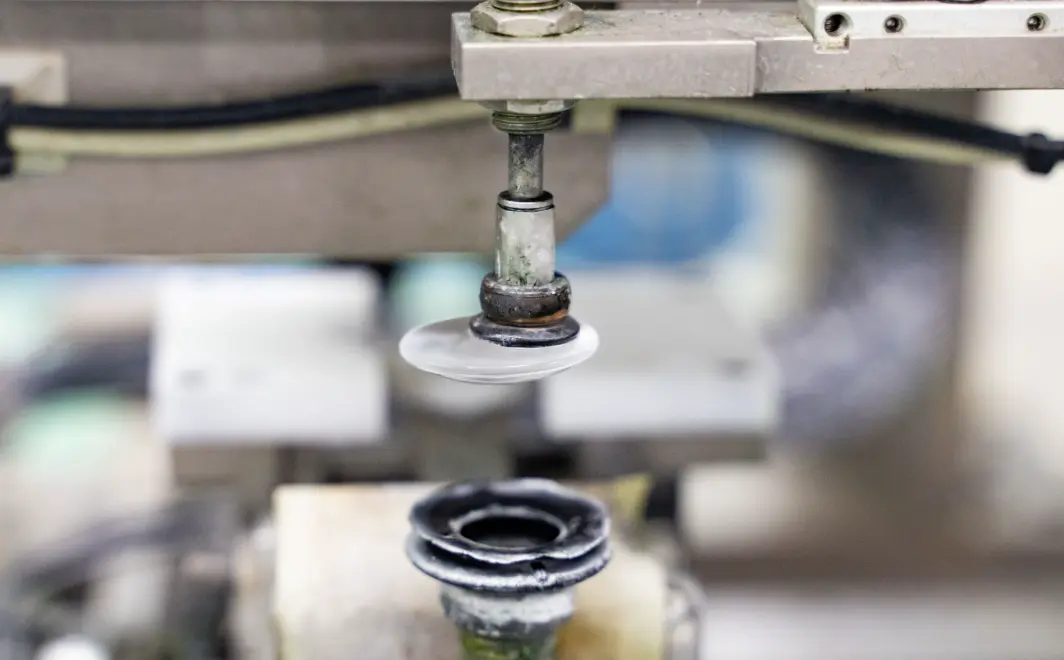
– Coarse Grinding: Using abrasive tools like bonded diamonds or silicon carbide to remove excess material and achieve the basic curvature. This step employs a grinding machine that rotates the blank against a tool, guided by templates or computer numerical control (CNC) for accuracy.
– Fine Grinding: Polishing the surface with finer abrasives to smooth out imperfections from coarse grinding, ensuring the lens approaches its final shape and optical quality.
– Polishing: Applying a polishing compound, such as cerium oxide, on a lap to refine the surface to optical standards, reducing surface roughness and enhancing light transmission.
– Centering and Edging: Aligning the optical center and cutting the lens to the required diameter and shape for mounting in frames or devices.
This process is essential for producing lenses used in eyeglasses, cameras, microscopes, telescopes, and laser systems. Historical advancements, such as those by Antonie van Leeuwenhoek in the 17th century, revolutionized microscopy through manual grinding techniques. Today, automated CNC machines and advanced materials like polycarbonate improve efficiency and precision, minimizing errors like aberrations or scratches. Quality control, including interferometry, ensures lenses meet specifications for focal length, thickness, and surface flatness.
Table of Contents
- Part 1: OnlineExamMaker AI Quiz Generator – The Easiest Way to Make Quizzes Online
- Part 2: 20 Lens Grinding Quiz Questions & Answers
- Part 3: OnlineExamMaker AI Question Generator: Generate Questions for Any Topic
Part 1: OnlineExamMaker AI Quiz Generator – The Easiest Way to Make Quizzes Online
When it comes to ease of creating a Lens Grinding skills assessment, OnlineExamMaker is one of the best AI-powered quiz making software for your institutions or businesses. With its AI Question Generator, just upload a document or input keywords about your assessment topic, you can generate high-quality quiz questions on any topic, difficulty level, and format.
What you will like:
● AI Question Generator to help you save time in creating quiz questions automatically.
● Share your online exam with audiences on social platforms like Facebook, Twitter, Reddit and more.
● Display the feedback for correct or incorrect answers instantly after a question is answered.
● Create a lead generation form to collect an exam taker’s information, such as email, mobile phone, work title, company profile and so on.
Automatically generate questions using AI
Part 2: 20 Lens Grinding Quiz Questions & Answers
or
1. Question: Who is credited with significant advancements in lens grinding for microscopes?
Options:
A. Galileo Galilei
B. Antonie van Leeuwenhoek
C. Isaac Newton
D. Johannes Kepler
Answer: B
Explanation: Antonie van Leeuwenhoek refined lens grinding techniques to create high-quality microscope lenses, allowing for detailed observations of microorganisms.
2. Question: What is the primary purpose of the grinding stage in lens manufacturing?
Options:
A. To polish the surface
B. To shape the lens to the desired curvature
C. To add coatings for protection
D. To test the lens for aberrations
Answer: B
Explanation: The grinding stage removes material to achieve the precise curvature needed for the lens’s optical properties.
3. Question: Which abrasive material is commonly used in the initial grinding of glass lenses?
Options:
A. Silicon carbide
B. Diamond paste
C. Aluminum oxide
D. Cerium oxide
Answer: A
Explanation: Silicon carbide is a hard abrasive used in the rough grinding phase to efficiently shape the lens blank.
4. Question: In lens grinding, what does “spherical aberration” refer to?
Options:
A. Uneven light focusing due to lens shape
B. Cracks in the lens material
C. Incorrect lens thickness
D. Dust on the lens surface
Answer: A
Explanation: Spherical aberration occurs when light rays passing through the edges of a spherical lens focus at a different point than those through the center, affecting image quality.
5. Question: What tool is typically used to hold the lens blank during grinding?
Options:
A. Polishing wheel
B. Blocking tool
C. Centering gauge
D. Abrasive pad
Answer: B
Explanation: A blocking tool secures the lens blank to the grinding machine, ensuring stability and precision during the shaping process.
6. Question: Which type of lens grinding produces a concave surface?
Options:
A. Convex grinding
B. Plano grinding
C. Meniscus grinding
D. Aspheric grinding
Answer: A
Explanation: Convex grinding can be adapted to create concave surfaces by reversing the grinding direction, commonly used for diverging lenses.
7. Question: What is the role of coolant in the lens grinding process?
Options:
A. To speed up grinding
B. To prevent overheating and remove debris
C. To add color to the lens
D. To measure lens curvature
Answer: B
Explanation: Coolant lubricates the grinding surface, dissipates heat, and washes away abrasive particles to maintain accuracy and prevent damage.
8. Question: In historical lens grinding, what material was often used for early telescope lenses?
Options:
A. Plastic
B. Glass
C. Quartz
D. Acrylic
Answer: B
Explanation: Glass was the primary material for early telescope lenses due to its optical clarity and workability in grinding processes.
9. Question: What follows the grinding stage in lens production?
Options:
A. Final assembly
B. Polishing
C. Coating application
D. Quality testing
Answer: B
Explanation: After grinding shapes the lens, polishing smooths the surface to reduce scratches and improve light transmission.
10. Question: Which factor most affects the precision of lens grinding?
Options:
A. Room temperature
B. Grinding wheel speed
C. Lens color
D. Worker’s height
Answer: B
Explanation: The speed of the grinding wheel influences the accuracy of the lens shape, as it controls the rate of material removal.
11. Question: What is a common error in manual lens grinding?
Options:
A. Over-polishing
B. Asymmetric curvature
C. Excessive weight
D. Lens discoloration
Answer: B
Explanation: Manual grinding can result in asymmetric curvature if the tool pressure is uneven, leading to optical distortions.
12. Question: In modern lens grinding, what technology enhances automation?
Options:
A. Computer numerical control (CNC)
B. Hand cranks
C. Steam engines
D. Manual lathes
Answer: A
Explanation: CNC technology allows for precise, automated control of grinding parameters, improving consistency and efficiency.
13. Question: What type of lens grinding is used for eyeglasses to correct nearsightedness?
Options:
A. Convex
B. Concave
C. Flat
D. Cylindrical
Answer: B
Explanation: Concave grinding creates lenses that diverge light, helping to correct myopia by focusing images on the retina.
14. Question: How does the grit size of abrasives affect lens grinding?
Options:
A. It determines the lens color
B. Finer grits produce smoother surfaces
C. Coarser grits slow down the process
D. It has no effect
Answer: B
Explanation: Using finer grit abrasives in later stages results in a smoother lens surface, reducing optical imperfections.
15. Question: What safety measure is essential during lens grinding?
Options:
A. Wearing sunglasses
B. Using eye protection
C. Listening to music
D. Standing far away
Answer: B
Explanation: Eye protection shields against flying debris and dust particles generated during the grinding process.
16. Question: Which mathematical concept is key in designing lens grinding curves?
Options:
A. Pythagorean theorem
B. Radius of curvature
C. Pi constant
D. Algebra equations
Answer: B
Explanation: The radius of curvature determines the lens’s focal length and is calculated during the grinding design phase.
17. Question: What material innovation improved lens grinding in the 20th century?
Options:
A. Wood lenses
B. Plastic polymers
C. Metal alloys
D. Paper molds
Answer: B
Explanation: Plastic polymers allowed for lighter, more flexible lenses that could be ground with greater precision than traditional glass.
18. Question: In lens grinding, what is “edging”?
Options:
A. Shaping the lens edges for fitting
B. Polishing the center
C. Adding tints
D. Testing for clarity
Answer: A
Explanation: Edging involves grinding the outer edges of the lens to match frame specifications, ensuring a proper fit.
19. Question: How does double grinding improve lens quality?
Options:
A. By adding weight
B. By reducing surface irregularities
C. By changing the lens shape entirely
D. By increasing cost
Answer: B
Explanation: Double grinding uses two different abrasive processes to minimize surface irregularities and achieve higher optical precision.
20. Question: What is the final step before a ground lens is deemed complete?
Options:
A. Grinding again
B. Quality inspection
C. Packaging
D. Shipping
Answer: B
Explanation: Quality inspection verifies the lens’s optical properties, such as curvature and clarity, after grinding and polishing.
or
Part 3: OnlineExamMaker AI Question Generator: Generate Questions for Any Topic
Automatically generate questions using AI