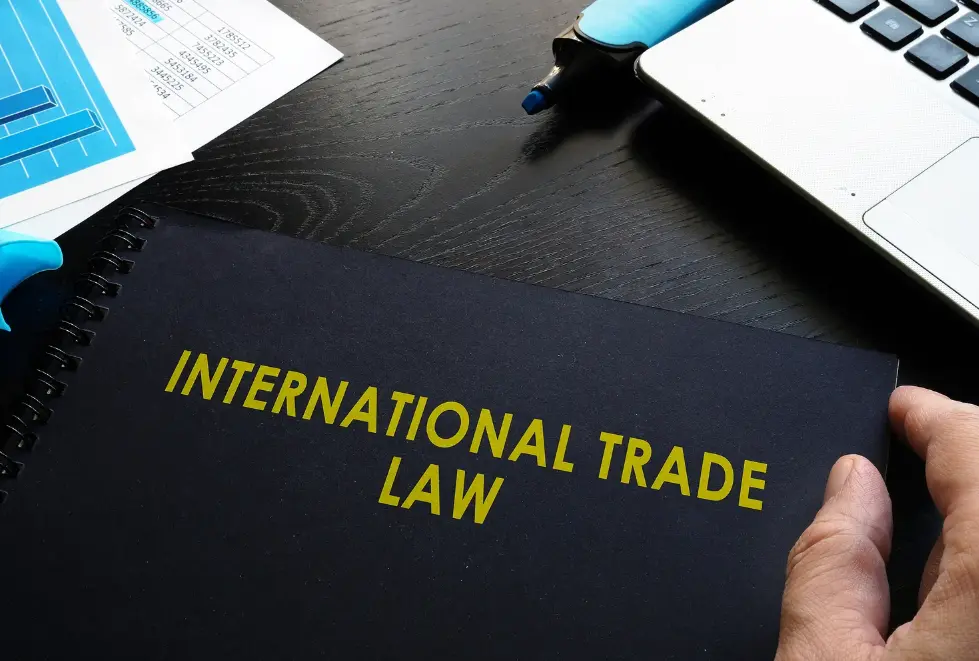
International Trade Law governs the rules and regulations facilitating cross-border exchanges of goods, services, and intellectual property between nations. It encompasses a framework of treaties, agreements, and customary practices designed to promote fair competition, reduce barriers, and resolve disputes.
Key Principles:
– Most-Favored-Nation (MFN) Treatment: Requires countries to extend the same trade advantages to all trading partners that they offer to any other nation, ensuring non-discrimination.
– National Treatment: Obliges countries to treat imported goods and services no less favorably than domestic ones once they have entered the market.
– Tariffs and Non-Tariff Barriers: Regulates customs duties and other restrictions like quotas or subsidies to prevent unfair trade practices.
– Prohibition of Dumping and Subsidies: Aims to curb practices where goods are sold below fair value or supported by government aid, which can harm domestic industries.
Major Organizations and Agreements:
– World Trade Organization (WTO): The primary global body overseeing trade rules, administering agreements like the General Agreement on Tariffs and Trade (GATT), and handling disputes through its Dispute Settlement Body.
– Regional Trade Agreements (RTAs): Examples include the European Union (EU) single market, the United States-Mexico-Canada Agreement (USMCA), and the Comprehensive and Progressive Agreement for Trans-Pacific Partnership (CPTPP), which aim to liberalize trade among specific regions.
– Other Key Treaties: The Agreement on Trade-Related Aspects of Intellectual Property Rights (TRIPS) protects IP in trade, while the Paris Agreement integrates environmental considerations into trade policies.
Dispute Resolution Mechanisms:
– Disputes are typically resolved through negotiation, mediation, or formal panels under the WTO. If unresolved, cases may escalate to binding arbitration, ensuring enforcement of trade rules.
Challenges and Emerging Issues:
– Digital Trade: Addresses data flows, e-commerce, and cybersecurity in an increasingly digital economy.
– Sustainability and Fair Trade: Incorporates environmental standards, labor rights, and climate change considerations, as seen in agreements promoting green practices.
– Global Supply Chains: Manages disruptions from events like pandemics or geopolitical tensions, emphasizing resilience and diversification.
This body of law evolves with global economic shifts, balancing liberalization with protectionism to foster equitable international commerce.
Table of Contents
- Part 1: OnlineExamMaker – Generate and Share International Trade Law Quiz with AI Automatically
- Part 2: 20 International Trade Law Quiz Questions & Answers
- Part 3: OnlineExamMaker AI Question Generator: Generate Questions for Any Topic
Part 1: OnlineExamMaker – Generate and Share International Trade Law Quiz with AI Automatically
The quickest way to assess the International Trade Law knowledge of candidates is using an AI assessment platform like OnlineExamMaker. With OnlineExamMaker AI Question Generator, you are able to input content—like text, documents, or topics—and then automatically generate questions in various formats (multiple-choice, true/false, short answer). Its AI Exam Grader can automatically grade the exam and generate insightful reports after your candidate submit the assessment.
What you will like:
● Create a question pool through the question bank and specify how many questions you want to be randomly selected among these questions.
● Allow the quiz taker to answer by uploading video or a Word document, adding an image, and recording an audio file.
● Display the feedback for correct or incorrect answers instantly after a question is answered.
● Create a lead generation form to collect an exam taker’s information, such as email, mobile phone, work title, company profile and so on.
Automatically generate questions using AI
Part 2: 20 International Trade Law Quiz Questions & Answers
or
1. Question: What is the primary function of the World Trade Organization (WTO)?
A) To regulate monetary policy globally
B) To facilitate international trade negotiations and resolve disputes
C) To enforce environmental standards worldwide
D) To manage global immigration policies
Answer: B
Explanation: The WTO oversees the rules of international trade, provides a forum for negotiations, and settles trade disputes among member countries.
2. Question: Under the General Agreement on Tariffs and Trade (GATT), what does the Most-Favored-Nation (MFN) principle require?
A) Countries must treat all trading partners equally in terms of tariffs and trade conditions
B) Countries can impose higher tariffs on favored nations
C) Only bilateral trade agreements are allowed
D) Subsidies must be provided to all nations equally
Answer: A
Explanation: The MFN principle ensures that any favorable treatment given to one country must be extended to all other WTO members, promoting non-discrimination.
3. Question: Which WTO agreement specifically deals with trade in goods?
A) TRIPS Agreement
B) GATS Agreement
C) GATT 1994
D) Agreement on Agriculture
Answer: C
Explanation: GATT 1994 is the core agreement governing trade in goods, covering aspects like tariffs, quotas, and subsidies.
4. Question: What is the purpose of anti-dumping measures in international trade law?
A) To encourage imports from all countries
B) To prevent the sale of goods below their normal value, which could harm domestic industries
C) To impose taxes on all exported goods
D) To promote subsidies for foreign producers
Answer: B
Explanation: Anti-dumping measures protect domestic industries from unfair competition when imported goods are sold at prices lower than their home market value.
5. Question: Under the Agreement on Trade-Related Aspects of Intellectual Property Rights (TRIPS), what must member countries provide?
A) Unlimited access to patents for all nations
B) Minimum standards for protecting intellectual property rights
C) Free licensing of trademarks
D) Bans on all intellectual property exports
Answer: B
Explanation: TRIPS sets global minimum standards for the protection of copyrights, patents, and trademarks to ensure fair trade in intellectual property.
6. Question: In WTO dispute settlement, what is the role of the Dispute Settlement Body (DSB)?
A) To impose tariffs on the losing party
B) To oversee the entire dispute resolution process and adopt panel reports
C) To negotiate new trade agreements
D) To provide financial aid to affected countries
Answer: B
Explanation: The DSB authorizes the establishment of panels, adopts reports, and monitors the implementation of rulings in trade disputes.
7. Question: What does the principle of national treatment in GATT require?
A) Imported goods must be treated less favorably than domestic goods
B) Imported goods must be treated no less favorably than domestic goods
C) All goods must be subject to the same export taxes
D) Domestic goods must be banned in favor of imports
Answer: B
Explanation: National treatment ensures that once goods enter a market, they are treated the same as domestically produced goods, preventing discrimination.
8. Question: Which agreement addresses subsidies and countervailing measures in international trade?
A) Agreement on Agriculture
B) Agreement on Subsidies and Countervailing Measures
C) GATS
D) TRIMS
Answer: B
Explanation: This agreement regulates subsidies that distort trade and allows countervailing duties to offset subsidized imports causing injury.
9. Question: What is a key feature of the General Agreement on Trade in Services (GATS)?
A) It only covers trade in physical goods
B) It provides a framework for rules on international trade in services
C) It prohibits all service sector investments
D) It focuses solely on agricultural services
Answer: B
Explanation: GATS establishes rules for trade in services, including commitments on market access and national treatment for sectors like banking and telecommunications.
10. Question: Under WTO rules, what is a tariff binding?
A) A maximum limit on export quotas
B) A commitment not to increase a tariff beyond a specified level
C) A ban on all imported goods
D) A subsidy for domestic producers
Answer: B
Explanation: Tariff bindings are commitments by WTO members to keep tariffs at or below agreed levels, providing predictability in trade.
11. Question: What does the Agreement on Technical Barriers to Trade (TBT) aim to prevent?
A) Unnecessary obstacles to international trade caused by technical regulations
B) All forms of subsidies
C) Direct investments in foreign countries
D) Environmental protections
Answer: A
Explanation: The TBT Agreement ensures that technical regulations and standards are not applied in a way that creates unnecessary barriers to trade.
12. Question: In international trade law, what is the significance of the Doha Development Agenda?
A) It focuses on promoting tourism globally
B) It is a round of WTO negotiations aimed at liberalizing trade and addressing development issues
C) It deals exclusively with intellectual property
D) It enforces currency controls
Answer: B
Explanation: The Doha Round seeks to reduce trade barriers, particularly for developing countries, though it remains unresolved.
13. Question: What is the main objective of the Agreement on Agriculture?
A) To eliminate all agricultural trade
B) To establish rules on subsidies, market access, and export competition in agriculture
C) To promote only organic farming
D) To ban imports of all food products
Answer: B
Explanation: This agreement aims to reform trade in agriculture by reducing subsidies and tariffs to create a fairer global market.
14. Question: Under the WTO, what is a safeguard measure?
A) A permanent ban on imports
B) Temporary measures to protect a domestic industry from a sudden surge of imports
C) A subsidy for exporters
D) A free trade zone
Answer: B
Explanation: Safeguard measures allow countries to temporarily restrict imports to give domestic industries time to adjust, as per WTO rules.
15. Question: What does the Trade-Related Investment Measures (TRIMS) Agreement prohibit?
A) All foreign investments
B) Measures that discriminate against foreign investors or distort trade
C) Domestic production requirements
D) Export subsidies
Answer: B
Explanation: TRIMS bans investment measures that violate GATT principles, such as local content requirements that favor domestic products.
16. Question: In international trade disputes, what is the function of a WTO panel?
A) To negotiate new agreements
B) To examine evidence and issue reports on complaints
C) To impose fines directly
D) To handle appeals only
Answer: B
Explanation: A WTO panel investigates disputes and provides findings and recommendations to the DSB.
17. Question: What is the role of the Appellate Body in the WTO?
A) To hear initial complaints
B) To review appeals from panel reports
C) To enforce trade sanctions
D) To create new trade laws
Answer: B
Explanation: The Appellate Body reviews legal issues from panel reports, ensuring consistency in WTO dispute settlements.
18. Question: Under GATT Article XX, what exceptions are allowed?
A) Measures related to public morals, health, and environmental protection
B) Unlimited tariffs on all goods
C) Bans on all services trade
D) Subsidies for any industry
Answer: A
Explanation: Article XX permits measures that are necessary to protect public morals, human health, or the environment, as long as they do not arbitrarily discriminate.
19. Question: What is the primary goal of free trade agreements (FTAs) like NAFTA or the EU?
A) To increase tariffs among member countries
B) To eliminate trade barriers between participating countries
C) To restrict all foreign investments
D) To promote global isolation
Answer: B
Explanation: FTAs aim to reduce or eliminate tariffs, quotas, and other barriers to trade among member nations, fostering economic integration.
20. Question: How does the WTO address sanitary and phytosanitary (SPS) measures?
A) By banning all food safety regulations
B) By ensuring that SPS measures are based on scientific principles and do not unjustifiably restrict trade
C) By requiring uniform global standards without exceptions
D) By promoting unrestricted imports of agricultural products
Answer: B
Explanation: The SPS Agreement allows countries to set their own standards for food safety and animal/plant health but requires them to be scientifically justified and not trade-discriminatory.
or
Part 3: OnlineExamMaker AI Question Generator: Generate Questions for Any Topic
Automatically generate questions using AI