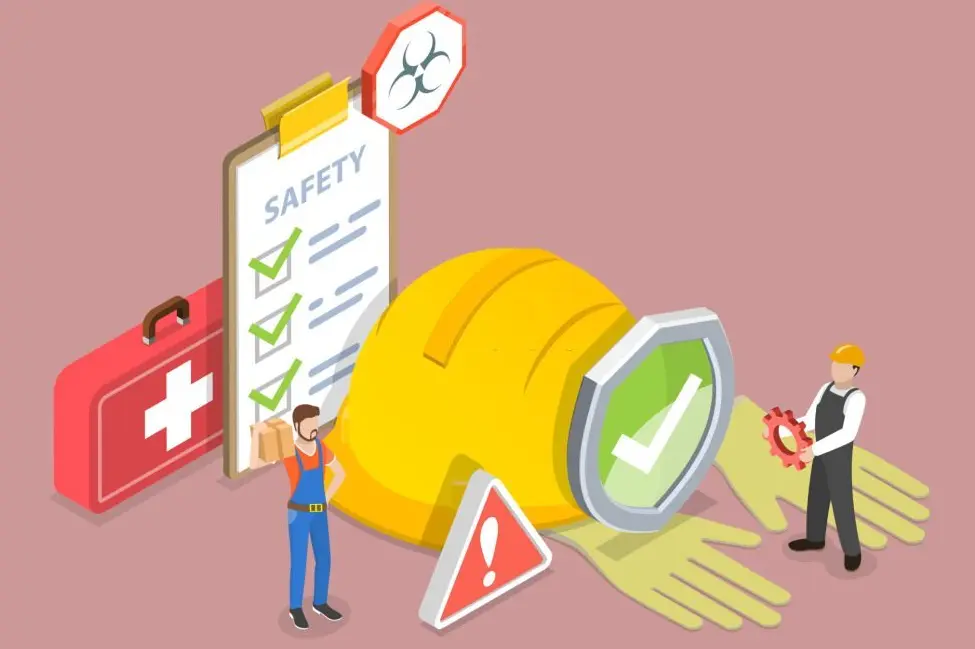
Industrial safety refers to the practices, protocols, and measures implemented to prevent accidents, injuries, and health risks in workplaces such as factories, construction sites, and manufacturing facilities. It encompasses identifying hazards, mitigating risks, and ensuring compliance with regulations to protect workers, equipment, and the environment.
#Key Components of Industrial Safety:
– Hazard Identification: Common hazards include chemical exposures, machinery-related accidents, electrical faults, falls from heights, and ergonomic strains. Regular risk assessments help pinpoint potential dangers in processes like welding, heavy lifting, or handling toxic substances.
– Regulatory Frameworks: Organizations must adhere to standards set by bodies like OSHA (Occupational Safety and Health Administration) in the U.S., ISO 45001 internationally, or equivalent local laws. These guidelines cover everything from personal protective equipment (PPE) to emergency response plans.
– Risk Mitigation Strategies: Effective measures include engineering controls (e.g., machine guards, ventilation systems), administrative controls (e.g., training programs, shift rotations), and PPE (e.g., helmets, gloves, respirators). Safety audits and incident investigations further reduce recurrence.
– Training and Culture: Workers should receive ongoing education on safe practices, emergency procedures, and hazard recognition. Fostering a safety culture involves leadership commitment, employee involvement, and regular drills to build awareness and accountability.
– Emerging Trends: With advancements in technology, industrial safety now incorporates automation, AI-driven monitoring, and IoT sensors for real-time hazard detection. Sustainability efforts also integrate safety with environmental protection, such as reducing chemical waste.
#Importance and Statistics:
Industrial safety is critical for minimizing workplace fatalities—globally, the ILO reports over 2.78 million annual work-related deaths, with many linked to industrial sectors. By prioritizing safety, companies can lower costs from accidents (e.g., medical expenses, lawsuits), improve productivity, and enhance employee morale.
In summary, a robust industrial safety program not only complies with legal requirements but also promotes a secure, efficient, and sustainable work environment for all stakeholders.
Table of Contents
- Part 1: OnlineExamMaker AI Quiz Maker – Make A Free Quiz in Minutes
- Part 2: 20 Industrial Safety Quiz Questions & Answers
- Part 3: Automatically Generate Quiz Questions Using AI Question Generator
Part 1: OnlineExamMaker AI Quiz Maker – Make A Free Quiz in Minutes
What’s the best way to create a Industrial Safety quiz online? OnlineExamMaker is the best AI quiz making software for you. No coding, and no design skills required. If you don’t have the time to create your online quiz from scratch, you are able to use OnlineExamMaker AI Question Generator to create question automatically, then add them into your online assessment. What is more, the platform leverages AI proctoring and AI grading features to streamline the process while ensuring exam integrity.
Key features of OnlineExamMaker:
● Create up to 10 question types, including multiple-choice, true/false, fill-in-the-blank, matching, short answer, and essay questions.
● Build and store questions in a centralized portal, tagged by categories and keywords for easy reuse and organization.
● Automatically scores multiple-choice, true/false, and even open-ended/audio responses using AI, reducing manual work.
● Create certificates with personalized company logo, certificate title, description, date, candidate’s name, marks and signature.
Automatically generate questions using AI
Part 2: 20 Industrial Safety Quiz Questions & Answers
or
1. Question: What is the primary purpose of Personal Protective Equipment (PPE) in an industrial setting?
Options:
A) To enhance worker productivity
B) To protect workers from hazards
C) To reduce operational costs
D) To improve workplace aesthetics
Answer: B) To protect workers from hazards
Explanation: PPE acts as a barrier against physical, chemical, electrical, and other workplace dangers, reducing the risk of injury or illness.
2. Question: Which of the following is the most common cause of industrial fires?
Options:
A) Electrical faults
B) Chemical spills
C) Poor housekeeping
D) Overloaded machinery
Answer: A) Electrical faults
Explanation: Electrical faults, such as short circuits or overloaded circuits, are a leading cause of fires due to heat buildup and potential ignition of nearby materials.
3. Question: What does the Lockout/Tagout (LOTO) procedure primarily aim to prevent?
Options:
A) Unauthorized machine access
B) Accidental startup of machinery
C) Noise pollution in the workplace
D) Chemical leaks from storage
Answer: B) Accidental startup of machinery
Explanation: LOTO ensures that machines are properly shut off and cannot be energized during maintenance, preventing unexpected activation that could cause injuries.
4. Question: In hazard communication, what is the purpose of a Safety Data Sheet (SDS)?
Options:
A) To list employee schedules
B) To provide details on chemical hazards and handling
C) To track inventory levels
D) To outline fire evacuation routes
Answer: B) To provide details on chemical hazards and handling
Explanation: SDS offers critical information on the properties, hazards, safe handling, and emergency measures for chemicals, helping workers mitigate risks.
5. Question: What is the minimum safe distance an employee should maintain from an unguarded edge to prevent falls?
Options:
A) 1 meter
B) 6 feet
C) 10 feet
D) 3 meters
Answer: B) 6 feet
Explanation: OSHA standards require a guardrail or fall protection when working at heights of 6 feet or more to prevent falls and serious injuries.
6. Question: Which type of fire extinguisher is suitable for electrical fires?
Options:
A) Class A
B) Class B
C) Class C
D) Class D
Answer: C) Class C
Explanation: Class C extinguishers are designed for fires involving energized electrical equipment, as they do not conduct electricity and can safely suppress the fire.
7. Question: What is the main risk associated with poor ergonomics in industrial work?
Options:
A) Increased production speed
B) Musculoskeletal disorders
C) Higher chemical exposure
D) Electrical shocks
Answer: B) Musculoskeletal disorders
Explanation: Poor ergonomics, such as repetitive motions or awkward postures, can lead to strains, sprains, and long-term conditions like carpal tunnel syndrome.
8. Question: Why is machine guarding important in industrial settings?
Options:
A) To reduce machine noise
B) To prevent access to moving parts
C) To increase machine speed
D) To improve aesthetic appeal
Answer: B) To prevent access to moving parts
Explanation: Guards protect workers from hazards like rotating parts, flying debris, or pinch points, minimizing the risk of amputations or other injuries.
9. Question: What should be the first action in the event of a chemical spill in an industrial area?
Options:
A) Clean it up immediately
B) Evacuate the area and alert supervisors
C) Ignore it if it’s a small spill
D) Continue working around it
Answer: B) Evacuate the area and alert supervisors
Explanation: Evacuating ensures safety from potential hazards like fumes or reactions, allowing trained personnel to handle the spill properly.
10. Question: Which gas is commonly monitored in confined spaces to prevent asphyxiation?
Options:
A) Oxygen
B) Carbon dioxide
C) Nitrogen
D) Hydrogen
Answer: A) Oxygen
Explanation: Low oxygen levels in confined spaces can lead to asphyxiation, so monitoring ensures levels are above 19.5% to maintain safe breathing conditions.
11. Question: What is the purpose of a Job Safety Analysis (JSA)?
Options:
A) To evaluate employee performance
B) To identify and control hazards in tasks
C) To schedule maintenance routines
D) To track material costs
Answer: B) To identify and control hazards in tasks
Explanation: JSA breaks down jobs into steps to pinpoint potential risks, allowing for the implementation of controls to prevent accidents.
12. Question: In electrical safety, what does “grounding” achieve?
Options:
A) Increases electrical current flow
B) Prevents electrical shocks by providing a safe path for current
C) Boosts equipment efficiency
D) Reduces lighting in the area
Answer: B) Prevents electrical shocks by providing a safe path for current
Explanation: Grounding directs excess electrical energy away from users, reducing the risk of shocks or fires from faulty wiring.
13. Question: Which personal protective equipment is essential for eye protection against flying particles?
Options:
A) Gloves
B) Safety goggles
C) Hard hats
D) Earplugs
Answer: B) Safety goggles
Explanation: Safety goggles shield the eyes from impacts, dust, and chemicals, preventing injuries like corneal abrasions in industrial environments.
14. Question: What is the key principle of the Hierarchy of Controls in industrial safety?
Options:
A) Elimination of hazards first, followed by other measures
B) Relying solely on personal protective equipment
C) Increasing worker training only
D) Ignoring administrative controls
Answer: A) Elimination of hazards first, followed by other measures
Explanation: The hierarchy prioritizes eliminating risks at the source before using less effective methods like PPE, ensuring comprehensive safety.
15. Question: Why are emergency eyewash stations required in areas with corrosive chemicals?
Options:
A) To clean tools
B) To flush chemicals from eyes immediately
C) To store cleaning supplies
D) To provide drinking water
Answer: B) To flush chemicals from eyes immediately
Explanation: Quick rinsing with eyewash stations can minimize damage from chemical splashes, preventing permanent eye injury.
16. Question: What does a confined space permit system ensure?
Options:
A) Proper lighting in the space
B) Safe entry and exit procedures
C) Regular cleaning schedules
D) Employee break times
Answer: B) Safe entry and exit procedures
Explanation: Permits verify that hazards like poor air quality are addressed before entry, reducing risks of accidents in confined areas.
17. Question: In forklift safety, what is the maximum safe load height for most operations?
Options:
A) Up to the operator’s eye level
B) No higher than 10 feet
C) As high as the forklift can reach
D) Determined by the load’s center of gravity
Answer: D) Determined by the load’s center of gravity
Explanation: Stability depends on the center of gravity; lifting too high can cause tipping, so it must be assessed for each load.
18. Question: What is the primary goal of a fire prevention plan in an industrial facility?
Options:
A) To extinguish fires quickly
B) To identify and eliminate fire hazards
C) To increase insurance coverage
D) To schedule fire drills annually
Answer: B) To identify and eliminate fire hazards
Explanation: A fire prevention plan focuses on proactive measures like removing combustibles and proper storage to avoid fires altogether.
19. Question: Which factor contributes most to heat-related illnesses in industrial work?
Options:
A) High humidity and poor ventilation
B) Loud noise levels
C) Bright lighting
D) Cold temperatures
Answer: A) High humidity and poor ventilation
Explanation: Excessive heat combined with humidity impairs the body’s ability to cool itself, leading to conditions like heat stroke if not managed.
20. Question: What is the role of a safety committee in an industrial organization?
Options:
A) To handle financial audits
B) To review and improve safety policies
C) To manage employee vacations
D) To oversee production quotas
Answer: B) To review and improve safety policies
Explanation: Safety committees identify issues, recommend changes, and ensure compliance with safety standards to foster a safer workplace.
or
Part 3: Automatically generate quiz questions using OnlineExamMaker AI Question Generator
Automatically generate questions using AI