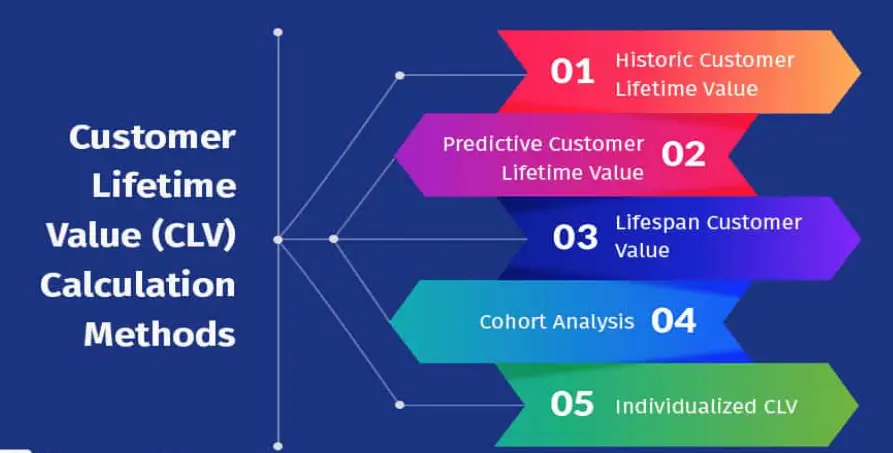
Customer Lifetime Value (CLV) represents the total revenue a business can expect from a customer over the entire duration of their relationship. In Google Ads, CLV helps advertisers shift focus from short-term conversions to long-term profitability, enabling more strategic bidding and budget allocation.
Key aspects of CLV in Google Ads include:
– Calculation Basics: CLV is typically calculated using the formula: CLV = (Average Purchase Value × Purchase Frequency × Customer Lifespan) – Acquisition Costs. Google Ads integrates this through tools like enhanced conversions and audience segmentation, allowing for data-driven estimates based on historical user behavior.
– Relevance to Advertising: By prioritizing high-CLV customers, advertisers can optimize campaigns for maximum return on ad spend (ROAS). For instance, Google Ads’ Smart Bidding algorithms use CLV signals to adjust bids in real-time, targeting users likely to generate sustained value rather than one-off sales.
– Integration and Features: Google Ads supports CLV through features such as Customer Match, which uploads customer data for remarketing, and Value-Based Bidding, which maximizes the value of conversions. This integration helps in identifying high-potential audiences and refining ad strategies to focus on retention and repeat business.
– Benefits for Businesses: Implementing CLV in Google Ads can improve ROI by reducing wasteful spending on low-value leads, enhancing customer retention strategies, and providing insights for personalized ad experiences. Ultimately, it aligns advertising efforts with overall business growth objectives.
By leveraging CLV, advertisers can make informed decisions that foster long-term success in a competitive digital landscape.
Table of Contents
- Part 1: OnlineExamMaker – Generate and Share Google Ads Customer Lifetime Value Quiz with AI Automatically
- Part 2: 20 Google Ads Customer Lifetime Value Quiz Questions & Answers
- Part 3: AI Question Generator – Automatically Create Questions for Your Next Assessment
Part 1: OnlineExamMaker – Generate and Share Google Ads Customer Lifetime Value Quiz with AI Automatically
The quickest way to assess the Google Ads Customer Lifetime Value knowledge of candidates is using an AI assessment platform like OnlineExamMaker. With OnlineExamMaker AI Question Generator, you are able to input content—like text, documents, or topics—and then automatically generate questions in various formats (multiple-choice, true/false, short answer). Its AI Exam Grader can automatically grade the exam and generate insightful reports after your candidate submit the assessment.
What you will like:
● Create a question pool through the question bank and specify how many questions you want to be randomly selected among these questions.
● Allow the quiz taker to answer by uploading video or a Word document, adding an image, and recording an audio file.
● Display the feedback for correct or incorrect answers instantly after a question is answered.
● Create a lead generation form to collect an exam taker’s information, such as email, mobile phone, work title, company profile and so on.
Automatically generate questions using AI
Part 2: 20 Google Ads Customer Lifetime Value Quiz Questions & Answers
or
Question 1:
What is Customer Lifetime Value (CLV) in the context of Google Ads?
A) The total revenue generated from a customer over their entire relationship with a business
B) The cost of acquiring a new customer through ad campaigns
C) The number of clicks on an ad per day
D) The profit from a single ad impression
Answer: A
Explanation: CLV represents the total net profit a business can expect from a customer throughout their relationship, helping advertisers prioritize high-value customers in Google Ads campaigns.
Question 2:
How is CLV typically calculated in Google Ads?
A) By multiplying average purchase value by the average number of purchases and customer lifespan
B) By dividing ad spend by the number of conversions
C) By subtracting the cost per click from total impressions
D) By calculating the average session duration on a website
Answer: A
Explanation: The basic CLV formula involves average purchase value times purchase frequency times customer lifespan, allowing advertisers to forecast long-term value and optimize bidding.
Question 3:
Why is CLV important for Google Ads bidding strategies?
A) It helps allocate budgets to customers who will generate the most future revenue
B) It reduces the need for keyword research
C) It directly lowers the cost per thousand impressions
D) It increases ad creative variety
Answer: A
Explanation: Using CLV in bidding allows for value-based bidding, where ads target users likely to have higher long-term value, improving overall ROI in Google Ads.
Question 4:
In Google Ads, what role does CLV play in remarketing campaigns?
A) It identifies and targets customers with high potential lifetime value for personalized ads
B) It determines the optimal ad rotation schedule
C) It calculates the exact conversion rate for each ad group
D) It monitors website loading speed
Answer: A
Explanation: CLV helps segment audiences in remarketing by focusing on high-value users, increasing the chances of repeat purchases and long-term profitability.
Question 5:
What is the relationship between Customer Acquisition Cost (CAC) and CLV in Google Ads?
A) CLV should ideally be greater than CAC for profitable campaigns
B) CAC is the same as CLV for all customers
C) Increasing CAC always increases CLV
D) CLV is calculated by subtracting CAC from ad impressions
Answer: A
Explanation: A healthy CLV-to-CAC ratio ensures that the cost of acquiring customers is offset by their lifetime value, guiding sustainable Google Ads investments.
Question 6:
How can Google Analytics data improve CLV calculations for Google Ads?
A) By providing insights into customer behavior, retention, and revenue over time
B) By tracking only the first click on an ad
C) By measuring the physical location of users
D) By analyzing competitor ad spend
Answer: A
Explanation: Google Analytics integrates with Google Ads to track metrics like repeat visits and purchases, refining CLV estimates for more accurate campaign optimization.
Question 7:
What factor most directly impacts CLV in e-commerce Google Ads campaigns?
A) Customer retention rate and repeat purchase frequency
B) The color scheme of ad creatives
C) The number of ad extensions used
D) The frequency of ad updates
Answer: A
Explanation: Higher retention rates lead to more repeat business, directly boosting CLV and making it a key metric for long-term success in Google Ads.
Question 8:
In Google Ads, how does value-based bidding relate to CLV?
A) It uses predicted CLV to automatically adjust bids for conversions with higher lifetime value
B) It focuses solely on immediate conversion value
C) It reduces bids based on historical CLV data
D) It ignores CLV entirely
Answer: A
Explanation: Value-based bidding leverages CLV predictions to prioritize bids on users likely to deliver the most value, enhancing campaign efficiency.
Question 9:
What is a common mistake when estimating CLV for Google Ads?
A) Failing to account for customer churn or lifetime duration
B) Overestimating the number of ad impressions
C) Using only desktop data
D) Ignoring seasonal trends
Answer: A
Explanation: Neglecting churn can lead to inflated CLV estimates, resulting in overspending on ads for customers who won’t provide long-term value.
Question 10:
How does increasing customer loyalty affect CLV in Google Ads?
A) It extends the customer lifespan, increasing overall revenue from that customer
B) It decreases the need for ad targeting
C) It raises the cost per acquisition immediately
D) It shortens the purchase frequency
Answer: A
Explanation: Loyal customers make more repeat purchases, directly raising CLV and justifying higher ad investments in retention-focused Google Ads strategies.
Question 11:
In Google Ads, what data source is most useful for calculating CLV?
A) Historical customer transaction and interaction data
B) Real-time bid adjustments
C) Competitor auction insights
D) Ad delivery reports
Answer: A
Explanation: Transaction data from sources like Google Analytics provides the foundation for accurate CLV calculations, enabling better ad spend decisions.
Question 12:
Why might a business use CLV to segment audiences in Google Ads?
A) To target high-CLV segments with premium bids and custom messaging
B) To reduce the total number of keywords
C) To automate ad scheduling
D) To track email open rates
Answer: A
Explanation: Segmenting by CLV ensures resources are focused on profitable customers, improving ad relevance and long-term returns in Google Ads.
Question 13:
What impact does a high CLV have on Google Ads ROI?
A) It can lead to higher ROI by justifying greater investment in customer acquisition
B) It lowers the overall ad budget
C) It increases the bounce rate on landing pages
D) It reduces conversion tracking
Answer: A
Explanation: High CLV means each acquired customer generates more profit over time, allowing for scaled Google Ads spending without diminishing returns.
Question 14:
How does personalization in Google Ads influence CLV?
A) It boosts engagement and repeat purchases, thereby increasing CLV
B) It eliminates the need for A/B testing
C) It directly cuts ad costs
D) It focuses only on new customers
Answer: A
Explanation: Personalized ads based on user data can enhance customer satisfaction and loyalty, leading to a higher CLV through sustained interactions.
Question 15:
In Google Ads, what is the formula for a simple CLV calculation?
A) Average order value × Purchase frequency × Average customer lifespan
B) Total ad spend ÷ Number of conversions
C) Cost per click × Conversion rate
D) Impressions × Click-through rate
Answer: A
Explanation: This formula estimates the total value a customer brings, helping advertisers set realistic bids and budgets in Google Ads.
Question 16:
How can A/B testing in Google Ads affect CLV?
A) By identifying ad variations that improve customer retention and long-term value
B) By reducing the need for audience insights
C) By focusing on short-term metrics only
D) By increasing ad frequency
Answer: A
Explanation: Effective A/B testing refines campaigns to better retain customers, directly contributing to higher CLV over time.
Question 17:
What external factor can negatively affect CLV in Google Ads campaigns?
A) Economic downturns that reduce customer spending
B) Increasing the bid adjustment for mobile devices
C) Adding more ad extensions
D) Optimizing for search intent
Answer: A
Explanation: External factors like recessions can shorten customer lifespans and lower spending, impacting CLV and requiring ad strategy adjustments.
Question 18:
In Google Ads, how does integrating CRM data help with CLV?
A) It provides detailed customer history for more accurate CLV predictions and targeted ads
B) It automates bid strategies without analysis
C) It tracks only website traffic
D) It reduces the importance of keywords
Answer: A
Explanation: CRM data enriches CLV models with real customer interactions, enabling smarter Google Ads targeting for maximum lifetime value.
Question 19:
Why is monitoring CLV trends important for ongoing Google Ads optimization?
A) It reveals changes in customer behavior, allowing for timely adjustments to bids and targeting
B) It eliminates the need for performance reports
C) It focuses on past data only
D) It increases ad creative costs
Answer: A
Explanation: Tracking CLV trends helps advertisers adapt to shifts in customer value, ensuring sustained profitability in Google Ads campaigns.
Question 20:
What strategy can maximize CLV in Google Ads?
A) Focusing on upselling and cross-selling to existing customers through targeted ads
B) Reducing all ad bids aggressively
C) Limiting campaign to a single device type
D) Ignoring customer feedback
Answer: A
Explanation: Upselling and cross-selling strategies nurture customer relationships, increasing purchase frequency and overall CLV in Google Ads.
or
Part 3: AI Question Generator – Automatically Create Questions for Your Next Assessment
Automatically generate questions using AI