Geotechnical Engineering is a branch of civil engineering that deals with the behavior of earth materials, including soil, rock, and groundwater, and their interaction with human-made structures. It encompasses the study of soil mechanics, rock mechanics, and foundation engineering to ensure the stability, safety, and sustainability of infrastructure projects.
Key areas include:
– Site Investigation: Assessing subsurface conditions through drilling, sampling, and testing to evaluate soil and rock properties.
– Foundation Design: Developing appropriate foundations for buildings, bridges, dams, and tunnels based on load-bearing capacity and settlement analysis.
– Slope Stability and Earthworks: Analyzing and mitigating risks of landslides, excavations, and embankments to prevent failures.
– Retaining Structures: Designing walls, piles, and anchors to support soil and manage lateral earth pressures.
– Groundwater Management: Controlling seepage, dewatering, and contamination to protect structures and the environment.
This field applies principles of physics, geology, and engineering to address challenges in construction, such as seismic activity, erosion, and environmental impacts. Geotechnical engineers collaborate with other disciplines to optimize designs, reduce costs, and enhance resilience in projects like highways, skyscrapers, and offshore platforms.
Table of Contents
- Part 1: OnlineExamMaker AI Quiz Generator – Save Time and Efforts
- Part 2: 20 Geotechnical Engineering Quiz Questions & Answers
- Part 3: Try OnlineExamMaker AI Question Generator to Create Quiz Questions
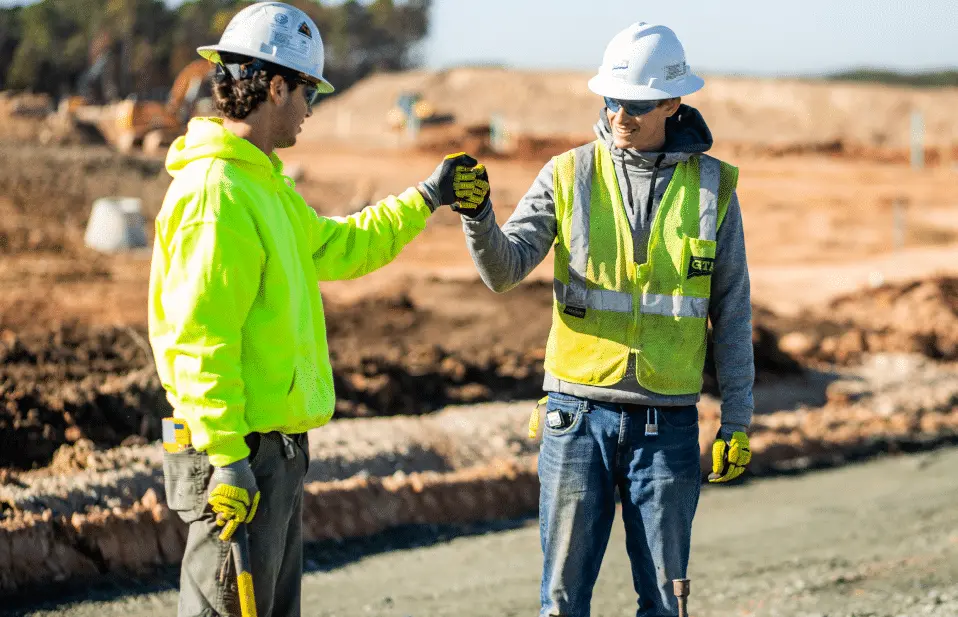
Part 1: OnlineExamMaker AI Quiz Generator – Save Time and Efforts
Still spend a lot of time in editing questions for your next Geotechnical Engineering assessment? OnlineExamMaker is an AI quiz maker that leverages artificial intelligence to help users create quizzes, tests, and assessments quickly and efficiently. You can start by inputting a topic or specific details into the OnlineExamMaker AI Question Generator, and the AI will generate a set of questions almost instantly. It also offers the option to include answer explanations, which can be short or detailed, helping learners understand their mistakes.
What you may like:
● Automatic grading and insightful reports. Real-time results and interactive feedback for quiz-takers.
● The exams are automatically graded with the results instantly, so that teachers can save time and effort in grading.
● LockDown Browser to restrict browser activity during quizzes to prevent students searching answers on search engines or other software.
● OnlineExamMaker API offers private access for developers to extract your exam data back into your system automatically.
Automatically generate questions using AI
Part 2: 20 Geotechnical Engineering Quiz Questions & Answers
or
1. Question: What is the primary purpose of the Standard Penetration Test (SPT) in geotechnical engineering?
A) To measure soil permeability
B) To determine the in-situ density of soil
C) To evaluate the resistance of soil to penetration, indicating its strength and density
D) To assess the shear strength of rocks
Answer: C
Explanation: The SPT measures the number of blows required for a sampler to penetrate soil, providing an empirical value for soil strength and density, which is crucial for foundation design.
2. Question: Which soil classification system is based on particle size distribution and plasticity?
A) Unified Soil Classification System (USCS)
B) AASHTO Soil Classification System
C) Both A and B
D) Neither A nor B
Answer: C
Explanation: Both USCS and AASHTO systems use particle size and plasticity charts to classify soils, aiding in engineering decisions like construction suitability.
3. Question: What does the term “effective stress” represent in soil mechanics?
A) The total stress minus pore water pressure
B) The total stress plus pore water pressure
C) The stress at the soil surface
D) The stress due to overburden only
Answer: A
Explanation: Effective stress is calculated as total stress minus pore water pressure, as it governs soil behavior such as shear strength and settlement.
4. Question: In slope stability analysis, what is the factor of safety?
A) The ratio of driving forces to resisting forces
B) The ratio of resisting forces to driving forces
C) The angle of internal friction
D) The cohesion of the soil
Answer: B
Explanation: The factor of safety is the ratio of available shear strength to the shear stress required for equilibrium, indicating the margin of safety against slope failure.
5. Question: What is the primary cause of consolidation in saturated clays?
A) Increase in pore water pressure
B) Dissipation of excess pore water pressure
C) Soil erosion
D) Chemical reactions in soil
Answer: B
Explanation: Consolidation occurs as excess pore water pressure dissipates under load, leading to soil volume reduction and settlement over time.
6. Question: Which type of foundation is most suitable for expansive soils?
A) Shallow strip footing
B) Deep pile foundation
C) Raft foundation
D) Both B and C
Answer: D
Explanation: Expansive soils swell and shrink, so deep pile foundations or raft foundations distribute loads and minimize differential settlement.
7. Question: What is the significance of the coefficient of permeability in geotechnical engineering?
A) It measures soil compressibility
B) It indicates the rate at which water can flow through soil
C) It represents soil shear strength
D) It defines soil plasticity
Answer: B
Explanation: The coefficient of permeability quantifies how easily water moves through soil, which is essential for drainage design and seepage analysis.
8. Question: In Terzaghi’s bearing capacity theory, what factor influences the ultimate bearing capacity of soil?
A) Depth of foundation only
B) Cohesion, angle of friction, and overburden pressure
C) Soil color and texture
D) Groundwater level alone
Answer: B
Explanation: Terzaghi’s equation incorporates cohesion, angle of internal friction, and effective overburden pressure to calculate the soil’s ability to support loads.
9. Question: What is the main difference between active and passive earth pressure?
A) Active pressure pushes against a wall, while passive resists it
B) Active pressure is always greater than passive
C) Passive pressure occurs only in cohesive soils
D) Active pressure is for vertical walls only
Answer: A
Explanation: Active earth pressure acts to move soil away from a retaining structure, while passive pressure resists movement, both critical for wall design.
10. Question: How is the liquidity index of a soil calculated?
A) (Plastic limit – Natural water content) / (Liquid limit – Plastic limit)
B) (Natural water content – Plastic limit) / (Liquid limit – Plastic limit)
C) (Liquid limit – Natural water content) / Plastic limit
D) Natural water content divided by liquid limit
Answer: B
Explanation: The liquidity index assesses the soil’s consistency relative to its Atterberg limits, with the formula indicating how close the soil is to its liquid state.
11. Question: What role does the Proctor test play in compaction?
A) It determines the maximum dry density and optimum moisture content
B) It measures soil shear strength
C) It evaluates soil permeability
D) It classifies soil types
Answer: A
Explanation: The Proctor test compacts soil at various moisture contents to find the optimum for achieving maximum density, essential for construction stability.
12. Question: In geotechnical engineering, what is a shear box test used for?
A) To measure direct shear strength of soil
B) To determine soil compression
C) To assess permeability
D) To classify soil particles
Answer: A
Explanation: The shear box test applies shear stress to soil samples to determine the shear strength parameters like cohesion and angle of friction.
13. Question: Which method is commonly used for slope stability analysis?
A) Bishop’s method
B) Terzaghi’s method
C) Casagrande’s method
D) Atterberg’s method
Answer: A
Explanation: Bishop’s method uses slices to calculate the factor of safety for circular failure surfaces, making it a standard for analyzing slopes.
14. Question: What is the effect of overconsolidation on soil behavior?
A) It increases compressibility
B) It makes soil stiffer and less compressible than normally consolidated soil
C) It reduces shear strength
D) It causes immediate settlement
Answer: B
Explanation: Overconsolidated soils have been subjected to higher past stresses, resulting in higher stiffness and resistance to further compression.
15. Question: How does the presence of groundwater affect foundation design?
A) It has no effect
B) It can lead to buoyancy and reduced effective stress, potentially causing settlement or instability
C) It only increases soil strength
D) It improves soil compaction
Answer: B
Explanation: Groundwater increases pore water pressure, reducing effective stress and possibly leading to issues like heaving or erosion in foundations.
16. Question: What is the primary function of a geotextile in geotechnical applications?
A) To provide structural support
B) To separate, filter, reinforce, or drain soil layers
C) To measure soil moisture
D) To classify soil types
Answer: B
Explanation: Geotextiles are used for functions like separation and drainage in projects such as roads and retaining walls to enhance stability.
17. Question: In soil mechanics, what is meant by “critical hydraulic gradient”?
A) The gradient at which soil particles start to erode
B) The maximum water flow rate
C) The soil’s permeability coefficient
D) The angle of repose
Answer: A
Explanation: The critical hydraulic gradient is the point where seepage forces equal the submerged weight of soil, leading to quicksand or boiling conditions.
18. Question: Which test is used to determine the unconfined compressive strength of soil?
A) Triaxial test
B) Unconfined compression test
C) Direct shear test
D) Consolidation test
Answer: B
Explanation: The unconfined compression test applies axial load to undisturbed soil samples to measure strength without lateral confinement, useful for cohesive soils.
19. Question: What is the key assumption in Coulomb’s earth pressure theory?
A) Soil is cohesionless
B) Soil behaves as a rigid plastic material
C) Both A and B
D) Neither A nor B
Answer: C
Explanation: Coulomb’s theory assumes soil is cohesionless and follows a rigid plastic failure criterion, simplifying calculations for retaining structures.
20. Question: How does vibration affect soil liquefaction?
A) It has no effect
B) It can increase pore water pressure, reducing effective stress and leading to liquefaction in saturated sands
C) It only compacts soil
D) It improves soil stability
Answer: B
Explanation: Vibrations from earthquakes can cause loose, saturated sands to liquefy by increasing pore pressure, resulting in loss of shear strength.
or
Part 3: Try OnlineExamMaker AI Question Generator to Create Quiz Questions
Automatically generate questions using AI