Geological Engineering is a multidisciplinary field that integrates principles of geology, engineering, and environmental science to address challenges related to the Earth’s crust and its resources. It focuses on the study and application of rock, soil, and groundwater behavior to design safe and sustainable infrastructure, mitigate natural hazards, and manage natural resources.
Key Areas of Geological Engineering:
– Site Investigation and Geotechnical Analysis: Involves assessing soil and rock properties to ensure stability for foundations, dams, tunnels, and bridges. Engineers use techniques like drilling, sampling, and geophysical surveys to evaluate subsurface conditions and prevent failures such as landslides or earthquakes.
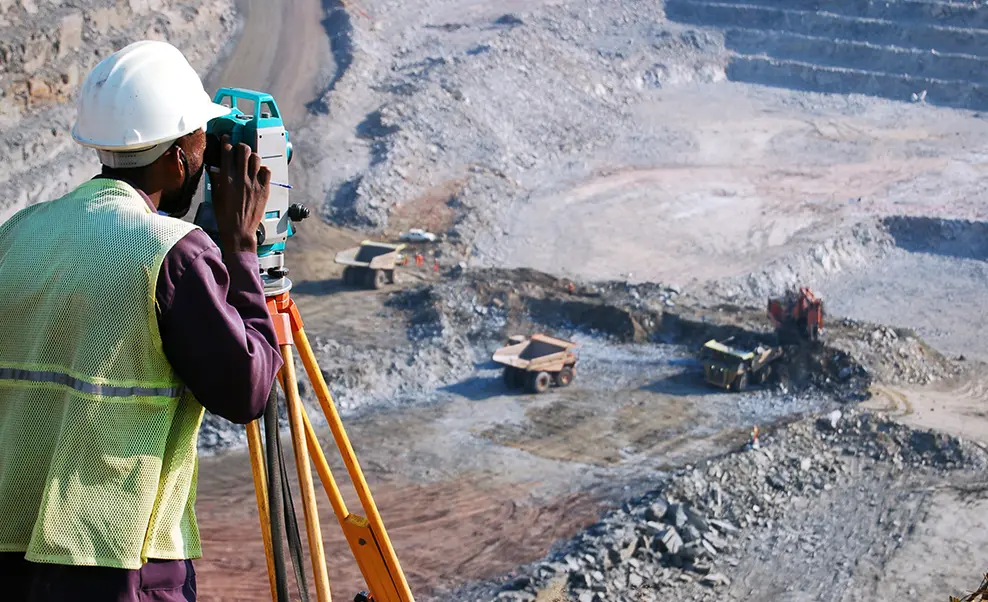
– Mining and Resource Extraction: Applies geological knowledge to locate, extract, and manage minerals, oil, gas, and groundwater. This includes designing safe mining operations, managing waste, and ensuring environmental compliance to minimize ecological impact.
– Environmental Management and Remediation: Addresses contamination from industrial activities, such as soil and water pollution. Geological engineers design systems for waste disposal, groundwater remediation, and restoration of degraded lands, often using technologies like bioremediation or barrier walls.
– Hazard Assessment and Mitigation: Evaluates risks from natural disasters like earthquakes, volcanoes, floods, and erosion. Engineers develop strategies for hazard mapping, slope stabilization, and seismic design to protect communities and infrastructure.
– Geotechnical Engineering Applications: Involves the design of earthworks, such as retaining walls, embankments, and landfills, ensuring they are stable and environmentally sound.
Importance and Challenges:
Geological Engineering plays a crucial role in sustainable development by balancing human needs with environmental protection. It helps in urban planning, renewable energy projects (e.g., geothermal systems), and climate change adaptation. However, challenges include dealing with unpredictable geological conditions, regulatory compliance, and the need for advanced modeling tools like GIS and remote sensing.
Educational and Career Pathways:
A degree in Geological Engineering typically requires coursework in geology, physics, mathematics, and engineering principles. Professionals often work in consulting firms, government agencies, mining companies, or research institutions, requiring skills in fieldwork, data analysis, and interdisciplinary collaboration.
This field continues to evolve with advancements in technology, such as AI for predictive modeling and remote sensing for real-time monitoring, making it essential for addressing global issues like resource scarcity and climate resilience.
Table of Contents
- Part 1: Create A Geological Engineering Quiz in Minutes Using AI with OnlineExamMaker
- Part 2: 20 Geological Engineering Quiz Questions & Answers
- Part 3: Try OnlineExamMaker AI Question Generator to Create Quiz Questions
Part 1: Create A Geological Engineering Quiz in Minutes Using AI with OnlineExamMaker
When it comes to ease of creating a Geological Engineering skills assessment, OnlineExamMaker is one of the best AI-powered quiz making software for your institutions or businesses. With its AI Question Generator, just upload a document or input keywords about your assessment topic, you can generate high-quality quiz questions on any topic, difficulty level, and format.
Overview of its key assessment-related features:
● AI Question Generator to help you save time in creating quiz questions automatically.
● Share your online exam with audiences on social platforms like Facebook, Twitter, Reddit and more.
● Instantly scores objective questions and subjective answers use rubric-based scoring for consistency.
● Simply copy and insert a few lines of embed codes to display your online exams on your website or WordPress blog.
Automatically generate questions using AI
Part 2: 20 Geological Engineering Quiz Questions & Answers
or
1. Question: What is the primary cause of most earthquakes?
A) Volcanic eruptions
B) Tectonic plate movements
C) Chemical weathering
D) River erosion
Answer: B
Explanation: Earthquakes are mainly caused by the sudden release of energy from the movement of tectonic plates, which builds stress along faults.
2. Question: Which type of rock is most commonly associated with groundwater aquifers?
A) Igneous rock
B) Sedimentary rock
C) Metamorphic rock
D) Volcanic rock
Answer: B
Explanation: Sedimentary rocks, such as sandstone and limestone, often have high porosity and permeability, making them ideal for storing and transmitting groundwater.
3. Question: In geological engineering, what does the term “liquefaction” refer to?
A) Solidification of soil
B) Loss of soil strength due to increased water pressure
C) Erosion of rock surfaces
D) Formation of new minerals
Answer: B
Explanation: Liquefaction occurs when saturated soil loses its shear strength during seismic events, behaving like a liquid and potentially causing structural failures.
4. Question: Which method is primarily used to determine the stability of a slope?
A) Factor of safety calculation
B) Rock hardness test
C) pH level measurement
D) Temperature profiling
Answer: A
Explanation: The factor of safety compares the resisting forces to the driving forces on a slope, helping engineers assess the likelihood of slope failure.
5. Question: What is the main purpose of a geological map in engineering projects?
A) To show vegetation patterns
B) To identify rock types and structures
C) To measure atmospheric pressure
D) To track animal migration
Answer: B
Explanation: Geological maps provide critical information on rock formations, faults, and stratigraphy, which are essential for site selection and hazard assessment.
6. Question: Which soil classification system is widely used in geotechnical engineering?
A) Mohs scale
B) Unified Soil Classification System (USCS)
C) Richter scale
D) Beaufort scale
Answer: B
Explanation: The USCS categorizes soils based on particle size and plasticity, aiding in the design of foundations and earth structures.
7. Question: What geological feature is typically associated with karst topography?
A) Glacial valleys
B) Sinkholes and caves
C) Volcanic cones
D) Sand dunes
Answer: B
Explanation: Karst topography results from the dissolution of soluble rocks like limestone, leading to features such as sinkholes, caves, and underground drainage systems.
8. Question: In rock mechanics, what does the unconfined compressive strength (UCS) measure?
A) Rock’s ability to resist tension
B) Rock’s ability to withstand crushing without lateral support
C) Rock’s permeability
D) Rock’s thermal conductivity
Answer: B
Explanation: UCS tests the maximum axial compressive stress a rock can bear before failure, which is crucial for tunnel and dam design.
9. Question: Which engineering technique is used to stabilize soil against landslides?
A) Retaining walls
B) Deforestation
C) Irrigation
D) Urbanization
Answer: A
Explanation: Retaining walls provide lateral support to soil masses, preventing slope failures by counteracting gravitational forces.
10. Question: What is the primary environmental concern associated with acid mine drainage?
A) Soil erosion
B) Water contamination by heavy metals
C) Air pollution from dust
D) Noise pollution
Answer: B
Explanation: Acid mine drainage occurs when sulfide minerals in rocks oxidize, releasing acidic water with heavy metals that pollute streams and groundwater.
11. Question: Which geophysical method uses seismic waves to explore subsurface structures?
A) Electrical resistivity surveying
B) Seismic refraction
C) Magnetic surveying
D) Gravity surveying
Answer: B
Explanation: Seismic refraction measures the travel time of seismic waves through different layers, helping map underground geology for engineering projects.
12. Question: What role does porosity play in geological engineering?
A) It affects rock color
B) It determines the ability of a material to hold fluids
C) It measures rock hardness
D) It indicates thermal properties
Answer: B
Explanation: Porosity is the percentage of void space in a rock or soil, which influences its capacity to store water, oil, or gas in engineering applications.
13. Question: In foundation design, what is the significance of the bearing capacity of soil?
A) It indicates soil fertility
B) It determines the maximum load the soil can support without failure
C) It measures soil temperature
D) It assesses soil color
Answer: B
Explanation: Bearing capacity is critical for ensuring that foundations can safely transfer loads from structures to the ground without causing settlement or collapse.
14. Question: Which type of fault is characterized by horizontal movement?
A) Normal fault
B) Reverse fault
C) Strike-slip fault
D) Thrust fault
Answer: C
Explanation: Strike-slip faults involve lateral sliding of tectonic plates, which can cause horizontal ground displacement and affect engineering structures.
15. Question: What is the main advantage of using geosynthetics in soil engineering?
A) They increase soil acidity
B) They enhance drainage and reinforcement
C) They promote erosion
D) They reduce soil porosity
Answer: B
Explanation: Geosynthetics, like geotextiles, improve soil stability by providing reinforcement, filtration, and drainage in projects such as roads and embankments.
16. Question: Which rock property is essential for assessing tunneling feasibility?
A) Rock density
B) Rock jointing and fracturing
C) Rock age
D) Rock magnetism
Answer: B
Explanation: Jointing and fracturing affect the stability and ease of excavation in tunnels, as they can lead to rock falls or require additional support.
17. Question: What does the term “hydrogeology” primarily study in geological engineering?
A) Ocean currents
B) Groundwater flow and quality
C) Atmospheric pressure
D) Volcanic gases
Answer: B
Explanation: Hydrogeology focuses on the distribution, movement, and management of groundwater, which is vital for water supply and environmental engineering.
18. Question: In site investigation, what is the purpose of a borehole log?
A) To record surface vegetation
B) To document subsurface soil and rock layers
C) To measure wind speed
D) To track rainfall
Answer: B
Explanation: Borehole logs provide detailed records of geological strata encountered during drilling, aiding in the design of safe and efficient structures.
19. Question: Which factor contributes most to the formation of landslides?
A) High vegetation cover
B) Steep slopes and heavy rainfall
C) Flat terrain
D) Low water table
Answer: B
Explanation: Steep slopes combined with saturation from heavy rainfall reduce soil cohesion, triggering landslides and requiring engineering mitigation.
20. Question: What is the key benefit of using remote sensing in geological engineering?
A) It provides real-time weather data
B) It allows non-invasive mapping of large areas
C) It measures plant growth
D) It predicts stock market trends
Answer: B
Explanation: Remote sensing technologies, like satellite imagery, enable the detection of geological features without ground disturbance, saving time and resources in surveys.
or
Part 3: Try OnlineExamMaker AI Question Generator to Create Quiz Questions
Automatically generate questions using AI