The fishing industry encompasses the global activities involved in harvesting, processing, and distributing aquatic resources from oceans, rivers, lakes, and aquaculture facilities. It plays a vital role in providing food, employment, and economic value worldwide.
Historical Background
Fishing dates back thousands of years, with early human societies relying on it for sustenance. Industrialization in the 19th century introduced larger vessels and mechanized techniques, transforming it into a major commercial sector. By the mid-20th century, overfishing and technological advancements led to significant environmental challenges.
Economic Importance
The industry contributes approximately $100-150 billion annually to the global economy, according to the Food and Agriculture Organization (FAO). It employs over 59 million people, primarily in developing countries, and supplies about 17% of the world’s animal protein intake. Key exporters include China, Norway, and the United States, with seafood trade valued at over $150 billion in exports.
Types of Fishing
– Commercial Fishing: Involves large-scale operations using trawlers, purse seiners, and longlines to catch species like tuna, salmon, and shrimp for markets.
– Artisanal and Small-Scale Fishing: Supports local communities, often using traditional methods, and accounts for about 90% of global fishers.
– Recreational Fishing: A leisure activity contributing to tourism, with regulations to prevent overexploitation.
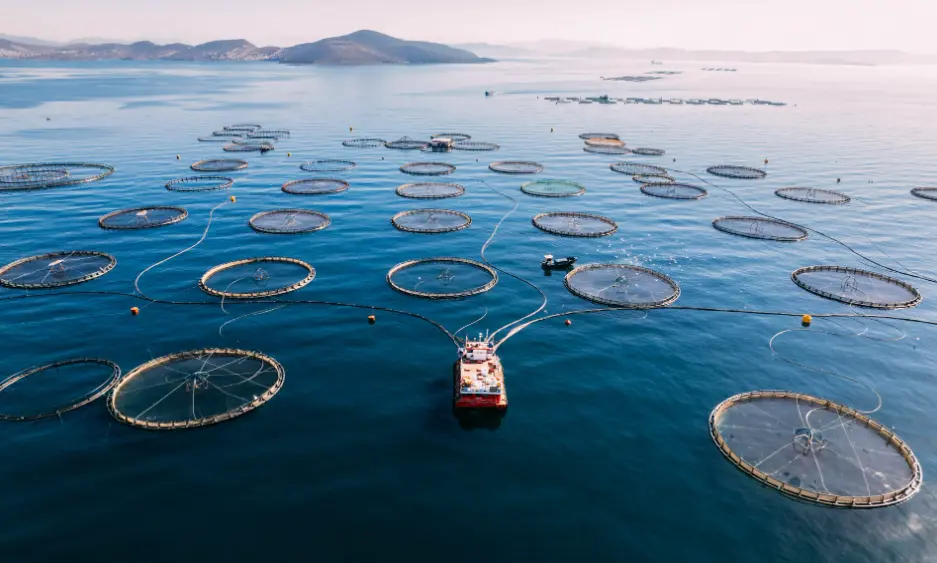
– Aquaculture: The fastest-growing segment, producing over 50% of global seafood through farmed fish like tilapia and salmon, helping meet rising demand.
Environmental Impacts
Overfishing has depleted stocks, with one-third of global fish populations overexploited, per FAO reports. Other issues include bycatch (unintended capture of non-target species), habitat destruction from bottom trawling, and pollution affecting marine ecosystems. Sustainable practices, such as marine protected areas and certifications (e.g., MSC), are increasingly adopted.
Challenges and Future Trends
The industry faces threats from climate change, which alters fish migration and ocean acidity, and illegal fishing, estimated at 10-26 million tons annually. Technological innovations like satellite monitoring and AI for stock assessment are emerging. The shift toward sustainability, blue economy initiatives, and alternative proteins (e.g., plant-based seafood) will shape its future, aiming for a balance between food security and environmental protection.
Table of Contents
- Part 1: Best AI Quiz Making Software for Creating A Fishing Industry Quiz
- Part 2: 20 Fishing Industry Quiz Questions & Answers
- Part 3: Automatically Generate Quiz Questions Using AI Question Generator
Part 1: Best AI Quiz Making Software for Creating A Fishing Industry Quiz
Nowadays more and more people create Fishing Industry quizzes using AI technologies, OnlineExamMaker a powerful AI-based quiz making tool that can save you time and efforts. The software makes it simple to design and launch interactive quizzes, assessments, and surveys. With the Question Editor, you can create multiple-choice, open-ended, matching, sequencing and many other types of questions for your tests, exams and inventories. You are allowed to enhance quizzes with multimedia elements like images, audio, and video to make them more interactive and visually appealing.
Take a product tour of OnlineExamMaker:
● Create a question pool through the question bank and specify how many questions you want to be randomly selected among these questions.
● Build and store questions in a centralized portal, tagged by categories and keywords for easy reuse and organization.
● Simply copy a few lines of codes, and add them to a web page, you can present your online quiz in your website, blog, or landing page.
● Randomize questions or change the order of questions to ensure exam takers don’t get the same set of questions each time.
Automatically generate questions using AI
Part 2: 20 Fishing Industry Quiz Questions & Answers
or
1. Question: What is the primary purpose of the Magnuson-Stevens Fishery Conservation and Management Act in the United States?
A. To promote recreational fishing only
B. To conserve and manage fishery resources
C. To eliminate all fishing quotas
D. To focus solely on aquaculture development
Answer: B. To conserve and manage fishery resources
Explanation: This act aims to prevent overfishing and rebuild depleted fish stocks through sustainable management practices.
2. Question: Which fishing method involves dragging a net along the seafloor?
A. Longlining
B. Trawling
C. Gillnetting
D. Purse seining
Answer: B. Trawling
Explanation: Trawling uses a cone-shaped net dragged behind a boat, which can catch large quantities of fish but often damages the ocean floor and non-target species.
3. Question: What is aquaculture primarily used for in the fishing industry?
A. Hunting wild fish in rivers
B. Farming fish and seafood in controlled environments
C. Preserving ancient fishing techniques
D. Exporting fishing equipment
Answer: B. Farming fish and seafood in controlled environments
Explanation: Aquaculture involves raising fish like salmon or shrimp in pens or tanks to meet global demand and reduce pressure on wild stocks.
4. Question: Which factor is a major cause of overfishing worldwide?
A. Increased marine protected areas
B. Unregulated fishing fleets
C. Declining demand for seafood
D. Natural ocean acidification
Answer: B. Unregulated fishing fleets
Explanation: Unregulated fleets lead to excessive catches, depleting fish populations faster than they can reproduce.
5. Question: What does the term “bycatch” refer to in fishing?
A. The main target species caught
B. Unintended species caught in fishing gear
C. Fish that escape from nets
D. Artificially bred fish for release
Answer: B. Unintended species caught in fishing gear
Explanation: Bycatch includes non-target animals like dolphins or turtles, which can be harmed or killed, contributing to ecosystem imbalance.
6. Question: Which organization is responsible for setting international fishing regulations?
A. World Health Organization
B. Food and Agriculture Organization (FAO)
C. International Monetary Fund
D. World Trade Organization
Answer: B. Food and Agriculture Organization (FAO)
Explanation: The FAO works with countries to promote sustainable fishing practices and manage global fish stocks through agreements like the Code of Conduct for Responsible Fisheries.
7. Question: What is the main economic benefit of the fishing industry?
A. Providing jobs and exporting goods
B. Reducing global tourism
C. Increasing deforestation
D. Limiting technological innovation
Answer: A. Providing jobs and exporting goods
Explanation: The industry supports millions of jobs worldwide and generates revenue through seafood exports, contributing to national economies.
8. Question: Which fish species is most commonly associated with sustainable fishing certifications like MSC?
A. Bluefin tuna
B. Alaskan pollock
C. Atlantic cod
D. All of the above
Answer: D. All of the above
Explanation: Species like bluefin tuna, Alaskan pollock, and Atlantic cod can receive MSC certification if they meet criteria for sustainable practices, though not all populations are certified.
9. Question: How does climate change impact the fishing industry?
A. By increasing fish populations everywhere
B. By altering ocean temperatures and fish migration patterns
C. By eliminating the need for fishing regulations
D. By boosting coral reef growth
Answer: B. By altering ocean temperatures and fish migration patterns
Explanation: Rising temperatures can shift fish habitats, making traditional fishing grounds less productive and affecting species distribution.
10. Question: What is a key advantage of pole and line fishing?
A. It catches large volumes quickly
B. It minimizes bycatch and is more selective
C. It requires heavy industrial equipment
D. It is only used in freshwater
Answer: B. It minimizes bycatch and is more selective
Explanation: Pole and line fishing targets specific fish, reducing unintended catches and making it a more sustainable method.
11. Question: Which technology is commonly used in modern fishing to locate fish schools?
A. Sonar
B. Telephones
C. Compasses
D. Paper maps
Answer: A. Sonar
Explanation: Sonar uses sound waves to detect fish underwater, helping fishers locate schools efficiently and reduce unnecessary searching.
12. Question: What role do marine protected areas (MPAs) play in the fishing industry?
A. They allow unlimited fishing access
B. They help replenish fish stocks by restricting fishing in certain zones
C. They promote industrial pollution
D. They eliminate all seafood trade
Answer: B. They help replenish fish stocks by restricting fishing in certain zones
Explanation: MPAs allow fish populations to recover and spill over into fished areas, supporting long-term sustainability.
13. Question: Which country is the largest producer of fish from aquaculture?
A. United States
B. China
C. Japan
D. Norway
Answer: B. China
Explanation: China leads in aquaculture production, accounting for a significant portion of global farmed fish like carp and tilapia.
14. Question: What is the primary environmental concern with bottom trawling?
A. It improves water quality
B. It destroys seafloor habitats and corals
C. It reduces ocean acidity
D. It enhances biodiversity
Answer: B. It destroys seafloor habitats and corals
Explanation: Bottom trawling drags nets across the ocean floor, damaging ecosystems and leading to loss of habitat for many marine species.
15. Question: How does the fishing industry contribute to global food security?
A. By decreasing protein availability
B. By providing a major source of animal protein for billions
C. By focusing only on luxury exports
D. By reducing agricultural needs
Answer: B. By providing a major source of animal protein for billions
Explanation: Fish and seafood supply essential nutrients and are a staple food for many populations, especially in developing countries.
16. Question: What is a common regulation in sustainable fishing?
A. Unlimited catch quotas
B. Seasonal closures to allow fish spawning
C. Encouraging illegal fishing
D. Ignoring stock assessments
Answer: B. Seasonal closures to allow fish spawning
Explanation: Seasonal closures protect fish during breeding periods, helping maintain population levels and prevent overfishing.
17. Question: Which factor has led to the growth of the fishing industry in developing countries?
A. Declining global demand
B. Access to international markets and technology
C. Stricter environmental laws
D. Reduced coastal populations
Answer: B. Access to international markets and technology
Explanation: Improved technology and trade opportunities have enabled developing countries to expand their fishing sectors and export products.
18. Question: What is the main goal of the Marine Stewardship Council (MSC)?
A. To certify unsustainable fishing practices
B. To promote eco-labels for sustainably caught seafood
C. To ban all fishing worldwide
D. To increase pollution in oceans
Answer: B. To promote eco-labels for sustainably caught seafood
Explanation: MSC certifies fisheries that meet environmental standards, helping consumers choose products that support ocean health.
19. Question: How does illegal, unreported, and unregulated (IUU) fishing affect the industry?
A. It ensures fair competition
B. It undermines sustainable efforts and depletes stocks
C. It reduces costs for legal fishers
D. It improves fish quality
Answer: B. It undermines sustainable efforts and depletes stocks
Explanation: IUU fishing bypasses regulations, leading to overexploitation and economic losses for compliant fisheries.
20. Question: What is the significance of the “fish stock assessment” in fishing management?
A. It determines the health and size of fish populations
B. It ignores environmental factors
C. It promotes overharvesting
D. It is only used for recreational fishing
Answer: A. It determines the health and size of fish populations
Explanation: Stock assessments use data to set catch limits, ensuring that fishing does not exceed what populations can sustain.
or
Part 3: Automatically generate quiz questions using OnlineExamMaker AI Question Generator
Automatically generate questions using AI