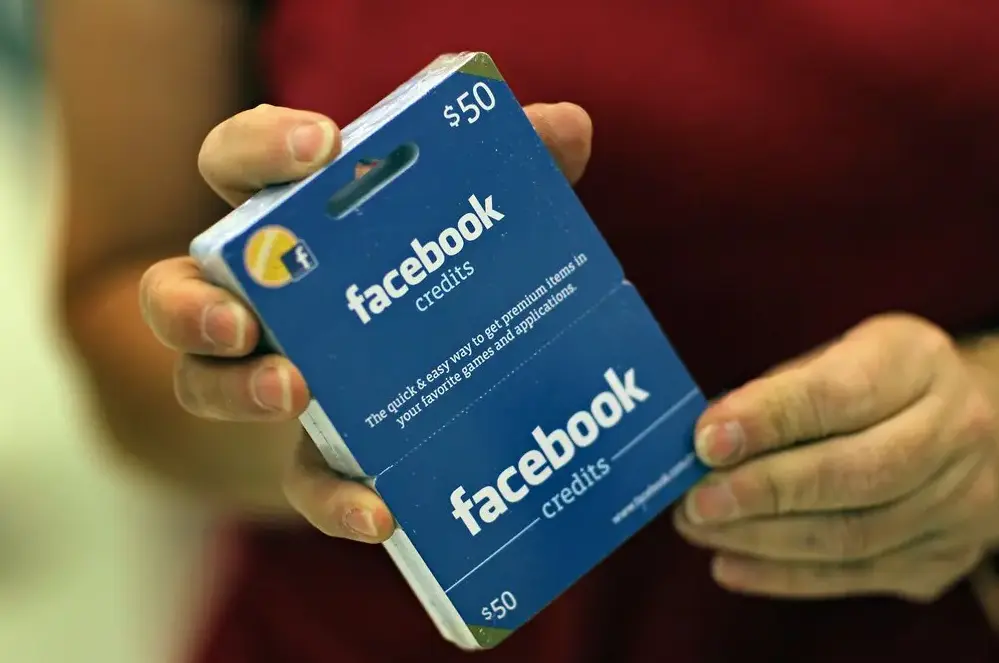
Facebook Credits was a virtual currency system introduced by Facebook in 2009, designed to facilitate in-app purchases for games and applications on the platform. Users could buy Credits using real money through various payment methods, such as credit cards or mobile payments, and then redeem them for virtual items, gifts, or services within Facebook-integrated apps.
Key Features:
– Simplified Transactions: Credits provided a unified payment method, making it easy for users to make purchases without leaving the Facebook ecosystem.
– Developer Integration: App developers could seamlessly incorporate Credits into their games, with Facebook handling the payment processing and revenue sharing.
– Security and Tracking: The system included measures to ensure secure transactions and track user spending, helping to prevent fraud and manage budgets.
– Global Availability: Credits were available in multiple currencies and supported international users, promoting accessibility worldwide.
How It Worked:
– Users purchased Credits in bundles (e.g., 10 Credits for $1) via the Facebook platform.
– These Credits could be spent on items like virtual goods in popular games such as FarmVille or CityVille.
– Facebook earned a percentage of each transaction, typically around 30%, as a service fee.
History and Impact:
– Launched amid the rise of social gaming, Credits became a major revenue driver for Facebook and developers, peaking in popularity around 2011.
– By 2013, Facebook phased out Credits in favor of direct payment options, allowing developers to use external payment processors for greater flexibility.
– The system influenced the evolution of in-app monetization, paving the way for modern models like in-game currencies and subscriptions.
Despite its discontinuation, Facebook Credits played a pivotal role in the growth of social media monetization and digital economies.
Table of Contents
- Part 1: Create An Amazing Facebook Credits Quiz Using AI Instantly in OnlineExamMaker
- Part 2: 20 Facebook Credits Quiz Questions & Answers
- Part 3: Save Time and Energy: Generate Quiz Questions with AI Technology
Part 1: Create An Amazing Facebook Credits Quiz Using AI Instantly in OnlineExamMaker
Nowadays more and more people create Facebook Credits quizzes using AI technologies, OnlineExamMaker a powerful AI-based quiz making tool that can save you time and efforts. The software makes it simple to design and launch interactive quizzes, assessments, and surveys. With the Question Editor, you can create multiple-choice, open-ended, matching, sequencing and many other types of questions for your tests, exams and inventories. You are allowed to enhance quizzes with multimedia elements like images, audio, and video to make them more interactive and visually appealing.
Recommended features for you:
● Prevent cheating by randomizing questions or changing the order of questions, so learners don’t get the same set of questions each time.
● Automatically generates detailed reports—individual scores, question report, and group performance.
● Simply copy a few lines of codes, and add them to a web page, you can present your online quiz in your website, blog, or landing page.
● Offers question analysis to evaluate question performance and reliability, helping instructors optimize their training plan.
Automatically generate questions using AI
Part 2: 20 Facebook Credits Quiz Questions & Answers
or
1. Question: What was the primary purpose of Facebook Credits?
Options:
A) To buy physical merchandise from Facebook stores
B) To purchase virtual goods in Facebook games and apps
C) To pay for Facebook’s premium subscription services
D) To donate to charitable causes on the platform
Answer: B
Explanation: Facebook Credits were designed as a virtual currency specifically for buying in-game items, virtual gifts, and other digital content within Facebook-integrated applications.
2. Question: When were Facebook Credits first introduced?
Options:
A) 2005
B) 2007
C) 2009
D) 2011
Answer: C
Explanation: Facebook Credits were launched in 2009 as a way to simplify transactions for virtual goods on the platform.
3. Question: Which company was involved in the initial development and management of Facebook Credits?
Options:
A) PayPal
B) Apple
C) Facebook itself
D) Google
Answer: C
Explanation: Facebook developed and managed Credits internally to control the ecosystem of virtual transactions on its platform.
4. Question: What types of content could be purchased using Facebook Credits?
Options:
A) Only music and videos
B) Virtual gifts, game items, and app features
C) Physical books and electronics
D) Advertising slots on user timelines
Answer: B
Explanation: Users could buy virtual gifts for friends, in-game upgrades, and additional features in apps using Facebook Credits.
5. Question: Why did Facebook encourage developers to use Credits in their apps?
Options:
A) To reduce server costs
B) To take a cut of the revenue from transactions
C) To promote user privacy
D) To compete with email services
Answer: B
Explanation: Facebook took a percentage of every transaction made with Credits, which helped monetize the platform through developer partnerships.
6. Question: In what year were Facebook Credits officially discontinued?
Options:
A) 2012
B) 2013
C) 2014
D) 2015
Answer: D
Explanation: Facebook phased out Credits in 2015, shifting to other payment methods like direct credit card payments for virtual goods.
7. Question: How were Facebook Credits typically acquired by users?
Options:
A) By mining them through Facebook games
B) By purchasing them with real money or earning them through promotions
C) By trading with other users
D) By completing surveys on external websites
Answer: B
Explanation: Users could buy Credits using real currency via credit cards, PayPal, or other methods, and sometimes earn them through promotions or rewards.
8. Question: What was one major criticism of Facebook Credits?
Options:
A) They were too easy to use
B) High fees and lack of transparency in transactions
C) They encouraged too much social interaction
D) They were only available in certain countries
Answer: B
Explanation: Critics pointed out the high transaction fees and opaque policies, which made Credits more expensive than direct payments.
9. Question: Which popular Facebook game heavily relied on Credits for in-app purchases?
Options:
A) Candy Crush Saga
B) FarmVille
C) Words with Friends
D) Pokémon GO
Answer: B
Explanation: FarmVille, developed by Zynga, was one of the most prominent games that used Facebook Credits for buying virtual items like crops and animals.
10. Question: What conversion rate was commonly used for Facebook Credits?
Options:
A) 1 Credit = 1 US dollar
B) 1 Credit = 0.10 US dollars
C) Variable rates based on region
D) Fixed at 1 Credit = 100 points
Answer: C
Explanation: The value of Credits varied by region and currency exchange rates to accommodate international users.
11. Question: How did Facebook Credits integrate with mobile apps?
Options:
A) They were not available on mobile
B) Through in-app purchases via the Facebook app
C) Only on desktop browsers
D) Via SMS payments
Answer: B
Explanation: Credits could be used in mobile versions of Facebook games and apps, allowing seamless purchases across devices.
12. Question: What role did Credits play in Facebook’s overall business strategy?
Options:
A) To expand into e-commerce
B) To monetize user engagement in social games
C) To replace traditional advertising
D) To support educational content
Answer: B
Explanation: Credits helped Facebook monetize the time users spent on games, turning casual interactions into revenue streams.
13. Question: Were Facebook Credits redeemable for real money?
Options:
A) Yes, at any time
B) No, they were non-refundable
C) Only for developers
D) Yes, but with a fee
Answer: B
Explanation: Credits were not redeemable for cash; they were meant for use within the Facebook ecosystem only.
14. Question: What payment methods were accepted for buying Facebook Credits?
Options:
A) Only cash at physical stores
B) Credit cards, PayPal, and mobile payments
C) Bitcoin and cryptocurrencies
D) Barter trades
Answer: B
Explanation: Users could purchase Credits using common methods like credit cards and PayPal for convenience.
15. Question: How did the discontinuation of Credits affect game developers?
Options:
A) It increased their profits
B) It forced them to adopt alternative payment systems
C) It had no impact
D) It led to more free games
Answer: B
Explanation: Developers had to transition to other in-app purchase methods, which disrupted their revenue models temporarily.
16. Question: What was the minimum purchase amount for Facebook Credits?
Options:
A) 1 Credit
B) 10 Credits
C) It varied by promotion
D) 100 Credits
Answer: C
Explanation: The minimum purchase often depended on promotions, but typically started from small packs like 10 or 15 Credits.
17. Question: Did Facebook Credits have any security features?
Options:
A) No security at all
B) Password protection and transaction logs
C) Biometric authentication
D) Anonymous transactions
Answer: B
Explanation: Credits included basic security like password requirements and activity logs to prevent unauthorized purchases.
18. Question: Which region saw the highest adoption of Facebook Credits?
Options:
A) Europe
B) Asia
C) North America
D) It was global and even
Answer: C
Explanation: North America had the highest initial adoption due to early market penetration and user base in the US.
19. Question: What happened to unused Facebook Credits after discontinuation?
Options:
A) They were automatically refunded
B) Users could convert them to other currencies
C) They became worthless
D) They were donated to charity
Answer: C
Explanation: After Credits were phased out, any remaining balances could not be used or refunded, rendering them worthless.
20. Question: How did Facebook Credits compare to other virtual currencies like those in other social platforms?
Options:
A) They were more secure
B) They were platform-specific and tied to Facebook’s ecosystem
C) They offered better exchange rates
D) They were available offline
Answer: B
Explanation: Unlike broader cryptocurrencies, Facebook Credits were exclusively for use within Facebook’s network, limiting their versatility.
or
Part 3: Save Time and Energy: Generate Quiz Questions with AI Technology
Automatically generate questions using AI