Elevators and escalators are essential for vertical transportation in buildings, but they require adherence to safety protocols to prevent accidents. This overview highlights key safety aspects for both.
Elevator Safety
– Design and Maintenance: Elevators must comply with standards like those from ASME or ISO, featuring automatic doors, emergency brakes, and regular inspections. Overloading (typically exceeding 80% capacity) can cause malfunctions, so always check posted weight limits.
– User Guidelines: Stand clear of doors to avoid getting caught; hold handrails if available. In case of a stoppage, use the emergency call button or phone inside the cab—never attempt to force doors open.
– Common Hazards: Sudden stops due to power outages, falls from improper entry/exit, or entrapment. Children should be supervised, and individuals with mobility issues may need assistance.
– Emergency Procedures: If stuck, remain calm and wait for help; elevators have backup power for controlled descent. Evacuate via stairs if a fire occurs, as elevators can malfunction in smoke.
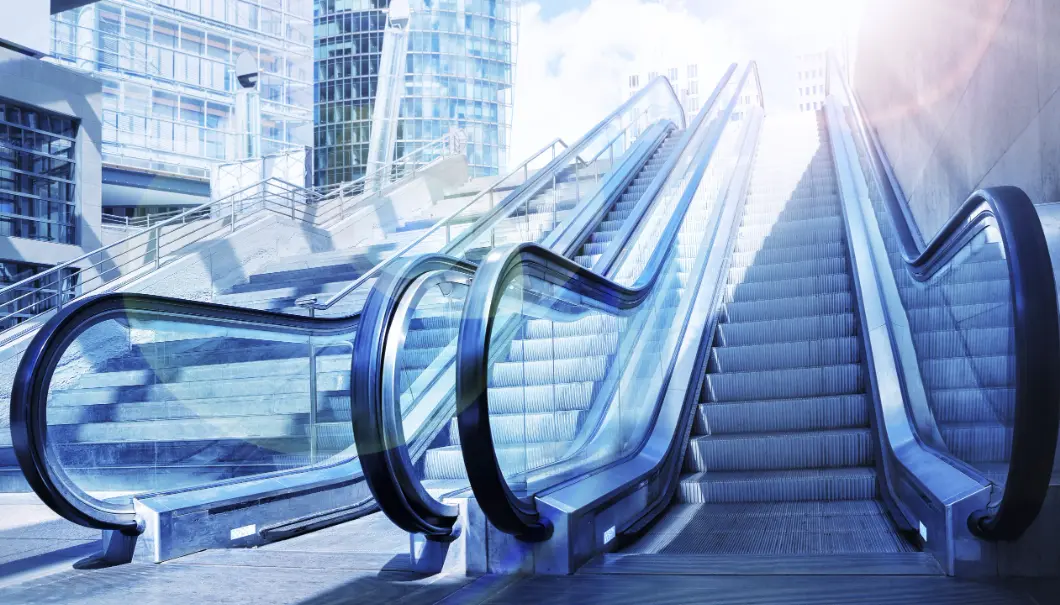
Escalator Safety
– Design and Maintenance: Escalators include safety features like emergency stop buttons, skirt brushes to prevent clothing entanglement, and automatic speed controls. Regular servicing ensures steps and handrails function properly.
– User Guidelines: Stand in the center of the step, facing forward, and hold the handrail. Step on and off carefully, avoiding rushing. Never sit or play on the escalator, and use the adjacent stairs if carrying large items.
– Common Hazards: Tripping on steps, entrapment in side panels, or falls from loose clothing. Children and elderly users are at higher risk, so always supervise them.
– Emergency Procedures: If clothing gets caught, press the emergency stop button immediately. In a crowd, maintain a safe distance to avoid pushing; if injured, seek medical help promptly.
General Best Practices
– For All Users: Wear appropriate footwear, avoid distractions like phones, and follow signage. Report any malfunctions to building management.
– Regulations: Adhere to local laws, such as OSHA standards in the US, which mandate routine inspections and training for operators.
– Education and Awareness: Buildings should provide safety signage and training programs to reduce risks, emphasizing that most accidents stem from user error.
By following these guidelines, the risks associated with elevators and escalators can be minimized, ensuring safer daily use.
Table of Contents
- Part 1: OnlineExamMaker AI Quiz Generator – Save Time and Efforts
- Part 2: 20 Elevator And Escalator Safety Quiz Questions & Answers
- Part 3: Save Time and Energy: Generate Quiz Questions with AI Technology
Part 1: OnlineExamMaker AI Quiz Generator – Save Time and Efforts
What’s the best way to create a Elevator And Escalator Safety quiz online? OnlineExamMaker is the best AI quiz making software for you. No coding, and no design skills required. If you don’t have the time to create your online quiz from scratch, you are able to use OnlineExamMaker AI Question Generator to create question automatically, then add them into your online assessment. What is more, the platform leverages AI proctoring and AI grading features to streamline the process while ensuring exam integrity.
Key features of OnlineExamMaker:
● Combines AI webcam monitoring to capture cheating activities during online exam.
● Allow the quiz taker to answer by uploading video or a Word document, adding an image, and recording an audio file.
● Automatically scores multiple-choice, true/false, and even open-ended/audio responses using AI, reducing manual work.
● OnlineExamMaker API offers private access for developers to extract your exam data back into your system automatically.
Automatically generate questions using AI
Part 2: 20 Elevator And Escalator Safety Quiz Questions & Answers
or
Question 1:
What should you do if you are trapped inside a stalled elevator?
A. Try to force the doors open.
B. Use the emergency phone or alarm button to call for help.
C. Jump up and down to restart the elevator.
D. Turn off the elevator’s power using the control panel.
Answer: B
Explanation: Using the emergency phone or alarm button ensures professional assistance without risking injury, as forcing doors or tampering with controls can cause harm.
Question 2:
What is the safest way to ride an escalator?
A. Stand on the sides and hold the handrail.
B. Run up or down the moving steps.
C. Face away from the direction of travel.
D. Carry heavy loads without using the handrail.
Answer: A
Explanation: Standing on the sides and holding the handrail maintains balance and prevents falls, which is a common escalator hazard.
Question 3:
Why should you avoid wearing loose clothing near escalators?
A. It might get caught in the escalator’s moving parts.
B. It could make you too warm during the ride.
C. Loose clothing is not fashionable in public.
D. It might block the escalator sensors.
Answer: A
Explanation: Loose clothing can become entangled in escalator mechanisms, leading to serious injuries, so it’s essential to wear fitted attire.
Question 4:
What should you do if you see an escalator that is not moving?
A. Step on it anyway, as it will start automatically.
B. Report it to maintenance and use the stairs or elevator.
C. Try to manually start it by pressing buttons.
D. Assume it’s safe and ride it slowly.
Answer: B
Explanation: A non-moving escalator could indicate a malfunction, and reporting it prevents accidents while using alternative safe routes.
Question 5:
In an elevator, what is the maximum weight limit typically indicated for?
A. To ensure the elevator doesn’t make noise.
B. To prevent overloading, which could cause malfunctions or crashes.
C. To help with energy efficiency.
D. To limit the number of people based on age.
Answer: B
Explanation: Exceeding the weight limit can strain the elevator’s mechanisms, leading to breakdowns or emergencies, so adhering to it is crucial for safety.
Question 6:
How should children be supervised on an escalator?
A. Let them ride alone to build independence.
B. Hold their hand and ensure they stand still.
C. Allow them to sit on the steps for fun.
D. Encourage them to run alongside the escalator.
Answer: B
Explanation: Holding a child’s hand and keeping them still reduces the risk of falls or entrapment in the escalator’s gaps.
Question 7:
What does an elevator’s emergency stop button do?
A. It speeds up the elevator for quick exits.
B. It halts the elevator immediately in case of danger.
C. It opens the doors automatically.
D. It resets the elevator to the ground floor.
Answer: B
Explanation: The emergency stop button is designed to stop the elevator safely during an emergency, allowing time for help to arrive.
Question 8:
Why should you stand clear of elevator doors when they are closing?
A. To avoid getting your belongings stuck.
B. Because it might delay the elevator’s schedule.
C. To prevent the doors from reopening.
D. It doesn’t matter as long as you’re inside.
Answer: A
Explanation: Standing clear prevents injuries from closing doors and ensures that items don’t trigger unsafe door reopenings.
Question 9:
What is a common cause of escalator accidents?
A. Using the handrail properly.
B. Stepping on the yellow safety line at the edges.
C. Distracted walking or rushing on the steps.
D. Waiting for the escalator to fully stop.
Answer: C
Explanation: Distracted or hurried behavior increases the likelihood of trips, falls, or entrapments on moving escalator steps.
Question 10:
In case of a fire, should you use an elevator to evacuate a building?
A. Yes, it’s the fastest way out.
B. No, use the stairs instead.
C. Only if the fire is on a lower floor.
D. Yes, but only during off-peak hours.
Answer: B
Explanation: Elevators can malfunction or fill with smoke during fires, making stairs the safer evacuation option as per fire safety protocols.
Question 11:
What should you do if an escalator suddenly stops while you’re on it?
A. Jump off immediately.
B. Hold the handrail and wait for it to restart.
C. Try to fix it by pressing the buttons.
D. Run to the nearest exit.
Answer: B
Explanation: Holding the handrail and waiting safely allows for proper resolution, as sudden movements could cause injuries.
Question 12:
Why are there sensors on elevator doors?
A. To make the doors close faster.
B. To detect obstacles and prevent closing on people or objects.
C. To count the number of passengers.
D. To adjust the elevator’s speed.
Answer: B
Explanation: Sensors ensure doors don’t close on individuals, reducing the risk of entrapment or injury during operation.
Question 13:
How should you enter an elevator?
A. Rush in just as the doors are closing.
B. Wait for everyone to exit first, then enter calmly.
C. Push others aside to get in quickly.
D. Stand in the doorway to hold it open.
Answer: B
Explanation: Allowing passengers to exit first prevents overcrowding and reduces the chance of accidents inside the elevator.
Question 14:
What is the purpose of the yellow markings on escalator steps?
A. To make the escalator look more attractive.
B. To indicate the edges and help prevent falls.
C. To show where to stand for a smoother ride.
D. To warn about weight limits.
Answer: B
Explanation: Yellow markings highlight the sides of the steps, helping users maintain balance and avoid stepping off the edge.
Question 15:
If an elevator starts shaking or making unusual noises, what should you do?
A. Continue your ride as it might be normal.
B. Press the emergency button and exit at the next stop.
C. Ignore it and enjoy the vibration.
D. Try to open the doors manually.
Answer: B
Explanation: Unusual shaking or noises could signal a mechanical issue, so alerting help via the emergency button is the safest response.
Question 16:
Why should you not hold the doors open for too long on an elevator?
A. It wastes energy and could cause the elevator to overheat.
B. It might trigger an alarm or malfunction.
C. Both A and B are correct.
D. It’s fine as long as no one is waiting.
Answer: C
Explanation: Holding doors open too long can drain power and activate safety alarms, potentially leading to elevator shutdowns.
Question 17:
What is the best practice for carrying items on an escalator?
A. Drape them over the handrail.
B. Hold them securely in front of you.
C. Drop them on the steps and pick them up at the top.
D. Swing them while walking.
Answer: B
Explanation: Holding items securely prevents them from falling or causing trips, maintaining safety for yourself and others.
Question 18:
In an emergency, who should you contact if an elevator is stuck?
A. The building’s security or emergency services.
B. A random passerby in the hallway.
C. The elevator company directly via social media.
D. Wait for someone else to handle it.
Answer: A
Explanation: Building security or emergency services are trained to handle such situations quickly and safely.
Question 19:
Why are escalators equipped with emergency stop buttons?
A. To allow users to control the speed.
B. To halt the escalator in case of an immediate threat.
C. To make it easier to clean.
D. To reset the escalator after use.
Answer: B
Explanation: Emergency stop buttons provide a way to stop the escalator instantly during hazards, preventing injuries.
Question 20:
What should you do after exiting an elevator?
A. Stand directly in front of the doors.
B. Move away quickly to allow others to exit.
C. Block the doorway to talk to someone inside.
D. Wait for the next person to leave first.
Answer: B
Explanation: Moving away from the doors ensures a clear path for other passengers, reducing congestion and potential accidents.
or
Part 3: Save Time and Energy: Generate Quiz Questions with AI Technology
Automatically generate questions using AI