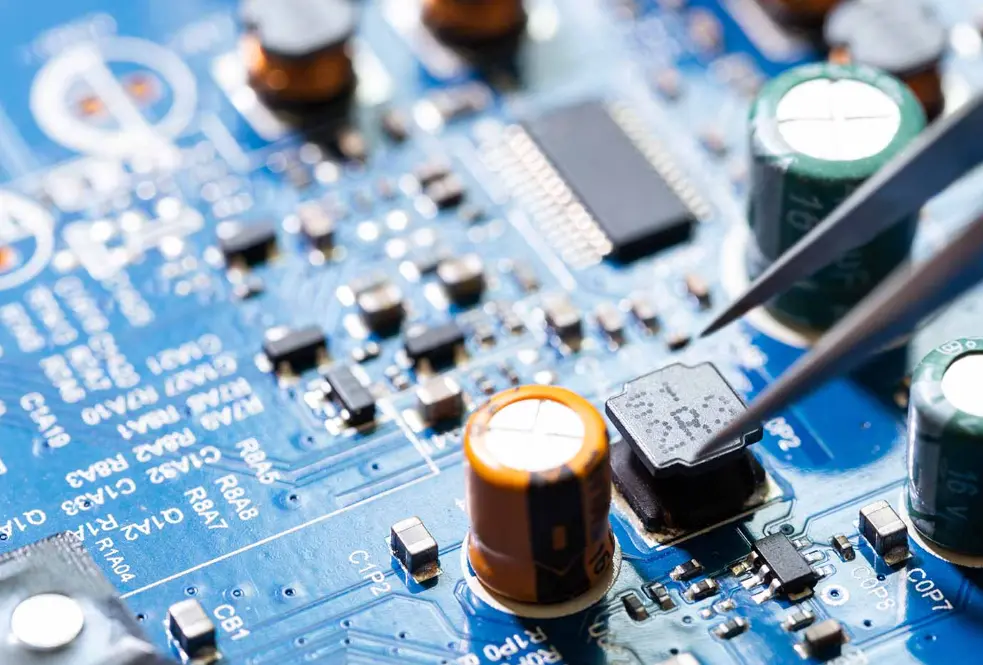
Electronic materials are essential substances used in the creation of electronic devices, characterized by their unique electrical, magnetic, and optical properties. These materials include semiconductors like silicon and gallium arsenide, which enable the control of electrical currents; conductors such as copper and gold, which facilitate efficient electron flow; and insulators like ceramics and polymers, which prevent unwanted electrical leakage.
Key types encompass:
– Semiconductors: Materials with conductivity between conductors and insulators, crucial for transistors, diodes, and integrated circuits, allowing for amplification and switching functions.
– Dielectrics: Non-conductive materials that store electrical energy, commonly used in capacitors and as substrates in printed circuit boards.
– Magnetic materials: Such as ferrites and rare-earth alloys, employed in data storage devices, transformers, and sensors for their ability to manipulate magnetic fields.
– Optoelectronic materials: Including LEDs and photodetectors made from compounds like gallium nitride, which convert light to electricity or vice versa.
These materials drive advancements in technology, from smartphones and computers to renewable energy systems, by enabling miniaturization, energy efficiency, and high performance in modern electronics. Ongoing research focuses on nanomaterials and flexible substrates to enhance durability and functionality in emerging fields like wearable tech and quantum computing.
Table of Contents
- Part 1: OnlineExamMaker AI Quiz Generator – The Easiest Way to Make Quizzes Online
- Part 2: 20 Electronic Materials Quiz Questions & Answers
- Part 3: Automatically Generate Quiz Questions Using AI Question Generator
Part 1: OnlineExamMaker AI Quiz Generator – The Easiest Way to Make Quizzes Online
When it comes to ease of creating a Electronic Materials skills assessment, OnlineExamMaker is one of the best AI-powered quiz making software for your institutions or businesses. With its AI Question Generator, just upload a document or input keywords about your assessment topic, you can generate high-quality quiz questions on any topic, difficulty level, and format.
What you will like:
● AI Question Generator to help you save time in creating quiz questions automatically.
● Share your online exam with audiences on social platforms like Facebook, Twitter, Reddit and more.
● Display the feedback for correct or incorrect answers instantly after a question is answered.
● Create a lead generation form to collect an exam taker’s information, such as email, mobile phone, work title, company profile and so on.
Automatically generate questions using AI
Part 2: 20 Electronic Materials Quiz Questions & Answers
or
1. Question: What type of material allows the flow of electric current with minimal resistance?
Options:
A) Insulator
B) Semiconductor
C) Conductor
D) Superconductor
Answer: C
Explanation: Conductors, such as copper and silver, have free electrons that enable easy flow of electric current due to their low resistance.
2. Question: Which electronic material has a bandgap of approximately 1.12 eV at room temperature?
Options:
A) Germanium
B) Silicon
C) Gallium arsenide
D) Diamond
Answer: B
Explanation: Silicon is a common semiconductor with a bandgap of about 1.12 eV, making it suitable for various electronic devices like transistors.
3. Question: In p-type semiconductors, the majority charge carriers are:
Options:
A) Electrons
B) Protons
C) Holes
D) Neutrons
Answer: C
Explanation: P-type semiconductors are doped with acceptor impurities, creating holes as the majority charge carriers, which facilitate current flow.
4. Question: What is the primary function of a dielectric material in capacitors?
Options:
A) To conduct electricity
B) To store electrical energy
C) To insulate and separate charges
D) To generate heat
Answer: C
Explanation: Dielectric materials, such as ceramics or plastics, act as insulators in capacitors, preventing direct current flow while allowing energy storage.
5. Question: Which material is commonly used as a gate dielectric in MOSFETs?
Options:
A) Silicon dioxide
B) Aluminum
C) Gold
D) Copper
Answer: A
Explanation: Silicon dioxide is used as a gate dielectric in MOSFETs because it provides excellent insulation and forms a stable interface with silicon.
6. Question: The process of adding impurities to a semiconductor to alter its electrical properties is called:
Options:
A) Diffusion
B) Doping
C) Etching
D) Annealing
Answer: B
Explanation: Doping introduces impurities like phosphorus or boron into semiconductors to control conductivity by creating n-type or p-type materials.
7. Question: What property makes graphene a promising material for future electronics?
Options:
A) High resistivity
B) Exceptional thermal conductivity
C) High bandgap
D) Poor flexibility
Answer: B
Explanation: Graphene’s exceptional thermal conductivity and high electron mobility make it ideal for high-speed electronic applications.
8. Question: In LEDs, which material is often used to emit red light?
Options:
A) Gallium nitride
B) Indium phosphide
C) Gallium arsenide phosphide
D) Silicon carbide
Answer: C
Explanation: Gallium arsenide phosphide is commonly used in LEDs to produce red light by emitting photons when electrons recombine with holes.
9. Question: What is the Fermi level in intrinsic semiconductors?
Options:
A) Near the valence band
B) Near the conduction band
C) Midway between the valence and conduction bands
D) Outside the bandgap
Answer: C
Explanation: In intrinsic semiconductors, the Fermi level is located approximately midway between the valence and conduction bands due to equal electron and hole concentrations.
10. Question: Which electronic material exhibits negative temperature coefficient of resistance?
Options:
A) Metals
B) Thermistors (NTC type)
C) Insulators
D) Superconductors
Answer: B
Explanation: NTC thermistors, made from materials like manganese oxides, have resistance that decreases as temperature increases, making them useful for temperature sensing.
11. Question: What is the main advantage of using gallium nitride in high-power electronics?
Options:
A) Low thermal stability
B) Wide bandgap
C) High resistivity
D) Poor electron mobility
Answer: B
Explanation: Gallium nitride’s wide bandgap allows it to handle high voltages and temperatures, making it suitable for power devices like inverters.
12. Question: In solar cells, what role does silicon play?
Options:
A) As a conductor
B) As a photovoltaic material
C) As an insulator
D) As a heat sink
Answer: B
Explanation: Silicon is used as a photovoltaic material in solar cells, where it absorbs light and converts it into electricity through the photovoltaic effect.
13. Question: Which material is typically used for the substrate in integrated circuits?
Options:
A) Glass
B) Silicon wafer
C) Plastic
D) Copper
Answer: B
Explanation: Silicon wafers serve as the substrate in integrated circuits because they provide a stable base for fabricating transistors and other components.
14. Question: What causes the Hall effect in electronic materials?
Options:
A) Magnetic fields interacting with charge carriers
B) Temperature changes
C) Light exposure
D) Pressure variations
Answer: A
Explanation: The Hall effect occurs when a magnetic field perpendicular to the current in a material deflects charge carriers, creating a measurable voltage.
15. Question: Which type of electronic material is amorphous silicon?
Options:
A) Crystalline
B) Polycrystalline
C) Non-crystalline
D) Metallic
Answer: C
Explanation: Amorphous silicon lacks a regular crystal structure, making it non-crystalline and commonly used in thin-film solar cells and displays.
16. Question: In transformers, what material is used for the core to minimize energy loss?
Options:
A) Iron
B) Silicon steel
C) Copper
D) Aluminum
Answer: B
Explanation: Silicon steel is used in transformer cores because its high magnetic permeability and low hysteresis loss reduce energy dissipation.
17. Question: What is the key characteristic of piezoelectric materials like quartz?
Options:
A) They conduct electricity well
B) They generate voltage when mechanically stressed
C) They insulate completely
D) They change color with temperature
Answer: B
Explanation: Piezoelectric materials, such as quartz, produce an electric charge in response to applied mechanical stress, enabling uses in sensors and actuators.
18. Question: Which electronic material is a II-VI compound semiconductor?
Options:
A) Silicon
B) Gallium arsenide
C) Cadmium sulfide
D) Germanium
Answer: C
Explanation: Cadmium sulfide is a II-VI compound semiconductor, composed of elements from groups II and VI of the periodic table, used in photodetectors.
19. Question: What effect does annealing have on electronic materials?
Options:
A) Increases defects
B) Reduces crystallinity
C) Improves electrical properties
D) Causes immediate breakdown
Answer: C
Explanation: Annealing heats and cools materials to relieve internal stresses and defects, thereby improving electrical properties like conductivity.
20. Question: In OLED displays, what material emits light when an electric current is applied?
Options:
A) Organic compounds
B) Metals
C) Insulators
D) Ceramics
Answer: A
Explanation: Organic compounds in OLEDs emit light through electroluminescence when electrons and holes recombine, enabling flexible and efficient displays.
or
Part 3: Automatically generate quiz questions using OnlineExamMaker AI Question Generator
Automatically generate questions using AI