## What is Conversion Rate Optimization (CRO)?
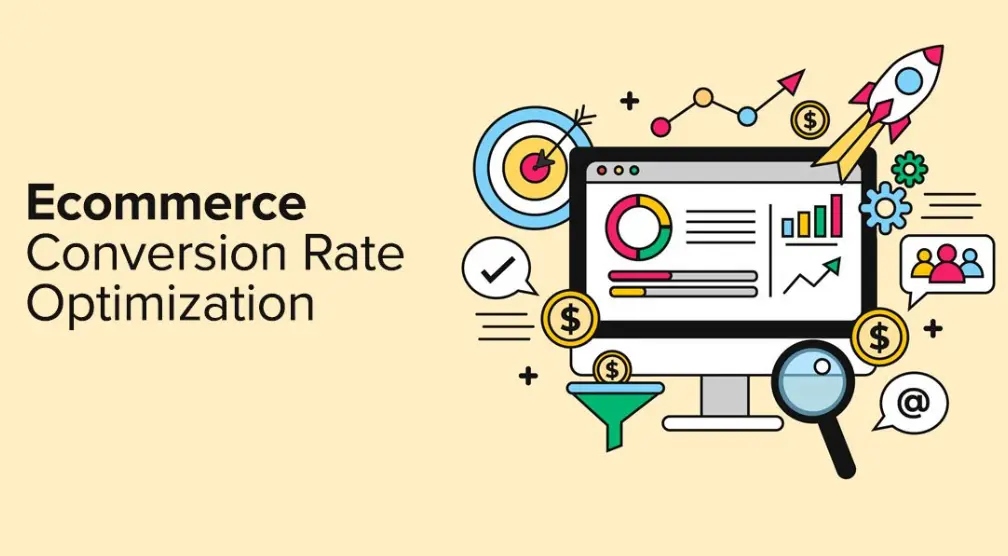
Conversion Rate Optimization (CRO) is the systematic process of increasing the percentage of website visitors who complete a desired action, such as making a purchase, signing up for a newsletter, or adding items to a cart. In e-commerce, it’s essential for maximizing revenue from existing traffic without relying solely on acquiring more visitors.
## Why is CRO Important for E-Commerce?
– Boosts Efficiency: By optimizing your site, you can turn more browsers into buyers, improving ROI on marketing efforts.
– Reduces Costs: Higher conversion rates mean you get more value from your current traffic, lowering customer acquisition costs.
– Enhances User Experience: CRO focuses on making the shopping journey smoother, which builds trust and loyalty.
– Adapts to Competition: In a crowded e-commerce landscape, optimized sites outperform others by providing a superior user experience.
## Key Strategies for CRO in E-Commerce
1. Analyze User Behavior: Use tools like Google Analytics, heatmaps, and session recordings to identify drop-off points, such as high cart abandonment rates.
2. Improve Website Speed and Design: Ensure fast loading times, mobile responsiveness, and intuitive navigation to reduce bounce rates.
3. Optimize Product Pages: Include high-quality images, detailed descriptions, customer reviews, and clear calls-to-action (CTAs) to persuade visitors.
4. A/B Testing: Test variations of elements like headlines, buttons, layouts, and pricing to determine what resonates best with users.
5. Personalization: Leverage data to tailor recommendations, offers, and content based on user preferences and browsing history.
6. Streamline Checkout Process: Minimize form fields, offer guest checkout options, and provide multiple payment methods to reduce friction.
7. Email and Retargeting Campaigns: Use abandoned cart emails and retargeting ads to re-engage users who didn’t complete a purchase.
## Common Metrics to Track
– Conversion Rate: (Number of conversions / Total visitors) × 100 – Aim for industry benchmarks, typically 1-5%.
– Bounce Rate: Percentage of visitors who leave without interacting – Target below 40-50%.
– Cart Abandonment Rate: Percentage of users who add items but don’t buy – Average around 60-80%, so focus on reductions.
– Average Order Value (AOV): Revenue per order – Optimize through upsells and cross-sells.
– Exit Rate: Percentage of users leaving from a specific page – Helps pinpoint problem areas.
## Best Practices and Tools
– Conduct Regular Audits: Review your site quarterly to spot issues like broken links or poor mobile performance.
– Focus on Trust Signals: Display security badges, free shipping options, and easy return policies to build confidence.
– Tools to Use: Google Optimize for A/B testing, Hotjar for user insights, Optimizely for personalization, and Shopify or WooCommerce analytics for e-commerce specifics.
– Iterate Based on Data: Always rely on quantitative data from tests rather than assumptions for informed decisions.
## Benefits of Effective CRO
Implementing CRO can lead to increased sales, higher customer satisfaction, better SEO performance, and a stronger competitive edge. By continuously refining your e-commerce site, you create a more profitable and user-friendly online store.
Table of Contents
- Part 1: Create An Amazing E-Commerce Conversion Rate Optimization Quiz Using AI Instantly in OnlineExamMaker
- Part 2: 20 E-Commerce Conversion Rate Optimization Quiz Questions & Answers
- Part 3: Automatically Generate Quiz Questions Using AI Question Generator
Part 1: Create An Amazing E-Commerce Conversion Rate Optimization Quiz Using AI Instantly in OnlineExamMaker
Nowadays more and more people create E-Commerce Conversion Rate Optimization quizzes using AI technologies, OnlineExamMaker a powerful AI-based quiz making tool that can save you time and efforts. The software makes it simple to design and launch interactive quizzes, assessments, and surveys. With the Question Editor, you can create multiple-choice, open-ended, matching, sequencing and many other types of questions for your tests, exams and inventories. You are allowed to enhance quizzes with multimedia elements like images, audio, and video to make them more interactive and visually appealing.
Recommended features for you:
● Prevent cheating by randomizing questions or changing the order of questions, so learners don’t get the same set of questions each time.
● Automatically generates detailed reports—individual scores, question report, and group performance.
● Simply copy a few lines of codes, and add them to a web page, you can present your online quiz in your website, blog, or landing page.
● Offers question analysis to evaluate question performance and reliability, helping instructors optimize their training plan.
Automatically generate questions using AI
Part 2: 20 E-Commerce Conversion Rate Optimization Quiz Questions & Answers
or
1. Question: What is the primary goal of Conversion Rate Optimization (CRO) in e-commerce?
A. Increasing website traffic
B. Maximizing the percentage of visitors who complete a purchase
C. Reducing advertising costs
D. Expanding product inventory
Answer: B
Explanation: CRO aims to improve the efficiency of an e-commerce site by focusing on converting existing visitors into customers, rather than solely driving more traffic.
2. Question: Which metric is most directly improved by effective CRO strategies?
A. Bounce rate
B. Conversion rate
C. Page views per session
D. Time on site
Answer: B
Explanation: CRO specifically targets the conversion rate, which measures the proportion of visitors who take a desired action, such as making a purchase.
3. Question: In e-commerce, what is A/B testing primarily used for?
A. Comparing two different websites
B. Testing variations of a webpage to see which performs better
C. Analyzing competitor traffic
D. Measuring server response times
Answer: B
Explanation: A/B testing allows e-commerce sites to experiment with elements like layouts or headlines to identify which version yields higher conversions.
4. Question: Why is mobile optimization important for e-commerce CRO?
A. It reduces email marketing costs
B. It ensures a seamless user experience on mobile devices, reducing abandonment
C. It increases social media shares
D. It automatically boosts search rankings
Answer: B
Explanation: With many users shopping on mobile, optimizing for speed and usability minimizes friction, leading to higher conversion rates.
5. Question: What role do clear calls-to-action (CTAs) play in e-commerce CRO?
A. They help with SEO optimization
B. They guide users toward completing a purchase, increasing conversions
C. They reduce the need for customer service
D. They track user demographics
Answer: B
Explanation: Effective CTAs, like “Add to Cart,” make it easier for users to proceed, directly impacting the conversion funnel.
6. Question: How does reducing page load time affect e-commerce conversions?
A. It has no impact on sales
B. Slower load times can lead to higher bounce rates and lower conversions
C. Faster loads only affect desktop users
D. It primarily boosts email open rates
Answer: B
Explanation: Slow loading frustrates users, increasing the likelihood of abandonment and negatively affecting conversion rates.
7. Question: What is the benefit of using trust signals like customer reviews in e-commerce?
A. They improve website design
B. They build credibility, reducing hesitation and boosting conversions
C. They lower shipping costs
D. They increase ad click-through rates
Answer: B
Explanation: Trust signals reassure shoppers, lowering perceived risk and encouraging more purchases, which enhances CRO.
8. Question: In e-commerce, why is personalization effective for CRO?
A. It makes the site look more modern
B. It tailors recommendations to user preferences, increasing the likelihood of purchase
C. It reduces the number of products listed
D. It focuses on competitor analysis
Answer: B
Explanation: Personalized content, such as product suggestions based on browsing history, makes shopping more relevant, leading to higher conversions.
9. Question: What is cart abandonment in e-commerce, and how does CRO address it?
A. It’s when users add items but don’t buy, and CRO ignores it
B. It’s when users leave without purchasing, and CRO uses strategies like exit pop-ups to recover sales
C. It’s a normal part of shopping and can’t be optimized
D. It’s related to inventory management only
Answer: B
Explanation: CRO tackles cart abandonment by simplifying checkout or offering incentives, directly improving conversion rates.
10. Question: How does simplifying the checkout process impact e-commerce conversions?
A. It makes the process longer, encouraging more thought
B. It reduces steps and friction, leading to higher completion rates
C. It has no effect on sales
D. It increases the need for customer logins
Answer: B
Explanation: A streamlined checkout minimizes drop-offs, as fewer barriers mean more users complete their purchases.
11. Question: What is the role of high-quality product images in e-commerce CRO?
A. They are only for aesthetic purposes
B. They help users visualize products, reducing uncertainty and boosting conversions
C. They speed up website loading
D. They replace the need for descriptions
Answer: B
Explanation: Clear images build confidence in the product, encouraging users to proceed to purchase and improving overall conversion rates.
12. Question: Why is upselling relevant to e-commerce CRO?
A. It confuses customers and lowers sales
B. It suggests higher-value alternatives, increasing average order value and conversions
C. It is unrelated to CRO
D. It only applies to physical stores
Answer: B
Explanation: Upselling complements CRO by guiding users to more profitable options during the buying process, enhancing revenue per visitor.
13. Question: How does social proof, like testimonials, aid in e-commerce conversions?
A. It distracts from the shopping experience
B. It leverages peer influence to build trust and encourage purchases
C. It slows down page loading
D. It is only useful for new websites
Answer: B
Explanation: Social proof reassures potential buyers by showing others’ positive experiences, which directly supports higher conversion rates.
14. Question: What impact does free shipping have on e-commerce CRO?
A. It increases costs without benefits
B. It removes a common barrier, leading to more completed purchases
C. It only affects international sales
D. It has no role in optimization
Answer: B
Explanation: Offering free shipping addresses a key objection, making it easier for users to convert by eliminating perceived extra costs.
15. Question: In e-commerce, how does heat map analysis contribute to CRO?
A. It tracks weather patterns for shipping
B. It reveals user behavior on pages, allowing optimizations like button placement for better conversions
C. It measures competitor traffic
D. It is unrelated to user experience
Answer: B
Explanation: Heat maps show where users click and scroll, enabling targeted changes that reduce friction and improve conversion rates.
16. Question: Why is funnel analysis important for e-commerce CRO?
A. It focuses on external marketing
B. It identifies drop-off points in the customer journey, allowing fixes to boost conversions
C. It replaces the need for analytics tools
D. It only applies to large businesses
Answer: B
Explanation: Analyzing the sales funnel highlights where users exit, so CRO strategies can be applied to retain and convert more visitors.
17. Question: What is the effect of using urgency tactics, like limited-time offers, in e-commerce?
A. They create confusion and lower sales
B. They motivate quick decisions, increasing conversions by playing on scarcity
C. They are ineffective for online stores
D. They only work for discounts
Answer: B
Explanation: Urgency tactics prompt immediate action, reducing hesitation and directly enhancing conversion rates.
18. Question: How does SEO integration support e-commerce CRO?
A. It replaces the need for CRO
B. It drives targeted traffic, which, when optimized, leads to higher conversions
C. It focuses solely on keywords
D. It has no connection to sales
Answer: B
Explanation: Good SEO brings qualified visitors, and combining it with CRO ensures those visitors are more likely to convert.
19. Question: What role does customer feedback play in e-commerce CRO?
A. It is ignored in optimization
B. It provides insights into pain points, allowing improvements that increase conversions
C. It only affects product development
D. It slows down website updates
Answer: B
Explanation: Feedback helps identify and fix issues, such as unclear navigation, leading to a better user experience and higher conversion rates.
20. Question: How does post-purchase optimization, like follow-up emails, enhance e-commerce CRO?
A. It has no impact on future sales
B. It builds loyalty and encourages repeat purchases, indirectly improving overall conversion metrics
C. It is only for customer service
D. It replaces the need for initial conversions
Answer: B
Explanation: Effective post-purchase strategies foster repeat business, which sustains and boosts long-term conversion rates on the site.
or
Part 3: Automatically generate quiz questions using OnlineExamMaker AI Question Generator
Automatically generate questions using AI