Disaster preparedness involves proactive steps to minimize risks and ensure safety during emergencies such as natural disasters (e.g., earthquakes, floods, hurricanes) or human-caused events (e.g., fires, chemical spills). Here’s a comprehensive overview:
1. Understanding Risks
– Assess local hazards: Identify common disasters in your area, such as wildfires in dry regions or tsunamis in coastal zones.
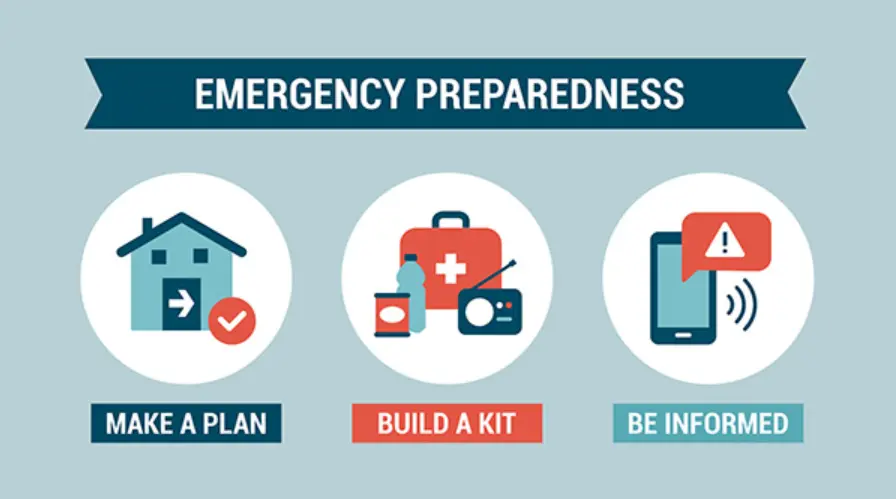
– Stay informed: Monitor weather alerts, emergency broadcasts, and apps like FEMA or Red Cross for real-time updates.
2. Creating a Preparedness Plan
– Develop a family or community plan: Include evacuation routes, meeting points, and communication strategies (e.g., using a designated contact outside the affected area).
– Assign roles: Designate responsibilities for children, elderly, or pets, and practice drills regularly.
– Build an emergency kit: Stock essentials for at least 72 hours, including water (1 gallon per person per day), non-perishable food, medications, flashlights, batteries, a first-aid kit, and important documents in a waterproof container.
3. Home and Property Safety
– Secure your environment: Bolt bookshelves to walls, install smoke detectors, and reinforce windows to withstand high winds.
– Utility management: Know how to shut off gas, water, and electricity to prevent hazards like fires or leaks.
– Insurance and documentation: Review and update home insurance policies, and keep digital copies of vital records.
4. During a Disaster
– Stay calm and follow instructions: Adhere to official guidance from authorities and avoid unnecessary travel.
– Seek shelter: Go to a safe room or basement for tornadoes, or move to higher ground for floods.
– Emergency communication: Use text messages or social media if phone lines are overloaded, and conserve phone battery.
5. After a Disaster
– Assess for dangers: Check for structural damage, gas leaks, or electrical hazards before re-entering buildings.
– Seek medical help: Attend to injuries and monitor for health issues like contaminated water.
– Recovery steps: Contact insurance, document damages for claims, and connect with community resources for aid.
Key Tips for All Ages
– Educate children: Teach them basic safety rules and how to call emergency services.
– Include vulnerable groups: Ensure plans account for people with disabilities, the elderly, or those with medical needs.
– Stay resilient: Mental health is crucial; prepare by learning coping strategies and building community networks.
Regularly review and update your plan every six months to adapt to changing circumstances. Preparedness saves lives and reduces the impact of disasters.
Table of Contents
- Part 1: Create An Amazing Disaster Preparedness Safety Quiz Using AI Instantly in OnlineExamMaker
- Part 2: 20 Disaster Preparedness Safety Quiz Questions & Answers
- Part 3: Automatically Generate Quiz Questions Using AI Question Generator
Part 1: Create An Amazing Disaster Preparedness Safety Quiz Using AI Instantly in OnlineExamMaker
The quickest way to assess the Disaster Preparedness Safety knowledge of candidates is using an AI assessment platform like OnlineExamMaker. With OnlineExamMaker AI Question Generator, you are able to input content—like text, documents, or topics—and then automatically generate questions in various formats (multiple-choice, true/false, short answer). Its AI Exam Grader can automatically grade the exam and generate insightful reports after your candidate submit the assessment.
Overview of its key assessment-related features:
● Create up to 10 question types, including multiple-choice, true/false, fill-in-the-blank, matching, short answer, and essay questions.
● Automatically generates detailed reports—individual scores, question report, and group performance.
● Instantly scores objective questions and subjective answers use rubric-based scoring for consistency.
● API and SSO help trainers integrate OnlineExamMaker with Google Classroom, Microsoft Teams, CRM and more.
Automatically generate questions using AI
Part 2: 20 Disaster Preparedness Safety Quiz Questions & Answers
or
1. What is the most important item to include in an emergency kit for disaster preparedness?
A. A smartphone
B. Bottled water
C. Jewelry
D. Candles
Answer: B
Explanation: Bottled water is essential for hydration during disasters when clean water sources may be unavailable, helping to prevent dehydration and maintain health.
2. During an earthquake, what is the recommended action if you are indoors?
A. Run outside immediately
B. Drop to the ground, cover your head, and hold on
C. Hide under a large appliance
D. Stand in a doorway
Answer: B
Explanation: Dropping to the ground, covering your head and neck, and holding onto a sturdy object protects you from falling debris and reduces injury risk.
3. Which of the following is a key step in preparing for a flood?
A. Building a sandcastle
B. Elevating important items above flood levels
C. Ignoring weather forecasts
D. Storing items in the basement
Answer: B
Explanation: Elevating important items helps prevent water damage and loss of essential documents, electronics, and supplies during flooding.
4. What should you do first if a fire starts in your home?
A. Open all windows for fresh air
B. Evacuate and call emergency services
C. Try to put it out with water
D. Gather your belongings
Answer: B
Explanation: Evacuating immediately and calling emergency services ensures personal safety, as attempting to fight the fire can be dangerous without proper training.
5. For hurricane preparedness, what is the primary purpose of boarding up windows?
A. To keep the house cool
B. To prevent high winds from breaking glass and causing injury
C. To block out sunlight
D. To improve insulation
Answer: B
Explanation: Boarding up windows protects against wind damage and flying debris, reducing the risk of injuries from shattered glass during a hurricane.
6. In a tornado warning, where is the safest place to seek shelter in a building?
A. A large open room
B. A basement or an interior room on the lowest floor
C. Near a window
D. On the roof
Answer: B
Explanation: Basements or interior rooms on the lowest floor provide the most protection from tornado winds and flying objects by offering structural barriers.
7. If a tsunami warning is issued, what should you do if you are near the coast?
A. Go to the beach to watch
B. Evacuate to higher ground immediately
C. Stay indoors and wait
D. Swim out to sea
Answer: B
Explanation: Evacuating to higher ground quickly saves lives by getting you out of the path of incoming waves, as tsunamis can strike without much warning.
8. What is an effective way to prevent wildfires around your home?
A. Storing flammable materials near the house
B. Creating a defensible space by clearing vegetation
C. Burning leaves in the yard
D. Ignoring dry conditions
Answer: B
Explanation: Creating a defensible space by removing dry vegetation reduces the risk of fire spreading to your home, giving firefighters a better chance to protect it.
9. For pandemic preparedness, what should be included in a basic supply kit?
A. Only food items
B. Face masks, hand sanitizer, and soap
C. Expensive electronics
D. Perishable goods
Answer: B
Explanation: Face masks, hand sanitizer, and soap help prevent the spread of illness by maintaining hygiene and reducing transmission in crowded or contaminated environments.
10. During a power outage, how should you safely use a generator?
A. Operate it indoors for convenience
B. Place it outdoors, away from windows and doors
C. Connect it directly to household wiring
D. Leave it running unattended
Answer: B
Explanation: Placing a generator outdoors away from windows and doors prevents carbon monoxide poisoning, which can occur from exhaust fumes in enclosed spaces.
11. What is the first step in basic first aid for a bleeding wound?
A. Clean the wound with water
B. Apply direct pressure to stop the bleeding
C. Bandage it loosely
D. Elevate the injured area only
Answer: B
Explanation: Applying direct pressure helps control bleeding quickly, reducing blood loss and the risk of shock in emergency situations.
12. Why is it important to have a family communication plan for disasters?
A. To share fun stories
B. To ensure everyone knows how to contact each other and meet if separated
C. To plan vacations
D. To ignore official alerts
Answer: B
Explanation: A communication plan helps family members reunite safely and share critical information during chaos, improving overall response and recovery.
13. When planning evacuation routes, what factor should you prioritize?
A. The shortest distance
B. Routes that are least likely to be blocked and have multiple options
C. Scenic views along the way
D. Roads with tolls
Answer: B
Explanation: Prioritizing routes that are less likely to be blocked ensures a safer and faster escape, accounting for potential disaster-related obstacles.
14. How should you prepare for pet safety during a disaster?
A. Leave them at home
B. Include pet food, carriers, and medications in your emergency kit
C. Take them for a walk outside during the event
D. Assume they can fend for themselves
Answer: B
Explanation: Including pet supplies in your kit ensures their well-being and prevents them from becoming a distraction or health risk during evacuation or sheltering.
15. During a flood, why is it unsafe to walk through moving water?
A. It might be cold
B. It can sweep you off your feet even if it’s only a few inches deep
C. It could be dirty
D. Walking is tiring
Answer: B
Explanation: Moving water can exert strong forces that knock you down and carry you away, leading to drowning or injury, even in shallow depths.
16. If you smell gas after a disaster, what should you do immediately?
A. Light a match to check
B. Evacuate the area and call emergency services
C. Open all windows
D. Turn on lights to investigate
Answer: B
Explanation: Evacuating and calling for help prevents explosions or fires, as gas leaks can ignite from any spark, posing a severe risk.
17. When should you shelter in place during a disaster?
A. Always, to avoid traffic
B. When officials advise it, such as during a chemical spill
C. Only at night
D. When you feel like it
Answer: B
Explanation: Sheltering in place is recommended by authorities for hazards like chemical releases, as it keeps you safe indoors away from immediate dangers.
18. After a disaster, why is it important to check for injuries before moving debris?
A. To avoid getting dirty
B. To ensure you don’t worsen any hidden injuries
C. To take photos for insurance
D. To wait for help
Answer: B
Explanation: Checking for injuries first prevents further harm, as moving debris could aggravate fractures or cause additional trauma in unstable conditions.
19. What role does having insurance play in disaster preparedness?
A. It replaces the need for an emergency kit
B. It provides financial protection for rebuilding and recovery
C. It guarantees immediate cash
D. It covers everyday expenses
Answer: B
Explanation: Insurance helps cover costs for damages and losses, allowing for effective recovery without overwhelming personal expenses after a disaster.
20. How can community involvement improve disaster preparedness?
A. By hosting parties
B. Through neighborhood drills and shared resources
C. By ignoring local events
D. By focusing only on individual plans
Answer: B
Explanation: Community drills and shared resources enhance collective response, making it easier to assist vulnerable members and coordinate efforts during emergencies.
or
Part 3: Automatically generate quiz questions using OnlineExamMaker AI Question Generator
Automatically generate questions using AI