Digital Manufacturing refers to the integration of advanced digital technologies into traditional manufacturing processes to enhance efficiency, flexibility, and innovation. At its core, it leverages tools such as the Internet of Things (IoT), artificial intelligence (AI), big data analytics, cloud computing, and additive manufacturing (like 3D printing) to create a connected and intelligent production ecosystem.
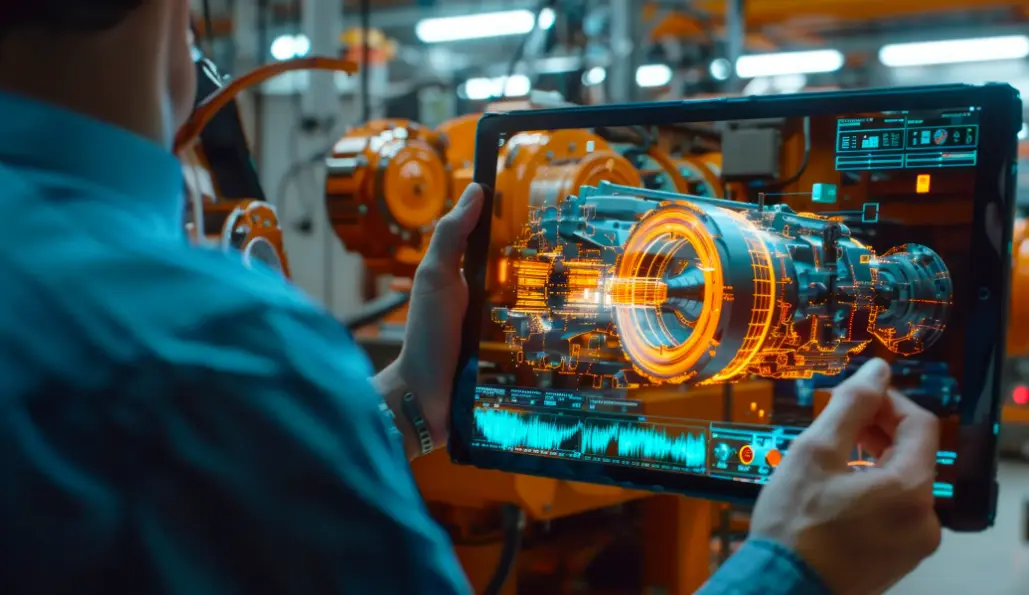
Key components include digital twins, which are virtual replicas of physical assets for simulation and optimization; cyber-physical systems that bridge the digital and physical worlds; and automated robotics for precise, high-speed operations. This approach enables real-time data collection, predictive maintenance, and seamless supply chain integration, reducing downtime and costs.
Benefits of Digital Manufacturing include increased productivity, improved quality control, and faster time-to-market for products. For instance, it allows for customized production at scale, minimizes waste through optimized resource use, and supports sustainable practices by reducing energy consumption.
In practice, industries like automotive, aerospace, and consumer electronics have adopted Digital Manufacturing to streamline operations. Companies such as Siemens and General Electric use it to simulate assembly lines, predict failures, and innovate new designs.
Looking ahead, the rise of Industry 4.0 and emerging technologies like edge computing and machine learning will further evolve Digital Manufacturing, making it a cornerstone of global competitiveness in the 21st century.
Table of Contents
- Part 1: OnlineExamMaker AI Quiz Generator – Save Time and Efforts
- Part 2: 20 Digital Manufacturing Quiz Questions & Answers
- Part 3: AI Question Generator – Automatically Create Questions for Your Next Assessment
Part 1: OnlineExamMaker AI Quiz Generator – Save Time and Efforts
What’s the best way to create a Digital Manufacturing quiz online? OnlineExamMaker is the best AI quiz making software for you. No coding, and no design skills required. If you don’t have the time to create your online quiz from scratch, you are able to use OnlineExamMaker AI Question Generator to create question automatically, then add them into your online assessment. What is more, the platform leverages AI proctoring and AI grading features to streamline the process while ensuring exam integrity.
Key features of OnlineExamMaker:
● Combines AI webcam monitoring to capture cheating activities during online exam.
● Allow the quiz taker to answer by uploading video or a Word document, adding an image, and recording an audio file.
● Automatically scores multiple-choice, true/false, and even open-ended/audio responses using AI, reducing manual work.
● OnlineExamMaker API offers private access for developers to extract your exam data back into your system automatically.
Automatically generate questions using AI
Part 2: 20 Digital Manufacturing Quiz Questions & Answers
or
1. Question: What is the primary goal of Digital Manufacturing?
A) To reduce physical labor in factories
B) To integrate digital technologies for optimizing manufacturing processes
C) To eliminate the need for human workers
D) To focus solely on product design
Answer: B
Explanation: Digital Manufacturing uses technologies like IoT and AI to streamline production, improve efficiency, and enable real-time data-driven decisions.
2. Question: Which technology is most commonly associated with enabling real-time monitoring in Digital Manufacturing?
A) Traditional assembly lines
B) Internet of Things (IoT)
C) Manual inventory systems
D) Paper-based blueprints
Answer: B
Explanation: IoT devices collect and transmit data from machinery, allowing for immediate monitoring and predictive maintenance to prevent downtime.
3. Question: In Digital Manufacturing, what does a digital twin represent?
A) A physical copy of a product
B) A virtual model that simulates a physical asset’s lifecycle
C) A backup data storage system
D) A 2D drawing of manufacturing processes
Answer: B
Explanation: A digital twin creates a dynamic virtual replica, enabling testing and optimization without affecting the real-world counterpart.
4. Question: How does additive manufacturing differ from traditional subtractive methods?
A) It removes material to shape products
B) It builds products layer by layer using digital designs
C) It requires more manual intervention
D) It is limited to metal materials
Answer: B
Explanation: Additive manufacturing, like 3D printing, adds material based on digital files, reducing waste and allowing for complex designs.
5. Question: What role does Artificial Intelligence (AI) play in Digital Manufacturing?
A) Only for marketing products
B) For predictive maintenance and quality control
C) To replace all human roles
D) For basic data entry
Answer: B
Explanation: AI analyzes data to predict equipment failures and optimize processes, improving efficiency and reducing costs.
6. Question: Which benefit is most directly linked to implementing automation in Digital Manufacturing?
A) Increased human error
B) Higher production speed and consistency
C) Reduced use of technology
D) Slower decision-making
Answer: B
Explanation: Automation uses robots and software to perform repetitive tasks faster and with greater accuracy than manual methods.
7. Question: What is the main purpose of Enterprise Resource Planning (ERP) systems in Digital Manufacturing?
A) To handle only financial records
B) To integrate and manage core business processes like supply chain and inventory
C) To design products exclusively
D) To focus on customer service
Answer: B
Explanation: ERP systems provide a centralized platform for real-time data sharing across departments, enhancing operational efficiency.
8. Question: How does cloud computing enhance Digital Manufacturing?
A) By limiting data access
B) By providing scalable storage and remote collaboration for manufacturing data
C) By slowing down processing speeds
D) By requiring on-site hardware only
Answer: B
Explanation: Cloud computing allows manufacturers to access and analyze large datasets from anywhere, reducing costs and improving flexibility.
9. Question: What is a key challenge in Digital Manufacturing related to data security?
A) Overabundance of physical security
B) Cybersecurity threats like data breaches in connected systems
C) Too much manual oversight
D) Lack of digital tools
Answer: B
Explanation: As systems become more interconnected, they are vulnerable to cyber attacks, necessitating robust security measures to protect sensitive information.
10. Question: Which technology enables rapid prototyping in Digital Manufacturing?
A) Hand tools
B) 3D printing
C) Traditional casting
D) Paper sketches
Answer: B
Explanation: 3D printing allows for quick creation of prototypes from digital designs, speeding up the development process and reducing costs.
11. Question: In Digital Manufacturing, what is the role of simulation software?
A) To create physical products
B) To model and test processes virtually before implementation
C) To store historical data only
D) To handle customer communications
Answer: B
Explanation: Simulation software predicts outcomes of manufacturing scenarios, helping identify issues and optimize designs without real-world trials.
12. Question: How does Big Data analytics contribute to Digital Manufacturing?
A) By ignoring data trends
B) By providing insights for process improvements and decision-making
C) By slowing down operations
D) By focusing on unrelated business areas
Answer: B
Explanation: Big Data analytics processes vast amounts of manufacturing data to uncover patterns, enhance efficiency, and drive innovation.
13. Question: What characterizes agile manufacturing in a digital context?
A) Rigid and slow adaptation
B) Flexible responses to market changes using digital tools
C) Complete avoidance of technology
D) Long production cycles
Answer: B
Explanation: Agile manufacturing leverages digital technologies for quick adjustments in production, enabling faster responses to customer demands.
14. Question: How does Digital Manufacturing integrate with lean principles?
A) By increasing waste
B) By minimizing waste through efficient digital processes
C) By adding unnecessary steps
D) By focusing on non-production activities
Answer: B
Explanation: Digital tools help identify and eliminate inefficiencies, aligning with lean principles to streamline operations and reduce costs.
15. Question: What is the application of Virtual Reality (VR) in Digital Manufacturing?
A) For entertainment purposes
B) For training employees and visualizing designs in a virtual environment
C) For physical assembly only
D) For marketing strategies
Answer: B
Explanation: VR provides immersive training and design reviews, reducing errors and improving safety without the need for physical prototypes.
16. Question: How does blockchain technology benefit supply chain management in Digital Manufacturing?
A) By complicating transparency
B) By ensuring secure and traceable transactions
C) By slowing down supply processes
D) By eliminating digital records
Answer: B
Explanation: Blockchain offers a tamper-proof ledger for tracking materials and products, enhancing trust and reducing fraud in the supply chain.
17. Question: What promotes sustainability in Digital Manufacturing?
A) Increased resource consumption
B) Optimized processes that minimize waste and energy use
C) Ignoring environmental impacts
D) Relying on non-recyclable materials
Answer: B
Explanation: Digital tools enable precise resource management, such as 3D printing with recycled materials, to reduce environmental footprints.
18. Question: In Digital Manufacturing, what is the primary advantage of using robotics in assembly lines?
A) Higher error rates
B) Precision, speed, and 24/7 operation
C) Limited adaptability
D) Increased manual labor
Answer: B
Explanation: Robotics perform tasks with high accuracy and consistency, boosting productivity and allowing humans to focus on complex roles.
19. Question: What defines a smart factory in Digital Manufacturing?
A) A factory with no technology
B) A highly connected facility using AI and IoT for autonomous operations
C) Manual processes only
D) Factories focused on traditional methods
Answer: B
Explanation: Smart factories integrate digital systems for real-time control, predictive analytics, and adaptive manufacturing processes.
20. Question: What is a emerging trend in Digital Manufacturing?
A) Return to analog methods
B) Integration of AI and machine learning for advanced automation
C) Decreased use of data
D) Isolation from global networks
Answer: B
Explanation: AI and machine learning are evolving to handle more complex tasks, leading to smarter, more efficient manufacturing systems.
or
Part 3: AI Question Generator – Automatically Create Questions for Your Next Assessment
Automatically generate questions using AI