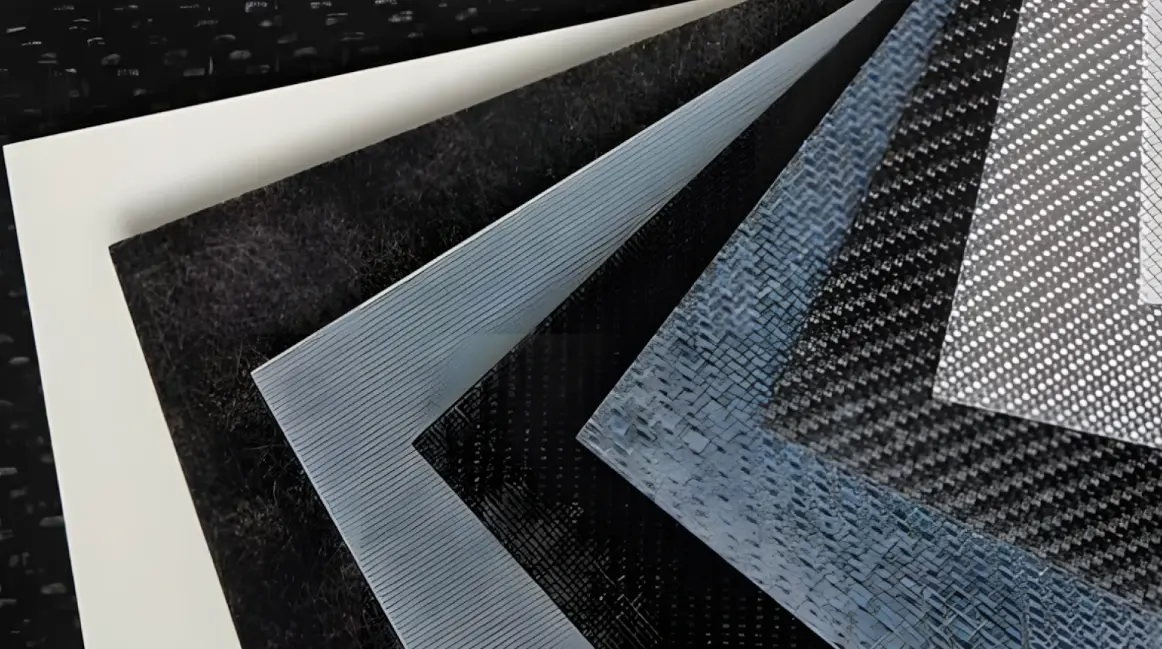
Composite materials are engineered substances created by combining two or more distinct materials, such as fibers, resins, or particles, to form a product with enhanced properties that surpass those of its individual components. For instance, carbon fiber reinforced polymers consist of strong fibers embedded in a polymer matrix, providing exceptional strength, lightness, and durability, which makes them ideal for applications in aerospace, automotive, and sports equipment. Other examples include fiberglass, used in boat hulls for its corrosion resistance, and concrete, a mix of cement, aggregates, and water that offers high compressive strength for construction. These materials excel in balancing weight, cost, and performance, revolutionizing industries by enabling innovative designs that are stronger, more efficient, and adaptable to specific needs.
Table of Contents
- Part 1: Best AI Quiz Making Software for Creating A Composite Materials Quiz
- Part 2: 20 Composite Materials Quiz Questions & Answers
- Part 3: Automatically Generate Quiz Questions Using AI Question Generator
Part 1: Best AI Quiz Making Software for Creating A Composite Materials Quiz
OnlineExamMaker is a powerful AI-powered assessment platform to create auto-grading Composite Materials skills assessments. It’s designed for educators, trainers, businesses, and anyone looking to generate engaging quizzes without spending hours crafting questions manually. The AI Question Generator feature allows you to input a topic or specific details, and it generates a variety of question types automatically.
Top features for assessment organizers:
● Combines AI webcam monitoring to capture cheating activities during online exam.
● Enhances assessments with interactive experience by embedding video, audio, image into quizzes and multimedia feedback.
● Once the exam ends, the exam scores, question reports, ranking and other analytics data can be exported to your device in Excel file format.
● API and SSO help trainers integrate OnlineExamMaker with Google Classroom, Microsoft Teams, CRM and more.
Automatically generate questions using AI
Part 2: 20 Composite Materials Quiz Questions & Answers
or
1. What is a composite material?
A. A single homogeneous material
B. A combination of two or more materials with different properties
C. A material made from a single element
D. A liquid substance used in manufacturing
Answer: B
Explanation: A composite material is defined as a combination of two or more constituent materials with significantly different physical or chemical properties that, when combined, produce a material with characteristics different from the individual components.
2. Which of the following is NOT a type of matrix in composite materials?
A. Polymer matrix
B. Metal matrix
C. Ceramic matrix
D. Atomic matrix
Answer: D
Explanation: The main types of matrices in composites are polymer, metal, and ceramic. “Atomic matrix” is not a recognized category in composite materials.
3. What is the primary role of the reinforcement in a composite material?
A. To provide ductility
B. To enhance strength and stiffness
C. To increase density
D. To reduce cost
Answer: B
Explanation: Reinforcements, such as fibers or particles, are added to improve the mechanical properties like strength and stiffness of the composite, while the matrix holds them together.
4. In fiber-reinforced composites, what does the fiber volume fraction represent?
A. The total weight of the fibers
B. The ratio of fiber volume to the total volume of the composite
C. The length of the fibers
D. The density of the fibers
Answer: B
Explanation: Fiber volume fraction is the proportion of the volume occupied by the fibers in the composite, which directly influences its mechanical performance.
5. Which manufacturing process is commonly used for polymer matrix composites?
A. Forging
B. Hand lay-up
C. Casting
D. Extrusion
Answer: B
Explanation: Hand lay-up is a simple and widely used method for fabricating polymer matrix composites, where layers of reinforcement are manually placed and impregnated with resin.
6. What is the main advantage of using composite materials in aerospace applications?
A. Higher density for stability
B. Reduced weight and high strength-to-weight ratio
C. Increased electrical conductivity
D. Lower manufacturing costs
Answer: B
Explanation: Composites offer a high strength-to-weight ratio, which helps in reducing the overall weight of aircraft, leading to improved fuel efficiency and performance.
7. Which type of composite is most resistant to high temperatures?
A. Polymer matrix composites
B. Ceramic matrix composites
C. Metal matrix composites
D. Natural fiber composites
Answer: B
Explanation: Ceramic matrix composites can withstand extremely high temperatures due to the inherent thermal stability of ceramics, making them suitable for applications like turbine blades.
8. What causes anisotropy in composite materials?
A. Uniform distribution of materials
B. Random orientation of fibers
C. Directional arrangement of reinforcements
D. Homogeneous mixing
Answer: C
Explanation: Anisotropy in composites arises from the directional alignment of fibers or reinforcements, resulting in different mechanical properties along different axes.
9. Which of the following is a common failure mode in composites?
A. Ductile fracture
B. Delamination
C. Creep resistance
D. Elastic deformation
Answer: B
Explanation: Delamination, the separation of layers in a composite, is a typical failure mode due to poor interfacial bonding or impact loading.
10. What is the primary matrix material in most automotive composites?
A. Aluminum
B. Epoxy resin
C. Steel
D. Concrete
Answer: B
Explanation: Epoxy resin is widely used as a polymer matrix in automotive composites because of its good adhesion, strength, and ease of processing.
11. How do composite materials generally compare to metals in terms of corrosion resistance?
A. Composites are less resistant
B. Composites are equally resistant
C. Composites are more resistant
D. Corrosion does not apply to composites
Answer: C
Explanation: Many composites, especially those with polymer matrices, exhibit superior corrosion resistance compared to metals, as they do not rust or degrade in the same way.
12. What is the rule of mixtures used for in composite materials?
A. Predicting exact properties
B. Estimating average properties of the composite
C. Manufacturing processes
D. Fiber alignment
Answer: B
Explanation: The rule of mixtures is a simple predictive model that estimates the overall properties of a composite, such as density or modulus, based on the properties and proportions of its constituents.
13. Which reinforcement material is commonly used in sporting goods like tennis rackets?
A. Glass fibers
B. Carbon fibers
C. Wood particles
D. Metal wires
Answer: B
Explanation: Carbon fibers are favored in sporting goods for their high strength, low weight, and flexibility, enhancing performance in items like tennis rackets.
14. What is a key disadvantage of composite materials?
A. High cost of production
B. Excessive flexibility
C. Poor aesthetic appeal
D. Low strength
Answer: A
Explanation: The high cost associated with raw materials, manufacturing, and processing makes composites more expensive than traditional materials in many applications.
15. In which industry are particle-reinforced composites frequently used?
A. Electronics
B. Construction
C. Aerospace
D. Automotive
Answer: B
Explanation: Particle-reinforced composites, like concrete (with aggregates), are widely used in construction for their strength and durability in building structures.
16. What effect does moisture have on polymer matrix composites?
A. Increases strength
B. Causes degradation and swelling
C. Improves thermal conductivity
D. Enhances electrical properties
Answer: B
Explanation: Moisture can penetrate polymer matrices, leading to swelling, reduced mechanical properties, and potential degradation over time.
17. Which test is used to evaluate the tensile strength of composites?
A. Hardness test
B. Impact test
C. Tensile test
D. Compression test
Answer: C
Explanation: The tensile test measures the ability of a composite to withstand pulling forces, providing data on its strength and elongation properties.
18. What is the purpose of interfacial bonding in composites?
A. To separate the matrix and reinforcement
B. To transfer stress between matrix and reinforcement
C. To increase porosity
D. To reduce density
Answer: B
Explanation: Strong interfacial bonding ensures efficient stress transfer from the matrix to the reinforcement, enhancing the overall performance of the composite.
19. Which composite is often used in bulletproof vests?
A. Glass fiber composites
B. Kevlar fiber composites
C. Carbon fiber composites
D. Metal matrix composites
Answer: B
Explanation: Kevlar fiber composites are ideal for ballistic protection due to their high tensile strength and ability to absorb impact energy.
20. How do hybrid composites differ from traditional composites?
A. They use only one type of reinforcement
B. They combine different types of reinforcements or matrices
C. They are always cheaper
D. They have no matrix material
Answer: B
Explanation: Hybrid composites incorporate multiple types of reinforcements or matrices to achieve a balance of properties, such as improved strength and toughness, that a single-type composite might not provide.
or
Part 3: Automatically generate quiz questions using OnlineExamMaker AI Question Generator
Automatically generate questions using AI