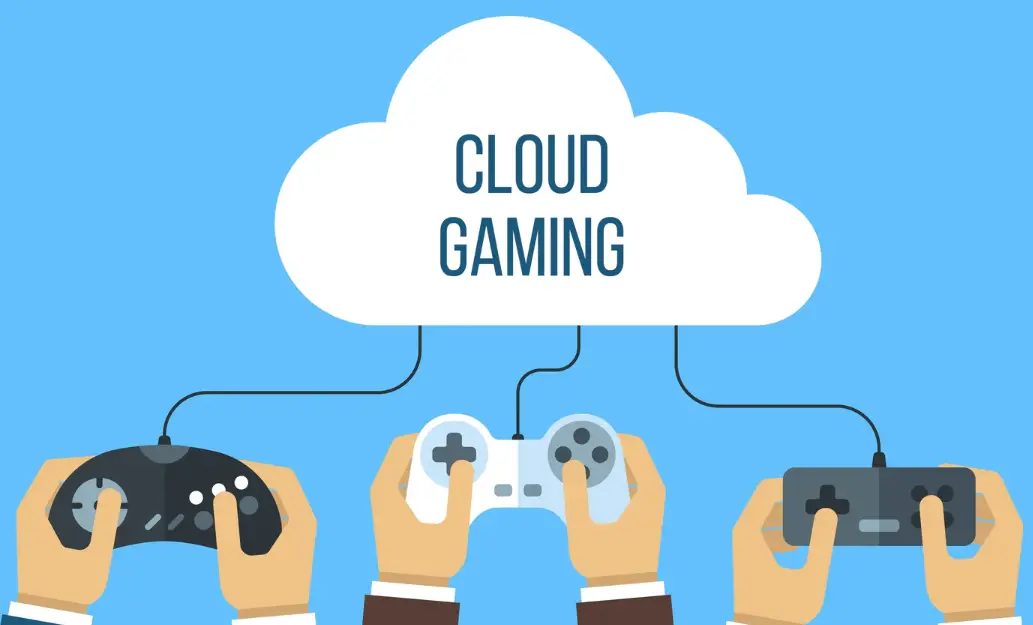
Cloud gaming is a technology that enables users to stream and play video games directly from remote servers over the internet, eliminating the need for high-end hardware on the user’s device. By processing game data in the cloud, players can access titles on smartphones, tablets, laptops, or even low-spec computers, as long as they have a stable internet connection.
How It Works
In cloud gaming, the game runs on powerful servers hosted by service providers. The user’s inputs (such as keyboard strokes or controller movements) are sent to the server in real-time, which then processes them and streams the rendered video and audio back to the device. This setup reduces latency through advanced compression and optimization techniques, making the experience feel seamless.
Key Benefits
– Accessibility: Players can enjoy high-quality games on any device, breaking barriers for those without expensive gaming rigs.
– Cost-Effective: No need to purchase costly hardware upgrades; users often pay a subscription fee or per-game basis.
– Instant Access: Large game libraries are available on demand, with automatic updates and no lengthy downloads.
– Multi-Device Support: Switch between devices effortlessly, such as from a phone to a TV, without losing progress.
Popular Services
Leading platforms include:
– Google Stadia (now discontinued, but its model influenced others): Focused on seamless streaming.
– NVIDIA GeForce Now: Streams games from your existing library on NVIDIA’s servers.
– Xbox Cloud Gaming (xCloud): Allows access to Xbox games on various devices via Xbox Game Pass.
– Amazon Luna: Offers a wide selection of titles with controller support and integration with Amazon services.
– PlayStation Now: Provides streaming of PlayStation games, blending with traditional downloads.
Challenges and Considerations
Despite its advantages, cloud gaming faces hurdles such as:
– Internet Dependency: High-speed, low-latency connections are essential; poor internet can cause lag or disconnections.
– Data Usage: Streaming games consumes significant bandwidth, potentially leading to high data costs.
– Latency Issues: Even with improvements, not all games perform perfectly, especially those requiring precise timing.
– Privacy and Security: Handling user data on remote servers raises concerns about data protection and potential breaches.
Future Prospects
As 5G networks expand and technology advances, cloud gaming is poised for growth. Enhanced infrastructure could reduce latency further, enabling more complex games and virtual reality experiences. Integration with emerging technologies like AI and augmented reality may also transform the gaming landscape, making it more immersive and widespread.
Overall, cloud gaming represents a shift towards on-demand entertainment, democratizing access to gaming and paving the way for innovative experiences in the digital age.
Table of Contents
- Part 1: OnlineExamMaker AI Quiz Generator – Save Time and Efforts
- Part 2: 20 Cloud Gaming Quiz Questions & Answers
- Part 3: Try OnlineExamMaker AI Question Generator to Create Quiz Questions
Part 1: OnlineExamMaker AI Quiz Generator – Save Time and Efforts
What’s the best way to create a Cloud Gaming quiz online? OnlineExamMaker is the best AI quiz making software for you. No coding, and no design skills required. If you don’t have the time to create your online quiz from scratch, you are able to use OnlineExamMaker AI Question Generator to create question automatically, then add them into your online assessment. What is more, the platform leverages AI proctoring and AI grading features to streamline the process while ensuring exam integrity.
Key features of OnlineExamMaker:
● Combines AI webcam monitoring to capture cheating activities during online exam.
● Allow the quiz taker to answer by uploading video or a Word document, adding an image, and recording an audio file.
● Automatically scores multiple-choice, true/false, and even open-ended/audio responses using AI, reducing manual work.
● OnlineExamMaker API offers private access for developers to extract your exam data back into your system automatically.
Automatically generate questions using AI
Part 2: 20 Cloud Gaming Quiz Questions & Answers
or
Question 1:
What is Cloud Gaming?
A. Playing games installed on your local device
B. Streaming games from remote servers over the internet
C. Downloading games to a cloud storage
D. Editing game files on a cloud platform
Answer: B
Explanation: Cloud Gaming involves streaming video game content from remote servers to the user’s device, eliminating the need for powerful local hardware, as the processing is done on the server side.
Question 2:
Which of the following is a popular Cloud Gaming platform?
A. Steam
B. Xbox Cloud Gaming
C. PlayStation 4
D. Nintendo Switch Online
Answer: B
Explanation: Xbox Cloud Gaming, formerly known as xCloud, is a service that allows users to stream games to various devices without downloading them, making it a key player in the Cloud Gaming market.
Question 3:
What is a primary advantage of Cloud Gaming?
A. Requires high-end local hardware
B. Reduces the need for physical game copies
C. Increases game development costs
D. Limits access to multiplayer games
Answer: B
Explanation: Cloud Gaming allows users to access a library of games instantly via streaming, eliminating the need for physical discs or large downloads, thus saving storage space and enhancing convenience.
Question 4:
How does Cloud Gaming differ from traditional gaming?
A. It uses local processing only
B. It relies on server-side processing and streaming
C. It requires no internet connection
D. It is limited to single-player experiences
Answer: B
Explanation: Unlike traditional gaming, which processes games on the user’s device, Cloud Gaming handles most computations on remote servers and streams the results, making it accessible on lower-spec devices.
Question 5:
What is the minimum recommended internet speed for smooth Cloud Gaming?
A. 1 Mbps
B. 5 Mbps
C. 10 Mbps
D. 50 Mbps
Answer: B
Explanation: A minimum of 5 Mbps is often recommended for basic Cloud Gaming to handle streaming without significant lag, though higher speeds (like 15-25 Mbps) are ideal for high-resolution gameplay.
Question 6:
Which technology is essential for Cloud Gaming to function?
A. Bluetooth connectivity
B. High-speed internet and data centers
C. Optical drives
D. Game cartridges
Answer: B
Explanation: Cloud Gaming depends on high-speed internet to stream data from remote data centers, where servers host and process the games in real-time.
Question 7:
What can cause latency issues in Cloud Gaming?
A. Fast internet connections
B. High server capacity
C. Network congestion or distance from servers
D. Local game installations
Answer: C
Explanation: Latency in Cloud Gaming often results from network congestion, long distances between the user and servers, or poor internet quality, which delays the transmission of game data.
Question 8:
Which device is commonly used for Cloud Gaming?
A. A desktop computer with no internet
B. Smartphones and tablets
C. Vintage gaming consoles
D. Devices without a screen
Answer: B
Explanation: Cloud Gaming is optimized for mobile devices like smartphones and tablets, allowing users to play games on the go as long as they have a stable internet connection.
Question 9:
What is a potential disadvantage of Cloud Gaming?
A. Lower subscription costs
B. Dependence on internet stability
C. Unlimited game storage
D. Enhanced graphics quality
Answer: B
Explanation: Cloud Gaming requires a stable and fast internet connection; any interruptions can lead to poor performance, unlike traditional gaming which doesn’t rely on online connectivity.
Question 10:
How does Cloud Gaming benefit game developers?
A. By increasing hardware sales
B. By reducing the need for physical distribution
C. By limiting user access
D. By requiring more local testing
Answer: B
Explanation: Cloud Gaming allows developers to distribute games digitally via streaming, cutting costs associated with physical media and enabling easier updates and wider reach.
Question 11:
What role does 5G play in Cloud Gaming?
A. It slows down data transfer
B. It provides faster speeds and lower latency
C. It eliminates the need for servers
D. It increases game file sizes
Answer: B
Explanation: 5G technology offers high-speed internet and reduced latency, making Cloud Gaming more seamless and responsive, especially for mobile users.
Question 12:
Which factor most affects the quality of Cloud Gaming?
A. The color of the device screen
B. The server’s processing power and internet bandwidth
C. The age of the game controller
D. The background music in games
Answer: B
Explanation: The quality of Cloud Gaming is primarily determined by the server’s ability to process graphics and the bandwidth available for streaming, which directly impacts resolution and frame rates.
Question 13:
What is the environmental impact of Cloud Gaming compared to traditional gaming?
A. It increases energy use due to local hardware
B. It can reduce overall energy consumption by centralizing processing
C. It has no effect on energy
D. It requires more physical manufacturing
Answer: B
Explanation: By using shared data centers, Cloud Gaming can be more energy-efficient than individual high-powered gaming PCs, as servers can optimize energy use for multiple users.
Question 14:
How does Cloud Gaming make gaming more accessible?
A. By requiring expensive consoles
B. By allowing play on various devices without high-end specs
C. By limiting game libraries
D. By increasing entry barriers
Answer: B
Explanation: Cloud Gaming enables users to play on everyday devices like phones or low-spec computers, lowering the barrier to entry since the heavy processing is handled remotely.
Question 15:
What security concern is associated with Cloud Gaming?
A. Overheating of local devices
B. Data breaches or unauthorized access to accounts
C. Too much local storage
D. Physical game theft
Answer: B
Explanation: As Cloud Gaming involves online accounts and data transmission, it risks security issues like hacking or data leaks, emphasizing the need for strong encryption and user authentication.
Question 16:
Which company pioneered early Cloud Gaming services?
A. Sony
B. OnLive
C. Microsoft
D. Nintendo
Answer: B
Explanation: OnLive was one of the first companies to offer Cloud Gaming services in the 2000s, streaming games to users’ devices before it was acquired and its technology evolved.
Question 17:
What is the typical cost structure for Cloud Gaming services?
A. One-time purchase only
B. Subscription-based or pay-per-game models
C. Free with no options
D. Hardware rental fees
Answer: B
Explanation: Most Cloud Gaming platforms use subscription models (e.g., monthly fees) or pay-per-game access, making it cost-effective compared to buying full games.
Question 18:
How does Cloud Gaming handle game updates?
A. Users must manually update locally
B. Updates are managed on servers and applied automatically
C. Updates are not possible
D. Updates require new hardware
Answer: B
Explanation: In Cloud Gaming, updates are handled on the server side, ensuring all users get the latest versions without needing to download anything, streamlining the process.
Question 19:
What is the future potential of Cloud Gaming?
A. It will decrease global internet usage
B. It could lead to more personalized gaming experiences via AI
C. It will eliminate online connectivity
D. It is expected to decline in popularity
Answer: B
Explanation: With advancements in AI and machine learning, Cloud Gaming can offer tailored experiences, such as adaptive difficulty or recommendations, enhancing user engagement.
Question 20:
Which aspect of Cloud Gaming appeals to casual gamers?
A. High hardware requirements
B. Instant access to a wide variety of games
C. Complex setup processes
D. Focus on competitive esports
Answer: B
Explanation: Casual gamers benefit from Cloud Gaming’s ability to provide quick and easy access to games without installation or high-end hardware, making it ideal for short gaming sessions.
or
Part 3: Try OnlineExamMaker AI Question Generator to Create Quiz Questions
Automatically generate questions using AI