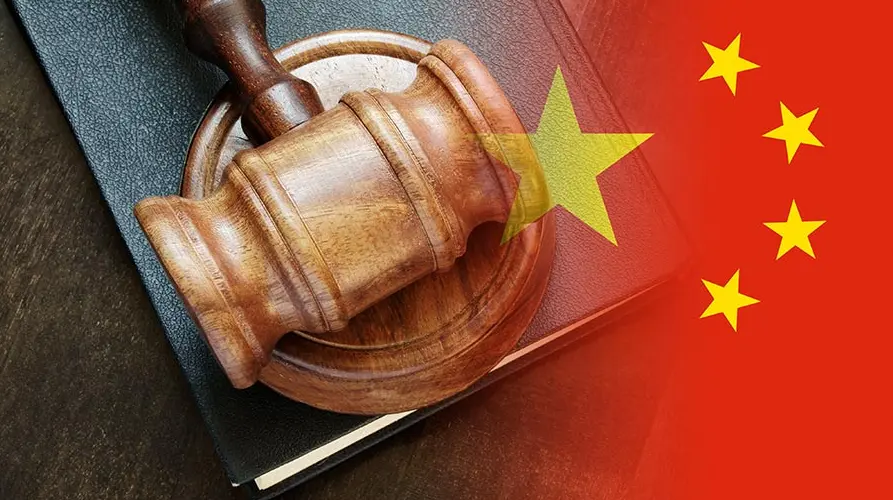
China’s legal system is a socialist legal framework of the People’s Republic of China, based on the 1982 Constitution. It is deeply influenced by civil law traditions and Marxist ideology. The system emphasizes the leadership of the Communist Party of China, social stability, and economic development, with the goal of advancing the modernization of national governance.
Key Characteristics
The Constitution as the Supreme Law: The Constitution of China is the highest legal authority. It defines the fundamental state system, citizens’rights and obligations, and the leadership role of the Communist Party of China.
Sources of Law: China’s legal system consists of laws enacted by the National People’s Congress, administrative regulations issued by the State Council, local regulations, and departmental rules, forming a multi-level legal framework.
Socialist Orientation: The legal system integrates traditional Chinese legal thought, Soviet legal models, and modern legal reforms, prioritizing collective interests and national security.
Major Branches of Law
Criminal Law: Addresses criminal offenses such as theft, corruption, and crimes endangering national security, with an emphasis on strict punishment and prevention.
Civil Law: The Civil Code enacted in 2020 serves as the core of civil law, covering contracts, property, inheritance, and personal rights. It aims to protect individual rights and promote the market economy.
Administrative Law: Regulates government conduct, including administrative licensing, law enforcement, and supervision, ensuring that administrative power is exercised in accordance with the law.
Economic Law: Supports national economic development through laws such as the Anti-Monopoly Law, Company Law, and Foreign Investment Law, adapting to the demands of globalization.
Intellectual Property Law: Protects patents, trademarks, and copyrights to encourage innovation and technological advancement.
Development and Reform
In recent years, China’s legal system has continued to evolve through initiatives such as the Belt and Road Initiative and regulations related to the digital economy, adapting to globalization and technological change. While the system is moving toward greater rule of law, it still faces challenges related to transparency and the protection of human rights.
Table of Contents
- Part 1: OnlineExamMaker AI Quiz Maker – Make A Free Quiz in Minutes
- Part 2: 20 Chinese Law Quiz Questions & Answers
- Part 3: Try OnlineExamMaker AI Question Generator to Create Quiz Questions
Part 1: OnlineExamMaker AI Quiz Maker – Make A Free Quiz in Minutes
Still spend a lot of time in editing questions for your next Chinese Law assessment? OnlineExamMaker is an AI quiz maker that leverages artificial intelligence to help users create quizzes, tests, and assessments quickly and efficiently. You can start by inputting a topic or specific details into the OnlineExamMaker AI Question Generator, and the AI will generate a set of questions almost instantly. It also offers the option to include answer explanations, which can be short or detailed, helping learners understand their mistakes.
What you may like:
● Automatic grading and insightful reports. Real-time results and interactive feedback for quiz-takers.
● The exams are automatically graded with the results instantly, so that teachers can save time and effort in grading.
● LockDown Browser to restrict browser activity during quizzes to prevent students searching answers on search engines or other software.
● Create certificates with personalized company logo, certificate title, description, date, candidate’s name, marks and signature.
Automatically generate questions using AI
Part 2: 20 Chinese Law Quiz Questions & Answers
or
1. Which of the following is the highest organ of state power in the People’s Republic of China according to the Constitution?
A. The National People’s Congress
B. The State Council
C. The Central Military Commission
D. The Supreme People’s Court
Correct Answer: A
Explanation: The Constitution of the People’s Republic of China designates the National People’s Congress as the highest organ of state power, responsible for electing key officials and supervising other state organs.
2. Under the Criminal Law of the People’s Republic of China, what is the minimum age for criminal responsibility?
A. 14 years old
B. 16 years old
C. 18 years old
D. 21 years old
Correct Answer: A
Explanation: According to Article 17 of the Criminal Law, individuals who have reached the age of 14 but not 16 may bear criminal responsibility for certain serious crimes, while full responsibility starts at 16.
3. In Chinese contract law, what principle ensures that a contract is binding once both parties agree?
A. Principle of reciprocity
B. Principle of good faith
C. Principle of consensus ad idem
D. Principle of public policy
Correct Answer: B
Explanation: The Contract Law emphasizes the principle of good faith, which requires parties to act honestly and fairly, making the contract enforceable upon mutual agreement.
4. According to the Law on the Protection of Rights and Interests of Consumers, what rights do consumers have regarding product safety?
A. Right to return products at any time
B. Right to safe products and services
C. Right to unlimited compensation
D. Right to free repairs
Correct Answer: B
Explanation: The law explicitly grants consumers the right to safe products and services, ensuring that goods must meet safety standards to protect public health.
5. Under the Anti-Unfair Competition Law, what constitutes an act of commercial bribery?
A. Offering discounts to customers
B. Providing gifts to business partners
C. Giving money or property to secure transactions unfairly
D. Advertising products aggressively
Correct Answer: C
Explanation: The law defines commercial bribery as providing money, property, or other benefits to influence transactions unfairly, which disrupts market competition.
6. In the context of intellectual property, what does the Patent Law protect?
A. Ideas and concepts only
B. Inventions, utility models, and designs
C. Trademarks and copyrights
D. Trade secrets exclusively
Correct Answer: B
Explanation: The Patent Law specifically protects inventions, utility models, and designs that meet novelty, inventiveness, and practical applicability criteria.
7. According to the Labor Law, what is the maximum number of working hours per day for employees?
A. 8 hours
B. 10 hours
C. 12 hours
D. No limit
Correct Answer: A
Explanation: The Labor Law stipulates that the standard working hours are no more than 8 hours per day on average, with provisions for overtime under certain conditions.
8. Under the Environmental Protection Law, who is primarily responsible for preventing pollution?
A. Local governments only
B. Enterprises and public institutions
C. Individual citizens
D. International organizations
Correct Answer: B
Explanation: The law holds enterprises and public institutions primarily accountable for pollution prevention, requiring them to adopt measures to protect the environment.
9. In Chinese administrative law, what is the role of the State Council?
A. To act as the judiciary
B. To execute laws and state administrative functions
C. To legislate new laws
D. To handle foreign affairs exclusively
Correct Answer: B
Explanation: The State Council, as the executive body, is responsible for implementing the Constitution and laws, managing state affairs, and administering the economy.
10. According to the Marriage Law, what is the minimum age for marriage for men?
A. 18 years old
B. 20 years old
C. 22 years old
D. 25 years old
Correct Answer: C
Explanation: The Marriage Law sets the minimum age for marriage at 22 for men and 20 for women, promoting maturity and stability in family formation.
11. Under the Company Law, what type of company liability is typical for a limited liability company?
A. Unlimited personal liability
B. Liability limited to the company’s assets
C. Joint and several liability
D. Personal guarantees from shareholders
Correct Answer: B
Explanation: In a limited liability company, shareholders’ liability is limited to their capital contributions, protecting personal assets beyond the company’s resources.
12. In the Criminal Procedure Law, what is the time limit for detaining a suspect before formal arrest?
A. 24 hours
B. 48 hours
C. 72 hours
D. 7 days
Correct Answer: B
Explanation: The law allows for detention of a suspect for up to 48 hours before a decision on arrest must be made, ensuring timely review.
13. According to the Law on the Protection of Cultural Relics, what activities are prohibited regarding national treasures?
A. Exporting without permission
B. Displaying in museums
C. Research and study
D. Selling to foreigners
Correct Answer: A
Explanation: The law prohibits the export of cultural relics without approval to preserve national heritage, while allowing controlled domestic activities.
14. Under the Tax Administration Law, who is required to file an annual tax return?
A. Only large corporations
B. All individuals and entities with taxable income
C. Foreign residents only
D. Government employees
Correct Answer: B
Explanation: The law mandates that all individuals and entities with taxable income must file tax returns, ensuring comprehensive tax compliance.
15. In Chinese civil law, what doctrine applies when two parties contribute to a harm?
A. Absolute liability
B. Contributory negligence
C. Strict liability
D. Joint liability
Correct Answer: B
Explanation: Contributory negligence allows courts to reduce compensation if the injured party contributed to the harm, based on principles of fairness.
16. According to the Law on the Prevention and Control of Infectious Diseases, what must be reported immediately?
A. Common colds
B. Outbreaks of infectious diseases
C. Minor injuries
D. Seasonal allergies
Correct Answer: B
Explanation: The law requires immediate reporting of infectious disease outbreaks to enable rapid response and control measures.
17. Under the Securities Law, what is required for a company to issue stocks publicly?
A. Approval from the local government
B. Registration with the China Securities Regulatory Commission
C. Shareholder vote only
D. No formal requirements
Correct Answer: B
Explanation: Public issuance of stocks requires registration and approval from the China Securities Regulatory Commission to protect investors and maintain market order.
18. In the Family Planning Law (prior to amendments), what was the general policy for urban couples?
A. One child per family
B. Two children per family
C. No limit on children
D. Three children per family
Correct Answer: A
Explanation: The original Family Planning Law promoted a one-child policy for urban couples to control population growth, though it has been relaxed in recent years.
19. According to the Law on State-Owned Assets, how must state-owned enterprises manage their assets?
A. For personal profit
B. In the interest of the state and public
C. By selling to private owners
D. Without government oversight
Correct Answer: B
Explanation: State-owned enterprises must manage assets to serve the public interest and state goals, ensuring efficient use and supervision.
20. Under the Cyber Security Law, what obligations do network operators have regarding user data?
A. Share data freely
B. Protect and manage user information securely
C. Sell data to third parties
D. Delete data immediately
Correct Answer: B
Explanation: The law requires network operators to safeguard user data, implement security measures, and obtain consent for data handling to prevent breaches.
or
Part 3: Try OnlineExamMaker AI Question Generator to Create Quiz Questions
Automatically generate questions using AI