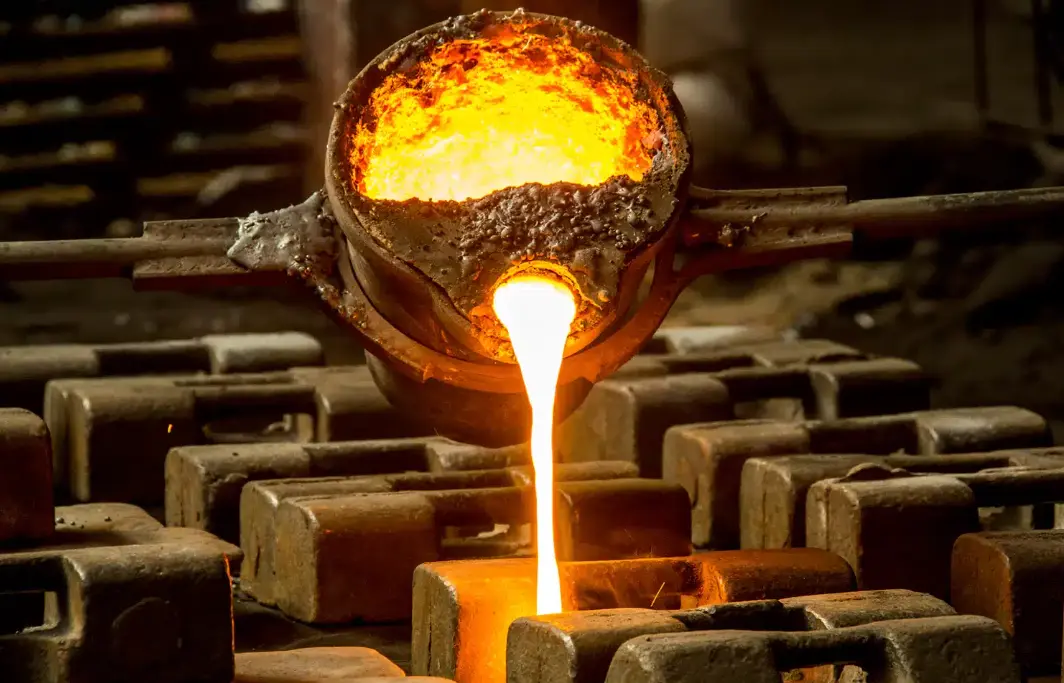
Cast metal refers to metal objects or components that are shaped through the process of casting, where molten metal is poured into a mold and allowed to solidify. This versatile manufacturing technique produces intricate and durable parts used in various industries, including automotive, aerospace, and construction. Common materials for casting include iron, steel, aluminum, and bronze, each offering unique properties such as high strength, corrosion resistance, and cost-effectiveness. The process begins with creating a pattern or mold, followed by melting the metal, pouring it into the cavity, and finishing the piece through cooling, trimming, and surface treatments. Cast metal parts are prized for their precision, ability to form complex shapes, and efficiency in mass production, making them essential in applications like engine blocks, pipes, sculptures, and machinery components.
Table of Contents
- Part 1: Create A Cast Metal Quiz in Minutes Using AI with OnlineExamMaker
- Part 2: 20 Cast Metal Quiz Questions & Answers
- Part 3: Try OnlineExamMaker AI Question Generator to Create Quiz Questions
Part 1: Create A Cast Metal Quiz in Minutes Using AI with OnlineExamMaker
When it comes to ease of creating a Cast Metal skills assessment, OnlineExamMaker is one of the best AI-powered quiz making software for your institutions or businesses. With its AI Question Generator, just upload a document or input keywords about your assessment topic, you can generate high-quality quiz questions on any topic, difficulty level, and format.
Overview of its key assessment-related features:
● AI Question Generator to help you save time in creating quiz questions automatically.
● Share your online exam with audiences on social platforms like Facebook, Twitter, Reddit and more.
● Instantly scores objective questions and subjective answers use rubric-based scoring for consistency.
● Simply copy and insert a few lines of embed codes to display your online exams on your website or WordPress blog.
Automatically generate questions using AI
Part 2: 20 Cast Metal Quiz Questions & Answers
or
1. What is the primary advantage of sand casting over other casting methods?
A. High dimensional accuracy
B. Low cost for small production runs
C. Ability to produce very thin walls
D. Minimal surface finishing required
Answer: B
Explanation: Sand casting is cost-effective for small production runs due to the use of inexpensive materials and simple molds, making it ideal for prototypes or low-volume manufacturing.
2. Which metal is most commonly used in die casting for automotive parts?
A. Steel
B. Aluminum
C. Copper
D. Titanium
Answer: B
Explanation: Aluminum is favored in die casting for automotive parts because of its lightweight properties, good corrosion resistance, and ability to be cast into complex shapes with high precision.
3. What causes porosity defects in cast metal?
A. Improper cooling rates
B. Trapped gases during solidification
C. Excessive mold temperature
D. Overheating the metal
Answer: B
Explanation: Porosity occurs when gases are trapped in the molten metal as it solidifies, leading to voids or holes in the final casting.
4. In investment casting, what material is typically used for the pattern?
A. Wax
B. Plastic
C. Clay
D. Metal
Answer: A
Explanation: Wax is used for the pattern in investment casting because it can be easily melted and removed, leaving a precise cavity for the metal to be poured into.
5. What is the main difference between permanent mold casting and sand casting?
A. Permanent mold casting uses reusable molds
B. Sand casting allows for larger parts
C. Permanent mold casting is cheaper
D. Sand casting requires higher temperatures
Answer: A
Explanation: Permanent mold casting employs durable, reusable molds made of metal, whereas sand casting uses expendable sand molds, making permanent molds more efficient for repeated production.
6. Which casting process is best for producing intricate jewelry?
A. Sand casting
B. Die casting
C. Investment casting
D. Centrifugal casting
Answer: C
Explanation: Investment casting excels in creating intricate details and fine features, as it uses a wax pattern that allows for high precision and smooth surfaces, ideal for jewelry.
7. What effect does rapid cooling have on the microstructure of cast metal?
A. Increases grain size
B. Decreases hardness
C. Refines grain structure
D. Promotes oxidation
Answer: C
Explanation: Rapid cooling, or quenching, refines the grain structure of cast metal, resulting in finer grains that enhance mechanical properties like strength and toughness.
8. Why is gating system important in metal casting?
A. To control the mold’s temperature
B. To direct molten metal into the mold cavity
C. To add alloying elements
D. To remove excess sand
Answer: B
Explanation: The gating system channels molten metal into the mold cavity efficiently, helping to prevent defects like turbulence that could cause inclusions or porosity.
9. Which alloy is commonly used for casting due to its low melting point?
A. Cast iron
B. Zinc alloy
C. Stainless steel
D. Bronze
Answer: B
Explanation: Zinc alloys have a low melting point, making them easy to cast with less energy and allowing for faster production cycles in processes like die casting.
10. What is a common defect in centrifugal casting?
A. Surface cracks
B. Uneven wall thickness
C. Internal voids
D. Flash formation
Answer: C
Explanation: Centrifugal casting can lead to internal voids if the process parameters are not controlled, as the centrifugal force may not evenly distribute the metal.
11. In which casting method is a vacuum often used to improve quality?
A. Sand casting
B. Investment casting
C. Die casting
D. Shell molding
Answer: C
Explanation: Die casting frequently employs vacuum assistance to remove air and gases from the mold, reducing porosity and improving the integrity of the cast part.
12. What material is used as a binder in green sand molding?
A. Clay
B. Resin
C. Water
D. Oil
Answer: A
Explanation: Clay acts as a binder in green sand molding to hold the sand particles together, allowing the mold to maintain its shape during the casting process.
13. Which factor primarily affects the fluidity of molten metal in casting?
A. Mold size
B. Pouring temperature
C. Ambient humidity
D. Metal density
Answer: B
Explanation: Higher pouring temperatures increase the fluidity of molten metal, enabling it to flow more easily into intricate mold details before solidifying.
14. What is the purpose of a riser in casting?
A. To feed molten metal to compensate for shrinkage
B. To cool the mold faster
C. To add strength to the casting
D. To vent gases
Answer: A
Explanation: A riser provides a reservoir of molten metal that feeds the casting as it shrinks during solidification, preventing voids or shrinkage defects.
15. Which casting process uses a rotating mold?
A. Sand casting
B. Centrifugal casting
C. Die casting
D. Investment casting
Answer: B
Explanation: Centrifugal casting involves rotating the mold at high speeds to force molten metal against the mold walls, creating dense and uniform castings.
16. Why is heat treatment often applied to cast metals?
A. To increase surface roughness
B. To relieve internal stresses and improve properties
C. To add weight to the casting
D. To change the color
Answer: B
Explanation: Heat treatment helps relieve internal stresses from the casting process and can enhance mechanical properties like hardness and ductility.
17. What type of casting is suitable for high-volume production of small parts?
A. Sand casting
B. Die casting
C. Lost foam casting
D. Plaster mold casting
Answer: B
Explanation: Die casting is ideal for high-volume production due to its fast cycle times and ability to produce consistent, precise small parts with minimal finishing.
18. Which element is added to cast iron to improve its strength and wear resistance?
A. Carbon
B. Silicon
C. Chromium
D. Nickel
Answer: C
Explanation: Adding chromium to cast iron forms alloys like ductile iron, enhancing strength, wear resistance, and corrosion resistance for demanding applications.
19. What is the role of a chill in metal casting?
A. To speed up cooling in specific areas
B. To insulate the mold
C. To provide extra metal
D. To remove impurities
Answer: A
Explanation: A chill is a metal insert placed in the mold to promote faster cooling in targeted areas, helping control the microstructure and prevent defects like shrinkage.
20. Which casting defect results from improper mold design?
A. Misrun
B. Cold shuts
C. Flash
D. All of the above
Answer: D
Explanation: Improper mold design can lead to misrun (incomplete filling), cold shuts (welded seams from cooled metal), and flash (excess metal at parting lines), all of which are common defects.
or
Part 3: Try OnlineExamMaker AI Question Generator to Create Quiz Questions
Automatically generate questions using AI