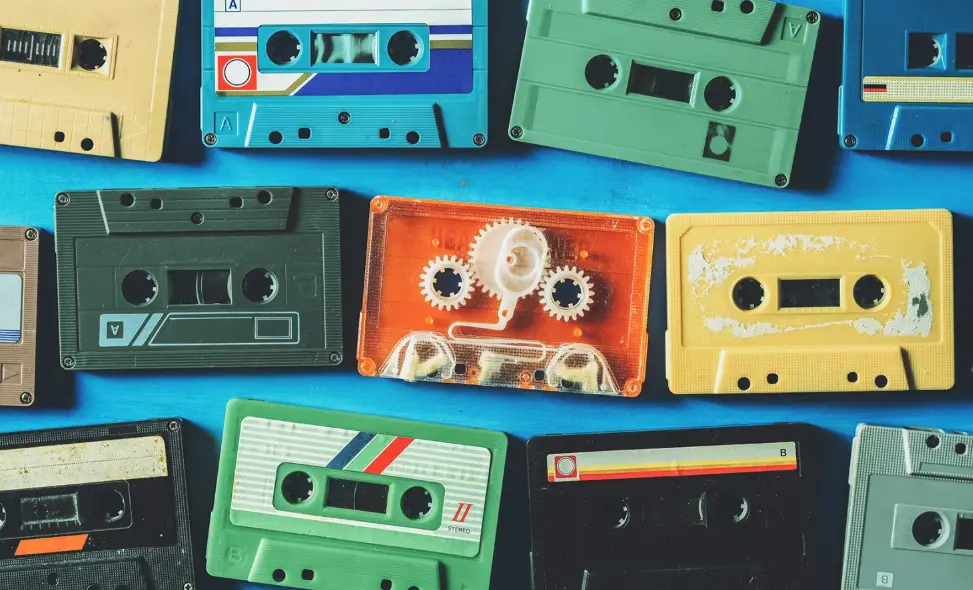
Cassette tapes, those compact plastic cartridges that revolutionized portable music, consist of a thin magnetic tape wound around two spools, enclosed in a protective shell. Invented in the 1960s by Philips, they became a cultural icon in the 1970s and 1980s, offering an affordable way to record, playback, and share audio on the go. With their distinctive click when inserted into a player, they’d unwind to deliver warm, analog sound—full of hiss and warmth that digital formats often lack. Users flipped them over for Side A and Side B, creating mixtapes that captured personal stories, from handwritten track lists to the thrill of fast-forwarding to a favorite song. Though superseded by CDs and streaming, cassette tapes endure as nostalgic relics, their tactile appeal and imperfect charm evoking memories of road trips, late-night mixes, and the simple joy of analog imperfection.
Table of Contents
- Part 1: OnlineExamMaker – Generate and Share Cassette Tapes Quiz with AI Automatically
- Part 2: 20 Cassette Tapes Quiz Questions & Answers
- Part 3: Save Time and Energy: Generate Quiz Questions with AI Technology
Part 1: OnlineExamMaker – Generate and Share Cassette Tapes Quiz with AI Automatically
OnlineExamMaker is a powerful AI-powered assessment platform to create auto-grading Cassette Tapes skills assessments. It’s designed for educators, trainers, businesses, and anyone looking to generate engaging quizzes without spending hours crafting questions manually. The AI Question Generator feature allows you to input a topic or specific details, and it generates a variety of question types automatically.
Top features for assessment organizers:
● Prevent cheating by randomizing questions or changing the order of questions, so learners don’t get the same set of questions each time.
● AI Exam Grader for efficiently grading quizzes and assignments, offering inline comments, automatic scoring, and “fudge points” for manual adjustments.
● Embed quizzes on websites, blogs, or share via email, social media (Facebook, Twitter), or direct links.
● Handles large-scale testing (thousands of exams/semester) without internet dependency, backed by cloud infrastructure.
Automatically generate questions using AI
Part 2: 20 Cassette Tapes Quiz Questions & Answers
or
Question 1:
What is a cassette tape primarily used for?
A. Storing digital photos
B. Recording and playing back audio
C. Transmitting radio signals
D. Printing documents
Answer: B
Explanation: A cassette tape is an analog storage medium designed for recording and playing back sound, using magnetic tape to store audio signals.
Question 2:
When was the Compact Cassette format first introduced?
A. 1948
B. 1963
C. 1980
D. 1995
Answer: B
Explanation: The Compact Cassette was introduced by Philips in 1963 as a portable audio recording format.
Question 3:
Who is credited with inventing the cassette tape?
A. Thomas Edison
B. Lou Ottens
C. Alexander Graham Bell
D. Steve Jobs
Answer: B
Explanation: Lou Ottens, an engineer at Philips, led the development of the Compact Cassette in the early 1960s.
Question 4:
How does a cassette tape store information?
A. Using optical lasers
B. With magnetic particles on a tape
C. Through digital encoding on a disc
D. Via electronic chips
Answer: B
Explanation: Cassette tapes use a thin magnetic tape coated with particles that can be magnetized to store analog audio signals.
Question 5:
What is the standard tape speed for a Compact Cassette?
A. 1.2 inches per second
B. 1.875 inches per second
C. 3.5 inches per second
D. 4.75 inches per second
Answer: B
Explanation: The standard playback speed for Compact Cassettes is 1.875 inches per second, which allows for consistent audio quality.
Question 6:
Which component is essential for playing a cassette tape?
A. A turntable
B. A cassette deck or player
C. A USB port
D. A projector
Answer: B
Explanation: A cassette deck or player is required to read the magnetic tape and convert it into audible sound.
Question 7:
What type of cassette tape is designed for higher fidelity recording?
A. Type I
B. Type II
C. Type III
D. Type IV
Answer: B
Explanation: Type II cassettes, also known as Chrome tapes, use chromium dioxide for better high-frequency response and overall sound quality.
Question 8:
Why did cassette tapes become popular in the 1970s and 1980s?
A. Their low cost and portability
B. Superior digital sound quality
C. Integration with computers
D. Wireless connectivity
Answer: A
Explanation: Cassette tapes were affordable, portable, and easy to use, making them a popular choice for music playback and recording during that era.
Question 9:
What innovation made cassette tapes more popular for personal use?
A. The compact disc
B. The Walkman player
C. Vinyl records
D. MP3 players
Answer: B
Explanation: The Sony Walkman, introduced in 1979, was a portable cassette player that revolutionized personal music listening on the go.
Question 10:
How many tracks are typically on a standard Compact Cassette?
A. 1 track
B. 2 tracks
C. 4 tracks
D. 8 tracks
Answer: C
Explanation: A standard Compact Cassette has four tracks (two for each side), allowing for stereo recording on both sides of the tape.
Question 11:
What is the main disadvantage of cassette tapes compared to CDs?
A. Shorter playback time
B. Prone to degradation and hiss
C. Higher storage capacity
D. Better sound quality
Answer: B
Explanation: Cassette tapes are susceptible to magnetic degradation, tape wear, and background hiss, which affects audio quality over time.
Question 12:
Which material is commonly used in the tape of a cassette?
A. Plastic film
B. Polyester base with magnetic coating
C. Glass fibers
D. Metal alloys
Answer: B
Explanation: Cassette tapes use a polyester base film coated with a layer of magnetic material, such as iron oxide, to record data.
Question 13:
What does “auto-reverse” mean on a cassette player?
A. Automatic volume control
B. Playing both sides without flipping the tape
C. Fast-forwarding to the end
D. Rewinding the tape
Answer: B
Explanation: Auto-reverse allows the player to automatically switch and play the other side of the cassette without manual intervention.
Question 14:
In what year did cassette tapes peak in global sales?
A. 1975
B. 1983
C. 1996
D. 2005
Answer: B
Explanation: Cassette tapes reached their peak popularity and sales around 1983, before the rise of CDs.
Question 15:
What is a common way to clean a cassette tape head?
A. Using water and soap
B. With isopropyl alcohol and a cotton swab
C. By baking it in an oven
D. With a vacuum cleaner
Answer: B
Explanation: Isopropyl alcohol on a cotton swab is recommended to clean the tape heads and remove oxide buildup for better playback.
Question 16:
Which format is a smaller version of the Compact Cassette?
A. Microcassette
B. 8-track tape
C. DAT tape
D. VHS tape
Answer: A
Explanation: The Microcassette is a compact version of the Compact Cassette, often used for dictation and voice recording.
Question 17:
Why have cassette tapes seen a revival in recent years?
A. Nostalgia and vinyl-like appeal
B. Superior technology to streaming
C. Mandatory for modern devices
D. Cheaper production costs
Answer: A
Explanation: The revival is driven by nostalgia, the analog aesthetic, and a cultural appreciation for physical media among younger audiences.
Question 18:
What is the typical length of a standard C60 cassette tape?
A. 30 minutes per side
B. 60 minutes total
C. 90 minutes per side
D. 120 minutes total
Answer: B
Explanation: A C60 cassette tape provides 60 minutes of total recording time, with 30 minutes per side at standard speed.
Question 19:
How does recording on a cassette tape work?
A. By engraving patterns on the tape
B. Magnetizing the tape with audio signals
C. Using light to etch data
D. Compressing digital files
Answer: B
Explanation: Recording involves a recording head that magnetizes the tape in patterns corresponding to the audio signals.
Question 20:
What environmental issue is associated with cassette tapes?
A. They are fully biodegradable
B. They contain non-recyclable plastic and magnetic materials
C. They produce no waste
D. They are made from renewable resources
Answer: B
Explanation: Cassette tapes are made from plastic and magnetic materials that are not easily recyclable, contributing to electronic waste.
or
Part 3: Save Time and Energy: Generate Quiz Questions with AI Technology
Automatically generate questions using AI