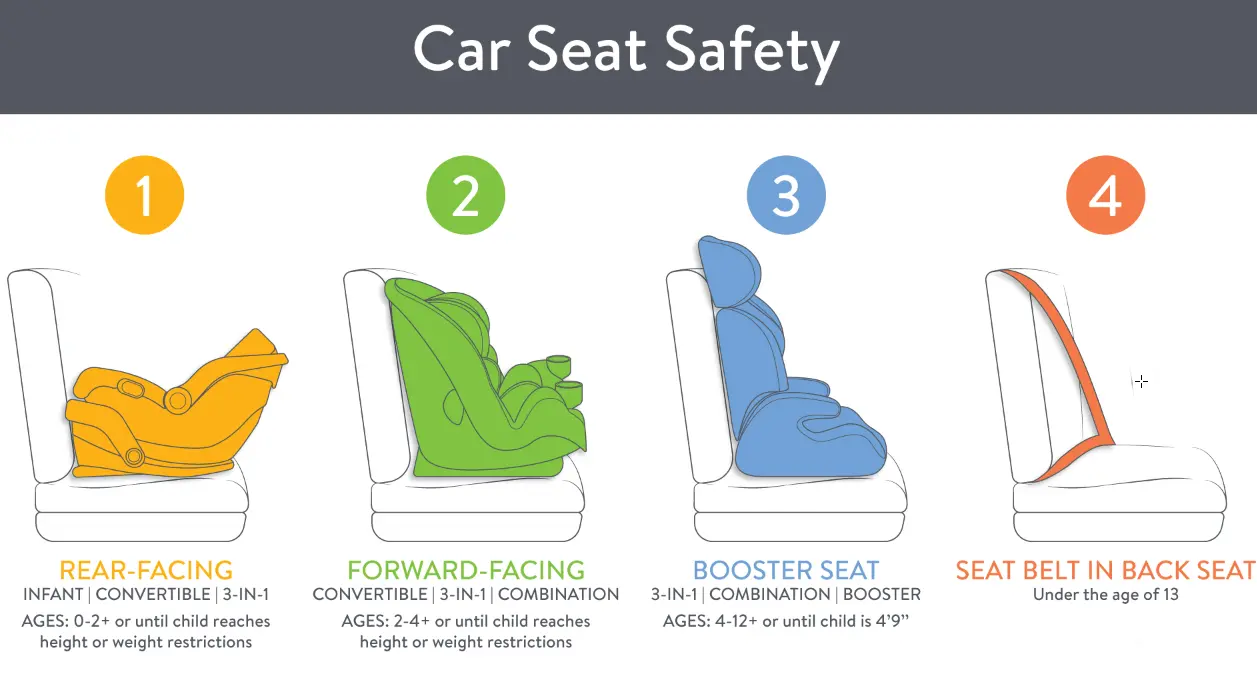
Car seat safety is essential for protecting children and adults during vehicle travel, significantly reducing the risk of injury or death in accidents. The right car seat, chosen based on age, weight, and height, provides crucial support and restraint. For infants, rear-facing seats are recommended to support the head, neck, and spine. Toddlers often transition to forward-facing seats with harnesses, while older children may use booster seats to ensure the seat belt fits correctly across the shoulder and lap.
Proper installation is key—always secure the car seat tightly in the vehicle using the LATCH system or seat belt, and check for less than an inch of movement at the base. Harness straps should be snug, at or below the shoulders for rear-facing seats and at or above for forward-facing ones, with the chest clip at armpit level.
Regular inspections, following manufacturer guidelines, and avoiding second-hand seats with unknown history are vital. Remember, car seat safety laws vary by region, so stay informed and use seats consistently on every trip to prioritize passenger protection.
Table of Contents
- Part 1: OnlineExamMaker – Generate and Share Car Seat Safety Quiz with AI Automatically
- Part 2: 20 Car Seat Safety Quiz Questions & Answers
- Part 3: AI Question Generator – Automatically Create Questions for Your Next Assessment
Part 1: OnlineExamMaker – Generate and Share Car Seat Safety Quiz with AI Automatically
OnlineExamMaker is a powerful AI-powered assessment platform to create auto-grading Car Seat Safety skills assessments. It’s designed for educators, trainers, businesses, and anyone looking to generate engaging quizzes without spending hours crafting questions manually. The AI Question Generator feature allows you to input a topic or specific details, and it generates a variety of question types automatically.
Top features for assessment organizers:
● Prevent cheating by randomizing questions or changing the order of questions, so learners don’t get the same set of questions each time.
● AI Exam Grader for efficiently grading quizzes and assignments, offering inline comments, automatic scoring, and “fudge points” for manual adjustments.
● Embed quizzes on websites, blogs, or share via email, social media (Facebook, Twitter), or direct links.
● Handles large-scale testing (thousands of exams/semester) without internet dependency, backed by cloud infrastructure.
Automatically generate questions using AI
Part 2: 20 Car Seat Safety Quiz Questions & Answers
or
1. Question: What is the recommended age and weight for a child to transition from a rear-facing car seat to a forward-facing one?
Options:
A. As soon as the child can sit up
B. At least 2 years old and 20 pounds
C. At least 1 year old and 20 pounds
D. At least 4 years old and 40 pounds
Answer: C
Explanation: The American Academy of Pediatrics recommends that children remain in a rear-facing car seat until at least 1 year old and 20 pounds to protect their neck and spine in a crash.
2. Question: Which type of car seat is appropriate for a child weighing between 40 and 80 pounds?
Options:
A. Infant car seat
B. Rear-facing convertible seat
C. Booster seat
D. Forward-facing harness seat
Answer: C
Explanation: Booster seats are designed for children who have outgrown their forward-facing harness seats, typically between 40 and 80 pounds, to ensure the vehicle’s seat belt fits properly.
3. Question: What is the primary purpose of a car seat’s tether strap?
Options:
A. To attach the car seat to the vehicle’s headrest
B. To reduce forward movement in a crash
C. To make the car seat more comfortable
D. To secure the car seat base only
Answer: B
Explanation: The tether strap anchors the top of the car seat to the vehicle, reducing forward head movement and providing extra protection during a collision.
4. Question: How should a rear-facing car seat be installed in a vehicle?
Options:
A. Using only the seat belt
B. Using the LATCH system or seat belt, at a 45-degree angle
C. Facing forward in the front seat
D. Without any straps for easy access
Answer: B
Explanation: Rear-facing car seats should be installed using the LATCH system or seat belt at a slight recline (about 45 degrees) to keep the child’s head from flopping forward.
5. Question: What is the safest place to install a car seat in a vehicle?
Options:
A. In the front passenger seat
B. In the center of the back seat
C. In the driver’s seat
D. Anywhere in the vehicle
Answer: B
Explanation: The center of the back seat is the safest location as it is farthest from impact points in side collisions and avoids the front airbag risk.
6. Question: Why should children use a booster seat until they are at least 4 feet 9 inches tall?
Options:
A. To make them more visible to drivers
B. To ensure the seat belt fits correctly across the shoulder and lap
C. To provide extra cushioning
D. To keep them entertained during drives
Answer: B
Explanation: Booster seats position the vehicle’s seat belt properly over the child’s shoulder and lap, reducing the risk of injury from improper belt placement.
7. Question: What should you do if your car’s LATCH system is not compatible with the car seat?
Options:
A. Use only the seat belt
B. Install it without any anchors
C. Buy a new car
D. Use duct tape to secure it
Answer: A
Explanation: If the LATCH system is incompatible, the car seat can be securely installed using the vehicle’s seat belt as an alternative method.
8. Question: At what angle should a forward-facing car seat be installed?
Options:
A. Completely upright
B. At a 90-degree angle
C. Upright, but with a slight recline if needed for younger children
D. Fully reclined
Answer: C
Explanation: Forward-facing car seats should be installed upright, with a slight recline for younger children to prevent slouching and ensure proper head support.
9. Question: What is the maximum expiration date for most car seats?
Options:
A. 1 year after purchase
B. 6 years from the manufacture date
C. Indefinite, as long as it looks good
D. 10 years from the manufacture date
Answer: B
Explanation: Car seats typically expire 6-10 years from the manufacture date due to material degradation, but most manufacturers recommend 6 years for safety.
10. Question: Why is it dangerous to use a second-hand car seat without checking its history?
Options:
A. It might be missing parts
B. It could have been in a previous crash
C. The color might not match your car
D. It may not fit your child
Answer: B
Explanation: A car seat involved in a crash may have hidden damage that compromises its ability to protect in future accidents.
11. Question: What should you check before using a car seat in a taxi or rideshare?
Options:
A. If the driver has a license
B. If you have your own car seat
C. The taxi’s insurance policy
D. The route of the trip
Answer: B
Explanation: It’s safest to bring your own car seat for children, as taxis and rideshares may not have properly installed or appropriate seats.
12. Question: How often should you inspect your car seat for wear and tear?
Options:
A. Once a year
B. Every time you use it
C. Only after an accident
D. Never, if it’s new
Answer: B
Explanation: Regular inspections before each use help identify issues like cracks, loose parts, or harness wear that could affect safety.
13. Question: What is the correct way to position the harness on a child in a forward-facing car seat?
Options:
A. At or below the child’s shoulders
B. Above the child’s ears
C. Loosely around the waist
D. At the child’s knees
Answer: A
Explanation: The harness should be at or below the child’s shoulders in a forward-facing seat to secure them properly and prevent ejection.
14. Question: Why should you avoid placing a car seat in front of an active airbag?
Options:
A. The airbag could block the view
B. The force of the airbag could injure the child
C. It makes the seat uncomfortable
D. Airbags are too expensive to deploy
Answer: B
Explanation: The rapid inflation of an airbag can cause serious injury or death to a child in a rear-facing or forward-facing seat due to the force involved.
15. Question: What is the recommended snugness for a car seat harness?
Options:
A. Loose enough for two fingers between the harness and chest
B. Tight enough that you can’t pinch the fabric at the shoulders
C. As loose as possible for comfort
D. Only tight around the waist
Answer: B
Explanation: A snug harness ensures the child is securely held in place during a crash; you should not be able to pinch the fabric at the shoulders.
16. Question: When can a child typically stop using a booster seat?
Options:
A. When they are 6 years old
B. When they can sit still for the entire trip
C. When they are at least 4 feet 9 inches tall and the seat belt fits properly
D. When they weigh over 100 pounds
Answer: C
Explanation: Children should use a booster until they are tall enough (at least 4 feet 9 inches) for the vehicle’s seat belt to fit correctly without a booster.
17. Question: What does the LATCH system stand for?
Options:
A. Lower Anchors and Tethers for Children
B. Lock and Tighten Child Harness
C. Lightweight Attachment for Car Seats
D. Legal Anchoring Technique for Cars
Answer: A
Explanation: LATCH stands for Lower Anchors and Tethers for Children, a standardized system for easier and safer car seat installation.
18. Question: How should you clean a car seat without damaging it?
Options:
A. Use a washing machine
B. Wipe with mild soap and water, then air dry
C. Submerge it in a bathtub
D. Use bleach for disinfection
Answer: B
Explanation: Mild soap and water preserve the car seat’s materials and integrity, while avoiding submersion or harsh chemicals that could weaken straps or foam.
19. Question: What is the risk of not using the top tether on a forward-facing car seat?
Options:
A. Increased forward head movement in a crash
B. The seat might slide sideways
C. It could cause the seat to overheat
D. The child might get bored
Answer: A
Explanation: Without the top tether, the car seat may allow excessive forward movement, increasing the risk of head and neck injuries.
20. Question: Why is it important to register your car seat with the manufacturer?
Options:
A. To get free upgrades
B. To receive recall notices
C. To enter contests
D. To prove ownership
Answer: B
Explanation: Registering ensures you are notified of any recalls due to safety issues, allowing you to address problems promptly.
or
Part 3: AI Question Generator – Automatically Create Questions for Your Next Assessment
Automatically generate questions using AI