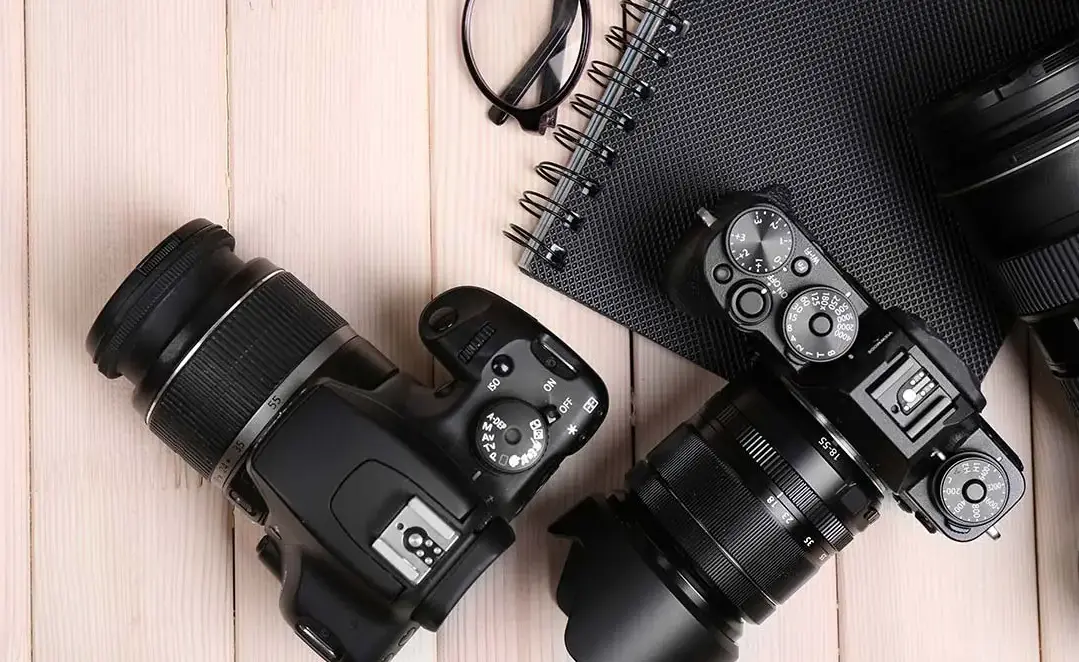
Cameras are remarkable devices that capture and preserve moments in time through the magic of optics and technology. At their core, they consist of a lens that focuses light onto a sensor or film, transforming scenes into images or videos. From the early days of box cameras in the 19th century to today’s sleek digital models, cameras have evolved to offer incredible versatility.
There are various types to suit different needs: DSLRs and mirrorless cameras for professional photographers, providing interchangeable lenses, manual controls, and high-resolution sensors for stunning detail; compact point-and-shoot cameras for everyday convenience, with automatic settings and portability; and smartphone cameras, which integrate advanced AI for features like night mode, portrait effects, and 4K video recording.
Key elements include the aperture, which controls light intake and depth of field; the shutter speed, determining how long the sensor is exposed; and ISO sensitivity, which affects image quality in low light. Modern cameras often boast image stabilization, fast autofocus, and connectivity options like Wi-Fi for instant sharing.
Whether used for artistic expression, journalism, or personal memories, cameras empower us to freeze fleeting moments, explore creativity, and connect with the world in vivid detail.
Table of Contents
- Part 1: OnlineExamMaker – Generate and Share Cameras Quiz with AI Automatically
- Part 2: 20 Cameras Quiz Questions & Answers
- Part 3: Save Time and Energy: Generate Quiz Questions with AI Technology
Part 1: OnlineExamMaker – Generate and Share Cameras Quiz with AI Automatically
The quickest way to assess the Cameras knowledge of candidates is using an AI assessment platform like OnlineExamMaker. With OnlineExamMaker AI Question Generator, you are able to input content—like text, documents, or topics—and then automatically generate questions in various formats (multiple-choice, true/false, short answer). Its AI Exam Grader can automatically grade the exam and generate insightful reports after your candidate submit the assessment.
What you will like:
● Create a question pool through the question bank and specify how many questions you want to be randomly selected among these questions.
● Allow the quiz taker to answer by uploading video or a Word document, adding an image, and recording an audio file.
● Display the feedback for correct or incorrect answers instantly after a question is answered.
● Create a lead generation form to collect an exam taker’s information, such as email, mobile phone, work title, company profile and so on.
Automatically generate questions using AI
Part 2: 20 Cameras Quiz Questions & Answers
or
1. Question: What is the primary function of a camera’s aperture?
A) To control the shutter speed
B) To adjust the amount of light entering the lens
C) To focus on distant objects
D) To store images on a memory card
Answer: B
Explanation: The aperture controls the size of the lens opening, regulating light exposure and depth of field.
2. Question: Which type of camera sensor is larger and typically found in professional DSLRs?
A) CMOS
B) Full-frame
C) Micro Four Thirds
D) CCD
Answer: B
Explanation: Full-frame sensors are larger than APS-C or crop sensors, allowing for better low-light performance and image quality.
3. Question: What does the term “shutter speed” refer to in photography?
A) The speed of the lens focusing
B) The duration the sensor is exposed to light
C) The camera’s ISO setting
D) The resolution of the image
Answer: B
Explanation: Shutter speed determines how long the camera’s shutter remains open, affecting motion blur and exposure.
4. Question: Which camera format is known for its compact size and interchangeable lenses?
A) Point-and-shoot
B) Mirrorless
C) Disposable
D) Film SLR
Answer: B
Explanation: Mirrorless cameras offer interchangeable lenses and a compact body by eliminating the mirror mechanism found in DSLRs.
5. Question: What is the purpose of a camera’s viewfinder?
A) To display the battery level
B) To compose the shot and frame the subject
C) To adjust the white balance
D) To zoom in on distant objects
Answer: B
Explanation: The viewfinder allows photographers to see exactly what the lens is capturing, aiding in accurate composition.
6. Question: Which lens type is best for capturing wide landscapes?
A) Telephoto
B) Prime
C) Wide-angle
D) Macro
Answer: C
Explanation: Wide-angle lenses have a short focal length, allowing them to capture a broader field of view, ideal for landscapes.
7. Question: What does ISO represent in camera settings?
A) Image stabilization option
B) Sensor sensitivity to light
C) Shutter speed range
D) Lens aperture size
Answer: B
Explanation: ISO measures the camera sensor’s sensitivity to light, with higher values allowing for brighter images in low-light conditions.
8. Question: Which camera brand is famous for the EOS series?
A) Nikon
B) Canon
C) Sony
D) Fujifilm
Answer: B
Explanation: Canon’s EOS series includes popular DSLRs and mirrorless cameras, known for their reliability and extensive lens ecosystem.
9. Question: What is the main advantage of a prime lens over a zoom lens?
A) Variable focal length
B) Generally sharper image quality and wider aperture
C) Built-in image stabilization
D) Automatic focusing
Answer: B
Explanation: Prime lenses have a fixed focal length, often resulting in better optical quality and a larger maximum aperture for low-light shooting.
10. Question: In what year was the first digital camera invented?
A) 1975
B) 1980
C) 1990
D) 2000
Answer: A
Explanation: The first digital camera was invented by Steven Sasson at Kodak in 1975, marking the beginning of digital photography.
11. Question: What does the term “depth of field” describe?
A) The range of distances in focus in an image
B) The camera’s battery life
C) The speed of the shutter
D) The color accuracy of the sensor
Answer: A
Explanation: Depth of field refers to the zone in a photo where objects appear sharp, influenced by aperture, focal length, and distance.
12. Question: Which camera mode is ideal for manually controlling exposure?
A) Auto
B) Program
C) Manual
D) Aperture Priority
Answer: C
Explanation: Manual mode allows photographers to set both shutter speed and aperture themselves for full creative control.
13. Question: What is a telephoto lens primarily used for?
A) Capturing close-up details of small subjects
B) Zooming in on distant objects
C) Wide-angle shots of interiors
D) Low-light photography
Answer: B
Explanation: Telephoto lenses have long focal lengths, making them suitable for wildlife, sports, and portraits by magnifying distant subjects.
14. Question: Which feature helps reduce camera shake in low-light conditions?
A) High ISO
B) Image stabilization
C) Fast shutter speed
D) Wide aperture
Answer: B
Explanation: Image stabilization compensates for hand movements, allowing sharper images at slower shutter speeds without a tripod.
15. Question: What is the function of a camera’s histogram?
A) To show the color balance
B) To display the distribution of tones in an image
C) To indicate file size
D) To preview video playback
Answer: B
Explanation: A histogram graphically represents the brightness levels in a photo, helping to assess exposure and avoid overexposure or underexposure.
16. Question: Which type of camera is best for underwater photography?
A) DSLR
B) Action camera
C) Point-and-shoot
D) Medium format
Answer: B
Explanation: Action cameras like GoPro are designed to be rugged and waterproof, making them ideal for underwater and adventure shooting.
17. Question: What does “RAW” format allow photographers to do?
A) Compress files for faster storage
B) Edit images with more flexibility and less loss of quality
C) Automatically apply filters
D) Record videos in high resolution
Answer: B
Explanation: RAW files store unprocessed data from the sensor, giving photographers greater control over adjustments in post-processing.
18. Question: Which component of a camera controls the focus?
A) Shutter
B) Lens elements
C) Aperture blades
D) Sensor
Answer: B
Explanation: The lens elements move to adjust focus, determining how sharply subjects at different distances are rendered.
19. Question: What is the benefit of a camera with a flip screen?
A) It allows for easier menu navigation
B) It enables shooting from unique angles, like overhead or low shots
C) It increases battery life
D) It provides a larger viewfinder
Answer: B
Explanation: A flip screen articulates to different positions, making it easier to compose selfies, vlogs, or shots from awkward perspectives.
20. Question: Which photography technique uses a slow shutter speed to create motion blur?
A) Panning
B) Long exposure
C) Burst mode
D) Macro shooting
Answer: B
Explanation: Long exposure involves keeping the shutter open for an extended period, capturing movement as blur while keeping static elements sharp.
or
Part 3: Save Time and Energy: Generate Quiz Questions with AI Technology
Automatically generate questions using AI