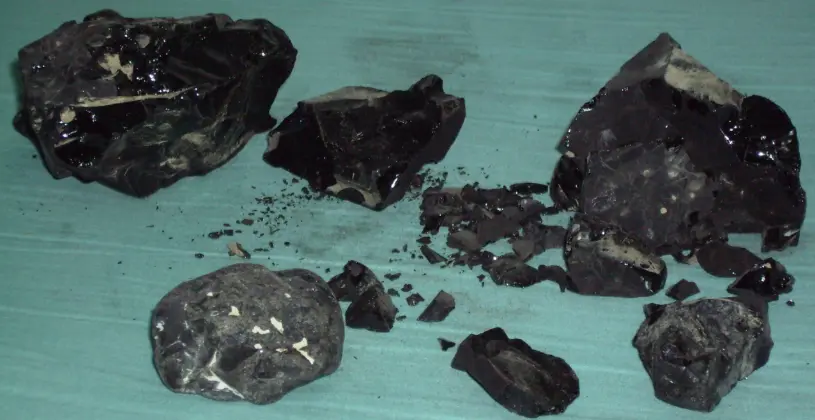
Bitumen, also known as asphalt, is a viscous, black, and sticky semi-solid form of petroleum that occurs naturally or is derived from crude oil refining. It is primarily composed of complex hydrocarbons and is valued for its waterproofing and adhesive properties.
Key Properties:
– Viscosity and Temperature Sensitivity: Bitumen softens when heated and hardens when cooled, making it ideal for various applications.
– Durability: It resists water and weathering, contributing to its longevity in construction.
– Varieties: Available in grades such as penetration bitumen, oxidized bitumen, and polymer-modified bitumen, each tailored for specific uses.
Sources and Production:
– Naturally occurring bitumen is found in deposits like tar sands (e.g., in Canada and Venezuela).
– Most commercial bitumen is a byproduct of petroleum refining, where heavier fractions of crude oil are processed.
Applications:
– Road Construction: The most common use, where it binds aggregates to form asphalt pavement, providing a smooth, durable surface for roads, highways, and airports.
– Waterproofing: Used in roofing materials, sealants, and coatings to protect structures from moisture.
– Industrial Uses: Employed in adhesives, paints, and insulation due to its binding and sealing capabilities.
– Energy Sector: Extracted from oil sands as a source of synthetic crude oil.
Environmental and Economic Aspects:
– Bitumen extraction and use raise environmental concerns, such as carbon emissions and habitat disruption, prompting innovations in sustainable alternatives.
– Globally, the bitumen market is driven by infrastructure development, with demand growing in emerging economies for road and building projects.
This overview highlights bitumen’s versatility and importance in modern industry, while ongoing research focuses on eco-friendly formulations.
Table of Contents
- Part 1: OnlineExamMaker AI Quiz Generator – Save Time and Efforts
- Part 2: 20 Bitumen Quiz Questions & Answers
- Part 3: OnlineExamMaker AI Question Generator: Generate Questions for Any Topic
Part 1: OnlineExamMaker AI Quiz Generator – Save Time and Efforts
What’s the best way to create a Bitumen quiz online? OnlineExamMaker is the best AI quiz making software for you. No coding, and no design skills required. If you don’t have the time to create your online quiz from scratch, you are able to use OnlineExamMaker AI Question Generator to create question automatically, then add them into your online assessment. What is more, the platform leverages AI proctoring and AI grading features to streamline the process while ensuring exam integrity.
Key features of OnlineExamMaker:
● Combines AI webcam monitoring to capture cheating activities during online exam.
● Allow the quiz taker to answer by uploading video or a Word document, adding an image, and recording an audio file.
● Automatically scores multiple-choice, true/false, and even open-ended/audio responses using AI, reducing manual work.
● OnlineExamMaker API offers private access for developers to extract your exam data back into your system automatically.
Automatically generate questions using AI
Part 2: 20 Bitumen Quiz Questions & Answers
or
1. Question: What is bitumen primarily derived from?
Options:
A. Coal
B. Petroleum
C. Natural gas
D. Limestone
Answer: B
Explanation: Bitumen is a viscous semi-solid or solid form of petroleum, obtained as a byproduct of crude oil refining.
2. Question: Which property of bitumen is measured by the penetration test?
Options:
A. Hardness
B. Viscosity
C. Density
D. Flash point
Answer: A
Explanation: The penetration test measures the hardness of bitumen by determining how far a standard needle penetrates under specific conditions.
3. Question: What is the main use of bitumen in road construction?
Options:
A. As a base layer
B. As a binder in asphalt
C. As a drainage material
D. As a decorative coating
Answer: B
Explanation: Bitumen acts as a binder to hold aggregates together in asphalt mixtures, providing durability and flexibility to road surfaces.
4. Question: Which factor does NOT affect the softening point of bitumen?
Options:
A. Temperature
B. Refining process
C. Color
D. Source of crude oil
Answer: C
Explanation: The softening point is influenced by temperature, refining, and crude oil source, but color is not a direct factor in this property.
5. Question: What is the typical viscosity range for paving grade bitumen?
Options:
A. 100-500 cSt
B. 1000-5000 cSt
C. 10-50 cSt
D. 50000-100000 cSt
Answer: B
Explanation: Paving grade bitumen generally has a viscosity between 1000 and 5000 cSt at standard temperatures, making it suitable for road applications.
6. Question: Which test is used to determine the ductility of bitumen?
Options:
A. Flash and fire point test
B. Ductility test
C. Softening point test
D. Penetration test
Answer: B
Explanation: The ductility test measures how far bitumen can be stretched before breaking, indicating its elasticity and ability to withstand traffic loads.
7. Question: What is cutback bitumen?
Options:
A. Bitumen mixed with polymers
B. Bitumen dissolved in a solvent
C. Bitumen with added fillers
D. Pure bitumen without additives
Answer: B
Explanation: Cutback bitumen is bitumen liquefied by dissolving it in a petroleum solvent, making it easier to apply in colder conditions.
8. Question: Which environmental issue is associated with bitumen production?
Options:
A. High water usage
B. Greenhouse gas emissions
C. Soil erosion
D. Noise pollution
Answer: B
Explanation: Bitumen production from crude oil refining releases significant greenhouse gases, contributing to climate change.
9. Question: What is the primary advantage of using modified bitumen?
Options:
A. Lower cost
B. Improved resistance to rutting
C. Faster curing time
D. Reduced flexibility
Answer: B
Explanation: Modified bitumen, often with polymers, enhances resistance to deformation and rutting under heavy traffic and temperature variations.
10. Question: Which grade of bitumen is suitable for high-temperature regions?
Options:
A. VG-10
B. VG-30
C. VG-40
D. VG-20
Answer: C
Explanation: VG-40 bitumen has higher viscosity, making it ideal for hot climates to prevent softening and maintain road integrity.
11. Question: What does the ring and ball test measure in bitumen?
Options:
A. Melting point
B. Softening point
C. Hardness
D. Elasticity
Answer: B
Explanation: The ring and ball test determines the softening point of bitumen by measuring the temperature at which it softens under standardized conditions.
12. Question: How does oxidation affect bitumen?
Options:
A. Increases flexibility
B. Hardens it over time
C. Reduces viscosity
D. Improves adhesion
Answer: B
Explanation: Oxidation causes bitumen to harden and become brittle, which can lead to cracking in pavements if not properly managed.
13. Question: What is emulsion bitumen?
Options:
A. Bitumen mixed with water and an emulsifier
B. Solid bitumen blocks
C. Bitumen heated to high temperatures
D. Bitumen with chemical additives
Answer: A
Explanation: Emulsion bitumen is a mixture of bitumen, water, and an emulsifying agent, allowing it to be used without heating for applications like surface treatments.
14. Question: Which component is NOT typically found in bitumen?
Options:
A. Asphaltenes
B. Resins
C. Aromatics
D. Silicones
Answer: D
Explanation: Bitumen consists of asphaltenes, resins, and aromatics, but silicones are not a natural component and are sometimes added synthetically.
15. Question: What is the role of flux in bitumen?
Options:
A. To increase hardness
B. To make it more fluid
C. To add color
D. To improve odor
Answer: B
Explanation: Flux is added to bitumen to reduce its viscosity and make it more workable, especially in blending processes.
16. Question: Which standard organization defines bitumen specifications?
Options:
A. ISO
B. ASTM
C. Both A and B
D. Neither A nor B
Answer: C
Explanation: Both ISO and ASTM provide standards for bitumen, including testing methods and specifications for quality control.
17. Question: How does temperature affect bitumen’s performance?
Options:
A. It becomes harder in hot weather
B. It softens in high temperatures
C. It remains unchanged
D. It only affects color
Answer: B
Explanation: High temperatures cause bitumen to soften, potentially leading to rutting, while low temperatures can make it brittle.
18. Question: What is the typical application of blown bitumen?
Options:
A. Roofing and waterproofing
B. Road surfacing
C. Bridge construction
D. Pipe coating
Answer: A
Explanation: Blown bitumen, produced by air blowing, has higher softening points and is commonly used for roofing membranes and waterproofing.
19. Question: Which factor influences the selection of bitumen for a project?
Options:
A. Climate only
B. Traffic volume and climate
C. Cost alone
D. Aesthetic appeal
Answer: B
Explanation: Bitumen selection depends on factors like traffic volume, which affects load-bearing capacity, and climate, which influences temperature stability.
20. Question: What is the main disadvantage of using bitumen in cold regions?
Options:
A. Excessive softening
B. Brittle cracking
C. Rapid curing
D. High cost
Answer: B
Explanation: In cold regions, bitumen can become brittle and crack due to low temperatures, reducing its effectiveness without proper modification.
or
Part 3: OnlineExamMaker AI Question Generator: Generate Questions for Any Topic
Automatically generate questions using AI