The automotive industry is a dynamic and expansive global sector focused on the design, development, manufacturing, marketing, and servicing of motor vehicles. It encompasses a wide range of products, including passenger cars, commercial trucks, buses, motorcycles, and electric vehicles, serving both personal and industrial needs.
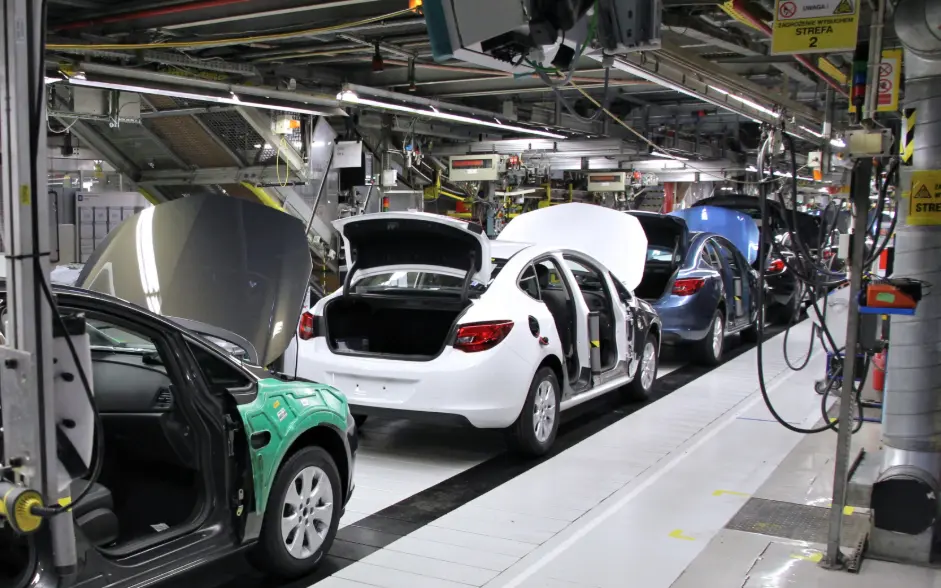
Originating in the late 19th century with innovations like Karl Benz’s first automobile in 1885, the industry has evolved through key milestones such as Henry Ford’s assembly line in 1913, which revolutionized mass production. Today, it plays a pivotal role in the global economy, employing millions and contributing significantly to GDP in countries like the United States, China, Germany, and Japan.
Major players include multinational corporations such as Toyota, Volkswagen, Ford, General Motors, and Tesla, which compete in areas like internal combustion engines, hybrid technology, and fully electric vehicles. The sector drives technological advancements, including autonomous driving systems, advanced safety features, and connectivity through AI and IoT.
Environmentally, the industry faces challenges from emissions and resource consumption, prompting a shift towards sustainability. This includes the adoption of electric vehicles (EVs), hydrogen fuel cells, and lightweight materials to reduce carbon footprints and comply with regulations like the Paris Agreement.
Economically, it influences supply chains, from raw materials like steel and lithium to components such as batteries and semiconductors. The rise of emerging markets in Asia and electric mobility is reshaping the landscape, with trends like shared mobility, ride-hailing services, and autonomous fleets poised to redefine transportation in the future.
Table of Contents
- Part 1: Create An Amazing Automotive Industry Quiz Using AI Instantly in OnlineExamMaker
- Part 2: 20 Automotive Industry Quiz Questions & Answers
- Part 3: Try OnlineExamMaker AI Question Generator to Create Quiz Questions
Part 1: Create An Amazing Automotive Industry Quiz Using AI Instantly in OnlineExamMaker
Nowadays more and more people create Automotive Industry quizzes using AI technologies, OnlineExamMaker a powerful AI-based quiz making tool that can save you time and efforts. The software makes it simple to design and launch interactive quizzes, assessments, and surveys. With the Question Editor, you can create multiple-choice, open-ended, matching, sequencing and many other types of questions for your tests, exams and inventories. You are allowed to enhance quizzes with multimedia elements like images, audio, and video to make them more interactive and visually appealing.
Recommended features for you:
● Prevent cheating by randomizing questions or changing the order of questions, so learners don’t get the same set of questions each time.
● Automatically generates detailed reports—individual scores, question report, and group performance.
● Simply copy a few lines of codes, and add them to a web page, you can present your online quiz in your website, blog, or landing page.
● Offers question analysis to evaluate question performance and reliability, helping instructors optimize their training plan.
Automatically generate questions using AI
Part 2: 20 Automotive Industry Quiz Questions & Answers
or
Question 1:
What is the primary function of a catalytic converter in a vehicle’s exhaust system?
A) To increase engine horsepower
B) To reduce harmful emissions
C) To improve fuel efficiency
D) To regulate engine temperature
Answer: B
Explanation: A catalytic converter helps convert toxic gases like carbon monoxide and nitrogen oxides into less harmful substances, such as carbon dioxide and water vapor, thereby reducing air pollution from vehicle exhaust.
Question 2:
Which company is credited with producing the first mass-produced automobile using assembly line techniques?
A) Toyota Motor Corporation
B) Ford Motor Company
C) General Motors
D) Volkswagen Group
Answer: B
Explanation: Henry Ford’s Ford Motor Company introduced the assembly line in 1913 for the Model T, which revolutionized manufacturing by making cars affordable and accessible to the masses.
Question 3:
What does the acronym “EV” stand for in the context of modern vehicles?
A) Engine Variant
B) Electric Vehicle
C) Emission Valve
D) Energy Volume
Answer: B
Explanation: EV refers to Electric Vehicle, which uses one or more electric motors for propulsion, typically powered by rechargeable batteries, as an alternative to traditional internal combustion engines.
Question 4:
Which type of engine uses a process of compressing air and fuel to ignite it without a spark?
A) Diesel engine
B) Gasoline engine
C) Hybrid engine
D) Electric motor
Answer: A
Explanation: A diesel engine operates on the principle of compression ignition, where the heat from compressing air ignites the fuel, making it more fuel-efficient for heavy-duty applications.
Question 5:
What is the main advantage of a hybrid vehicle over a traditional gasoline vehicle?
A) Higher top speed
B) Better fuel economy and lower emissions
C) Simpler maintenance
D) Increased towing capacity
Answer: B
Explanation: Hybrid vehicles combine an internal combustion engine with an electric motor, allowing them to switch between power sources for improved fuel efficiency and reduced greenhouse gas emissions.
Question 6:
Which organization sets many of the global standards for automotive safety and emissions?
A) EPA (Environmental Protection Agency)
B) ISO (International Organization for Standardization)
C) NHTSA (National Highway Traffic Safety Administration)
D) FIA (Fédération Internationale de l’Automobile)
Answer: B
Explanation: ISO develops international standards for various industries, including automotive, such as ISO 26262 for functional safety, ensuring consistency in quality and safety across global markets.
Question 7:
What is autonomous driving technology primarily designed to do?
A) Reduce vehicle weight
B) Allow vehicles to operate without human intervention
C) Increase engine noise
D) Improve radio reception
Answer: B
Explanation: Autonomous driving uses sensors, AI, and software to enable vehicles to navigate and make decisions on their own, aiming to enhance safety and reduce human error in driving.
Question 8:
Which material is most commonly used in modern car bodies for its lightweight and strength properties?
A) Steel
B) Aluminum
C) Plastic
D) Wood
Answer: B
Explanation: Aluminum is favored in automotive design for its high strength-to-weight ratio, which helps improve fuel efficiency and handling while maintaining structural integrity.
Question 9:
What does the term “horsepower” measure in an automobile?
A) The weight of the engine
B) The engine’s output of work over time
C) The speed of the wheels
D) The fuel capacity
Answer: B
Explanation: Horsepower is a unit that measures an engine’s power output, indicating how quickly it can perform work, such as accelerating a vehicle.
Question 10:
Which emission standard aims to limit pollutants from vehicles in Europe?
A) CAFE standards
B) Euro 6
C) LEV regulations
D) Tier 3
Answer: B
Explanation: Euro 6 is a set of European Union standards that regulate the emission limits for vehicles, focusing on reducing nitrogen oxides and particulate matter to improve air quality.
Question 11:
What is the role of anti-lock braking systems (ABS) in vehicles?
A) To prevent tire blowouts
B) To maintain wheel traction during braking
C) To increase acceleration
D) To reduce engine noise
Answer: B
Explanation: ABS prevents wheels from locking up during braking, allowing the driver to maintain steering control and avoid skidding, especially on slippery surfaces.
Question 12:
Which automaker is known for pioneering the electric car with the Model S?
A) Toyota
B) Tesla
C) BMW
D) Nissan
Answer: B
Explanation: Tesla, founded by Elon Musk, popularized electric vehicles with the Model S in 2012, emphasizing long-range capability and advanced technology.
Question 13:
What is the purpose of a vehicle’s transmission system?
A) To store fuel
B) To transfer power from the engine to the wheels
C) To cool the radiator
D) To amplify sound from the stereo
Answer: B
Explanation: The transmission system changes gears to efficiently deliver engine power to the wheels, adapting to speed and load for optimal performance.
Question 14:
Which factor has the most significant impact on a vehicle’s fuel efficiency?
A) Color of the paint
B) Weight and aerodynamics
C) Number of doors
D) Type of headlights
Answer: B
Explanation: Vehicle weight and aerodynamics affect how much energy is required to move the car, directly influencing fuel consumption and efficiency.
Question 15:
What is the main environmental concern associated with internal combustion engines?
A) Excessive noise
B) Greenhouse gas emissions
C) Overheating
D) Battery waste
Answer: B
Explanation: Internal combustion engines produce carbon dioxide and other emissions that contribute to climate change and air pollution, prompting a shift to cleaner alternatives.
Question 16:
Which technology is used in adaptive cruise control systems?
A) Radar or cameras
B) Windshield wipers
C) Exhaust pipes
D) Seat belts
Answer: A
Explanation: Adaptive cruise control uses radar or cameras to detect the distance and speed of vehicles ahead, automatically adjusting the car’s speed to maintain a safe following distance.
Question 17:
What does the acronym “MPG” stand for in relation to vehicles?
A) Maximum Power Gauge
B) Miles Per Gallon
C) Motor Performance Grade
D) Multi-Phase Gear
Answer: B
Explanation: MPG measures how far a vehicle can travel per unit of fuel, such as miles per gallon, serving as a key indicator of fuel efficiency.
Question 18:
Which component in a car converts chemical energy from fuel into mechanical energy?
A) Battery
B) Alternator
C) Engine
D) Radiator
Answer: C
Explanation: The engine burns fuel to produce power, converting the chemical energy in gasoline or diesel into mechanical energy that drives the vehicle.
Question 19:
What is the primary benefit of all-wheel drive (AWD) systems?
A) Faster acceleration
B) Improved traction on various surfaces
C) Reduced maintenance costs
D) Quieter cabin
Answer: B
Explanation: AWD systems distribute power to all four wheels, enhancing grip and stability, especially in slippery or off-road conditions.
Question 20:
Which global event in the 1970s led to a major push for fuel-efficient vehicles?
A) The Space Race
B) The Oil Crisis
C) World War II
D) The Industrial Revolution
Answer: B
Explanation: The 1973 Oil Crisis caused fuel shortages and price spikes, prompting governments and manufacturers to develop more fuel-efficient vehicles to reduce dependency on oil.
or
Part 3: Try OnlineExamMaker AI Question Generator to Create Quiz Questions
Automatically generate questions using AI