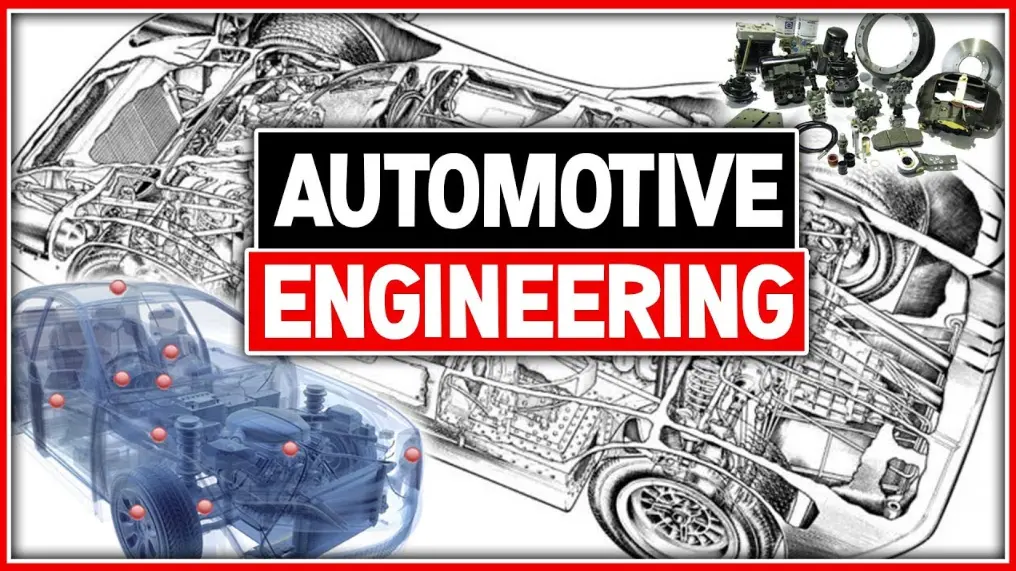
Automotive Engineering is a dynamic branch of engineering that focuses on the design, development, manufacturing, and maintenance of vehicles, primarily automobiles. At its core, it integrates principles from mechanical, electrical, and software engineering to create efficient, safe, and innovative transportation systems.
This field encompasses the entire lifecycle of a vehicle, from conceptualization to production and beyond. Engineers in this discipline work on critical components such as engines, transmissions, chassis, and braking systems, ensuring they meet performance standards for speed, fuel efficiency, and durability. For instance, they design internal combustion engines or electric powertrains that balance power output with environmental sustainability, addressing challenges like emissions reduction and energy efficiency.
Safety is a paramount concern, leading to advancements in features like anti-lock braking systems (ABS), airbags, and advanced driver-assistance systems (ADAS), which incorporate sensors, AI, and real-time data processing. Automotive engineers also tackle aerodynamics to minimize drag and improve fuel economy, while exploring materials science for lighter, stronger vehicle bodies.
In today’s world, the rise of electric vehicles (EVs), autonomous driving, and connected cars is transforming the industry. Engineers are at the forefront of integrating battery technology, artificial intelligence, and IoT (Internet of Things) to create smarter, greener vehicles. This evolution not only enhances user experience but also addresses global issues like climate change and urban mobility.
Overall, Automotive Engineering plays a vital role in shaping the future of transportation, blending creativity with technical expertise to drive innovation and progress.
Table of Contents
- Part 1: OnlineExamMaker AI Quiz Maker – Make A Free Quiz in Minutes
- Part 2: 20 Automotive Engineering Quiz Questions & Answers
- Part 3: Automatically Generate Quiz Questions Using AI Question Generator
Part 1: OnlineExamMaker AI Quiz Maker – Make A Free Quiz in Minutes
Still spend a lot of time in editing questions for your next Automotive Engineering assessment? OnlineExamMaker is an AI quiz maker that leverages artificial intelligence to help users create quizzes, tests, and assessments quickly and efficiently. You can start by inputting a topic or specific details into the OnlineExamMaker AI Question Generator, and the AI will generate a set of questions almost instantly. It also offers the option to include answer explanations, which can be short or detailed, helping learners understand their mistakes.
What you may like:
● Automatic grading and insightful reports. Real-time results and interactive feedback for quiz-takers.
● The exams are automatically graded with the results instantly, so that teachers can save time and effort in grading.
● LockDown Browser to restrict browser activity during quizzes to prevent students searching answers on search engines or other software.
● Create certificates with personalized company logo, certificate title, description, date, candidate’s name, marks and signature.
Automatically generate questions using AI
Part 2: 20 Automotive Engineering Quiz Questions & Answers
or
1. Question: What is the primary function of a crankshaft in an internal combustion engine?
Options:
A) To convert linear motion into rotational motion
B) To mix air and fuel
C) To regulate engine temperature
D) To store electrical energy
Answer: A
Explanation: The crankshaft converts the up-and-down motion of the pistons into rotational motion, which drives the vehicle’s wheels.
2. Question: Which type of suspension system uses a coil spring and shock absorber combined in one unit?
Options:
A) Leaf spring suspension
B) MacPherson strut suspension
C) Torsion bar suspension
D) Solid axle suspension
Answer: B
Explanation: The MacPherson strut integrates the spring and damper, providing a compact design that improves handling and ride comfort.
3. Question: What does the acronym ABS stand for in automotive braking systems?
Options:
A) Automatic Brake System
B) Anti-lock Braking System
C) Advanced Brake Suspension
D) Air Brake System
Answer: B
Explanation: ABS prevents wheels from locking during braking, allowing the driver to maintain steering control and reduce stopping distances on slippery surfaces.
4. Question: In a four-stroke engine, what occurs during the intake stroke?
Options:
A) Combustion of fuel and air
B) Exhaust gases are expelled
C) Fuel and air mixture is drawn into the cylinder
D) The piston compresses the air-fuel mixture
Answer: C
Explanation: During the intake stroke, the piston moves downward, creating a vacuum that draws in the air-fuel mixture for combustion.
5. Question: Which component is responsible for converting alternating current to direct current in an electric vehicle?
Options:
A) Battery
B) Inverter
C) Motor
D) Charger
Answer: B
Explanation: The inverter converts DC from the battery to AC for the motor and vice versa, enabling efficient power management in electric vehicles.
6. Question: What is the purpose of a differential in a vehicle’s drivetrain?
Options:
A) To increase engine speed
B) To allow wheels to rotate at different speeds during turns
C) To filter engine oil
D) To cool the transmission
Answer: B
Explanation: The differential enables the inner and outer wheels to rotate at varying speeds, improving traction and handling during cornering.
7. Question: Which fuel injection system sprays fuel directly into the combustion chamber?
Options:
A) Carburetor
B) Port fuel injection
C) Direct fuel injection
D) Throttle body injection
Answer: C
Explanation: Direct fuel injection delivers fuel precisely into the cylinder, enhancing efficiency, power, and emissions control.
8. Question: What does turbocharging do to an engine?
Options:
A) Reduces engine size
B) Increases air intake by using exhaust gases
C) Decreases fuel consumption
D) Eliminates the need for a radiator
Answer: B
Explanation: A turbocharger uses exhaust gas energy to force more air into the engine, allowing for better combustion and increased power output.
9. Question: In automotive electronics, what is the role of the ECU?
Options:
A) To control the audio system
B) To manage engine and vehicle functions
C) To handle lighting systems
D) To regulate tire pressure
Answer: B
Explanation: The Engine Control Unit (ECU) monitors sensors and adjusts parameters like fuel injection and ignition timing for optimal performance.
10. Question: Which material is commonly used for engine blocks due to its strength and heat resistance?
Options:
A) Aluminum
B) Plastic
C) Rubber
D) Glass
Answer: A
Explanation: Aluminum is lightweight, dissipates heat effectively, and provides the durability needed for engine blocks in modern vehicles.
11. Question: What is the main advantage of a continuously variable transmission (CVT)?
Options:
A) Provides more gear ratios for better acceleration
B) Reduces noise and vibration
C) Improves fuel efficiency by varying gear ratios seamlessly
D) Increases towing capacity
Answer: C
Explanation: A CVT offers infinite gear ratios, allowing the engine to operate at its most efficient speed, which enhances fuel economy.
12. Question: Which system in a vehicle helps maintain stability during sharp turns?
Options:
A) Anti-lock Braking System
B) Electronic Stability Control
C) Cruise Control
D) Power Steering
Answer: B
Explanation: Electronic Stability Control uses sensors to detect skids and applies brakes to individual wheels to help the vehicle stay on its intended path.
13. Question: What is the function of a timing belt in an engine?
Options:
A) To connect the crankshaft and camshaft for valve timing
B) To lubricate engine parts
C) To filter intake air
D) To cool the radiator
Answer: A
Explanation: The timing belt synchronizes the rotation of the crankshaft and camshaft, ensuring valves open and close at the correct times.
14. Question: In hybrid vehicles, what is the role of the regenerative braking system?
Options:
A) To stop the vehicle quickly
B) To convert kinetic energy into electrical energy for battery charging
C) To heat the cabin
D) To adjust suspension height
Answer: B
Explanation: Regenerative braking captures energy from the wheels during deceleration and stores it in the battery, improving overall efficiency.
15. Question: Which type of brake uses friction between pads and a disc?
Options:
A) Drum brakes
B) Disc brakes
C) Air brakes
D) Hydraulic brakes
Answer: B
Explanation: Disc brakes provide better heat dissipation and stopping power by pressing pads against a rotating disc.
16. Question: What does aerodynamics aim to achieve in vehicle design?
Options:
A) Increase engine noise
B) Reduce air resistance for better fuel efficiency
C) Add weight to the vehicle
D) Improve interior space
Answer: B
Explanation: Aerodynamic design minimizes drag, which reduces fuel consumption and enhances high-speed stability.
17. Question: Which sensor measures the oxygen level in exhaust gases?
Options:
A) Mass Air Flow sensor
B) Oxygen sensor
C) Throttle Position sensor
D) Crankshaft Position sensor
Answer: B
Explanation: The oxygen sensor monitors exhaust oxygen levels, helping the ECU adjust the air-fuel mixture for optimal combustion and emissions.
18. Question: What is the primary benefit of all-wheel drive (AWD) systems?
Options:
A) Better fuel economy
B) Improved traction on various surfaces
C) Reduced vehicle weight
D) Simpler maintenance
Answer: B
Explanation: AWD distributes power to all wheels, enhancing grip and handling in slippery or off-road conditions.
19. Question: In electric vehicles, what does the term “range anxiety” refer to?
Options:
A) Fear of high-speed driving
B) Concern over battery charge distance
C) Worry about vehicle weight
D) Anxiety from engine noise
Answer: B
Explanation: Range anxiety is the fear that an electric vehicle’s battery will not have enough charge to reach the destination, affecting adoption.
20. Question: Which transmission type uses planetary gears for gear shifting?
Options:
A) Manual transmission
B) Automatic transmission
C) Continuously Variable Transmission
D) Dual-clutch transmission
Answer: B
Explanation: Automatic transmissions use planetary gear sets to change gears smoothly without driver input, relying on hydraulic systems for operation.
or
Part 3: Automatically generate quiz questions using OnlineExamMaker AI Question Generator
Automatically generate questions using AI