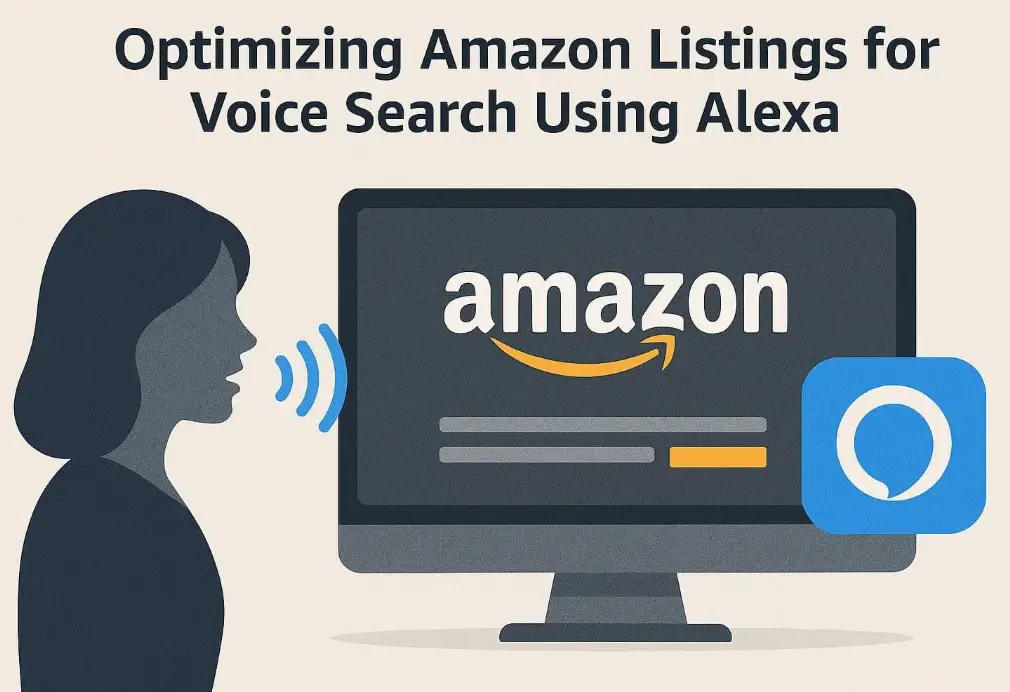
Amazon Voice Search Optimization (VSO) focuses on enhancing product visibility and sales through voice-activated searches via devices like Alexa. As voice commerce grows, with users increasingly asking questions like “Alexa, find the best wireless earbuds,” optimizing for this channel is essential.
Why It Matters
Voice searches differ from text-based ones, often being conversational, location-based, and question-oriented (e.g., “What’s the best laptop under $500?”). This shift drives more natural language queries, potentially increasing traffic for well-optimized listings. Businesses that adapt can see higher conversion rates, as voice searches often lead to immediate purchases.
Key Strategies
1. Keyword Research for Voice: Target long-tail, natural language keywords. Use tools like Amazon’s search bar or third-party analytics to identify phrases like “buy organic coffee beans online” instead of generic terms.
2. Product Title and Description Optimization: Craft titles that include brand names, features, and user intents (e.g., “Noise-Canceling Headphones with Long Battery Life”). Descriptions should answer common questions, incorporating synonyms and variations for voice queries.
3. Enhance A9 Algorithm Compatibility: Amazon’s A9 algorithm prioritizes relevance. Focus on high-quality images, detailed bullet points, and positive reviews to boost ranking in voice results.
4. Leverage Structured Data: Use Amazon’s attributes and categories effectively. For example, specify product variations (size, color) to match specific voice commands.
5. Integration with Alexa Skills: Develop or integrate with Alexa skills to create seamless shopping experiences, such as voice-enabled product recommendations.
Best Practices
– Monitor Trends: Track voice search data via Amazon Seller Central or tools like Google Trends for voice-related patterns.
– User-Centric Content: Write for how people speak—use full sentences and everyday language.
– Mobile Optimization: Ensure listings are mobile-friendly, as many voice searches occur on the go.
– A/B Testing: Experiment with different titles and keywords to refine strategies based on performance metrics.
– Compliance and Ethics: Avoid keyword stuffing; prioritize accurate, helpful content to maintain trust.
By implementing VSO, sellers can capture a growing segment of e-commerce, leading to improved discoverability, customer satisfaction, and revenue growth in the voice-driven market.
Table of Contents
- Part 1: Create A Amazon Voice Search Optimization Quiz in Minutes Using AI with OnlineExamMaker
- Part 2: 20 Amazon Voice Search Optimization Quiz Questions & Answers
- Part 3: OnlineExamMaker AI Question Generator: Generate Questions for Any Topic
Part 1: Create A Amazon Voice Search Optimization Quiz in Minutes Using AI with OnlineExamMaker
When it comes to ease of creating a Amazon Voice Search Optimization skills assessment, OnlineExamMaker is one of the best AI-powered quiz making software for your institutions or businesses. With its AI Question Generator, just upload a document or input keywords about your assessment topic, you can generate high-quality quiz questions on any topic, difficulty level, and format.
Overview of its key assessment-related features:
● AI Question Generator to help you save time in creating quiz questions automatically.
● Share your online exam with audiences on social platforms like Facebook, Twitter, Reddit and more.
● Instantly scores objective questions and subjective answers use rubric-based scoring for consistency.
● Simply copy and insert a few lines of embed codes to display your online exams on your website or WordPress blog.
Automatically generate questions using AI
Part 2: 20 Amazon Voice Search Optimization Quiz Questions & Answers
or
1. Question: What is the primary difference between voice search and traditional text search on Amazon?
A. Voice search uses natural language queries.
B. Text search is only available on mobile apps.
C. Voice search has fewer results.
D. Text search requires an internet connection.
Answer: A
Explanation: Voice search queries are typically phrased in conversational language, which differs from the keyword-focused approach of text search, allowing for more contextually relevant results on Amazon.
2. Question: Why is long-tail keyword optimization important for Amazon voice search?
A. It targets specific, conversational queries.
B. It reduces competition from short keywords.
C. It improves product visibility in voice results.
D. All of the above.
Answer: D
Explanation: Long-tail keywords align with the natural, detailed phrasing of voice searches, reducing competition and enhancing visibility and relevance in Amazon’s voice search algorithms.
3. Question: Which Amazon feature is most effective for optimizing content for voice search?
A. A+ Content.
B. Sponsored Products.
C. Product Variations.
D. Customer Reviews.
Answer: A
Explanation: A+ Content provides enhanced, structured product descriptions that can be pulled into voice search responses, improving user engagement and search rankings on Amazon.
4. Question: How does Amazon’s voice search algorithm prioritize results?
A. Based on relevance and user intent.
B. By popularity of the seller.
C. Through random selection.
D. Only by price.
Answer: A
Explanation: Amazon’s algorithm focuses on relevance to the user’s spoken query and intent, ensuring that results match natural language searches effectively.
5. Question: What role do customer reviews play in Amazon voice search optimization?
A. They influence product ranking in voice results.
B. They are not used in voice search.
C. They only affect text search.
D. They determine shipping speed.
Answer: A
Explanation: Positive reviews boost a product’s credibility and ranking in voice search, as Amazon’s system considers them for relevance and user satisfaction.
6. Question: Which type of keyword is best for voice search on Amazon?
A. Question-based keywords.
B. Single-word keywords.
C. Brand-specific keywords.
D. Hashtag keywords.
Answer: A
Explanation: Voice searches often start with questions (e.g., “What is the best…”), so question-based keywords help match the conversational style and improve optimization.
7. Question: How can sellers use Amazon’s Brand Store for voice search optimization?
A. By creating voice-friendly product pages.
B. It has no impact on voice search.
C. Only for visual searches.
D. By increasing ad spend.
Answer: A
Explanation: Amazon’s Brand Store allows for structured, narrative content that aligns with voice queries, enhancing discoverability in voice search results.
8. Question: What is a key benefit of using natural language in product titles for voice search?
A. It matches how users speak.
B. It shortens titles.
C. It avoids keywords.
D. It reduces character limits.
Answer: A
Explanation: Natural language in titles helps products appear in voice search results by aligning with the everyday phrasing users employ when querying Alexa or similar devices.
9. Question: Why should sellers monitor Amazon’s search analytics for voice optimization?
A. To track voice query performance.
B. To ignore text searches.
C. To focus on global trends only.
D. To avoid competitor analysis.
Answer: A
Explanation: Amazon’s analytics provide insights into voice search trends, allowing sellers to refine keywords and content for better performance in voice-driven queries.
10. Question: Which device integration is crucial for testing Amazon voice search optimization?
A. Alexa-enabled devices.
B. Only smartphones.
C. Desktop computers.
D. Email notifications.
Answer: A
Explanation: Testing on Alexa devices ensures that product listings perform well in real voice search scenarios, as these are primary platforms for such queries.
11. Question: How does featured snippets help in Amazon voice search?
A. They provide quick, spoken answers.
B. They are not used in voice search.
C. They only appear in text.
D. They increase video content.
Answer: A
Explanation: Featured snippets from optimized listings can be read aloud in voice search responses, improving user experience and product visibility on Amazon.
12. Question: What is the impact of mobile optimization on Amazon voice search?
A. It ensures fast loading for voice-activated devices.
B. It has no effect.
C. It only affects app downloads.
D. It slows down searches.
Answer: A
Explanation: Voice searches often occur on mobile or integrated devices, so mobile optimization speeds up responses and enhances ranking in Amazon’s system.
13. Question: Why are synonyms important in Amazon voice search optimization?
A. They cover variations in user phrasing.
B. They are not necessary.
C. They confuse the algorithm.
D. They only help in ads.
Answer: A
Explanation: Users might use synonyms in voice queries, so including them in listings helps the algorithm match and display relevant products accurately.
14. Question: Which element of a product description is most optimized for voice search?
A. Clear, concise bullet points.
B. Long paragraphs.
C. Images only.
D. Videos.
Answer: A
Explanation: Bullet points allow for easy extraction of key information in voice responses, making them ideal for Amazon’s voice search functionality.
15. Question: How does user intent affect Amazon voice search rankings?
A. It prioritizes contextually relevant results.
B. It ignores intent entirely.
C. It focuses on exact matches only.
D. It boosts unrelated products.
Answer: A
Explanation: Amazon’s voice search algorithm analyzes user intent from natural language to deliver the most relevant results, improving overall search accuracy.
16. Question: What strategy can sellers use to compete in high-voice-traffic categories?
A. Optimize for local and specific queries.
B. Avoid keywords altogether.
C. Use generic terms only.
D. Limit product listings.
Answer: A
Explanation: Targeting local or specific voice queries helps sellers stand out in competitive categories by aligning with user-specific needs on Amazon.
17. Question: Why is schema markup relevant for Amazon voice search?
A. It structures data for better voice responses.
B. It is not used on Amazon.
C. It only applies to websites.
D. It increases costs.
Answer: A
Explanation: Schema markup helps Amazon’s system understand and organize product data, leading to more accurate and featured placements in voice search results.
18. Question: How does Amazon’s Q&A section aid voice search optimization?
A. By providing answers that can be voiced back.
B. It does not affect searches.
C. Only for written responses.
D. By hiding questions.
Answer: A
Explanation: The Q&A section offers direct, answerable content that can be integrated into voice search responses, enhancing product discoverability.
19. Question: What is the best practice for keyword placement in Amazon listings for voice search?
A. Naturally throughout the description.
B. Only in the title.
C. At the end of the page.
D. In hidden tags.
Answer: A
Explanation: Placing keywords naturally ensures they fit conversational flows, helping Amazon’s algorithm match voice queries effectively.
20. Question: How can sellers measure the success of voice search optimization on Amazon?
A. Through increased conversion rates from voice queries.
B. By checking email only.
C. Via social media shares.
D. Through external search engines.
Answer: A
Explanation: Tracking conversion rates from voice searches in Amazon analytics indicates effective optimization, as it shows real user engagement and sales impact.
or
Part 3: OnlineExamMaker AI Question Generator: Generate Questions for Any Topic
Automatically generate questions using AI