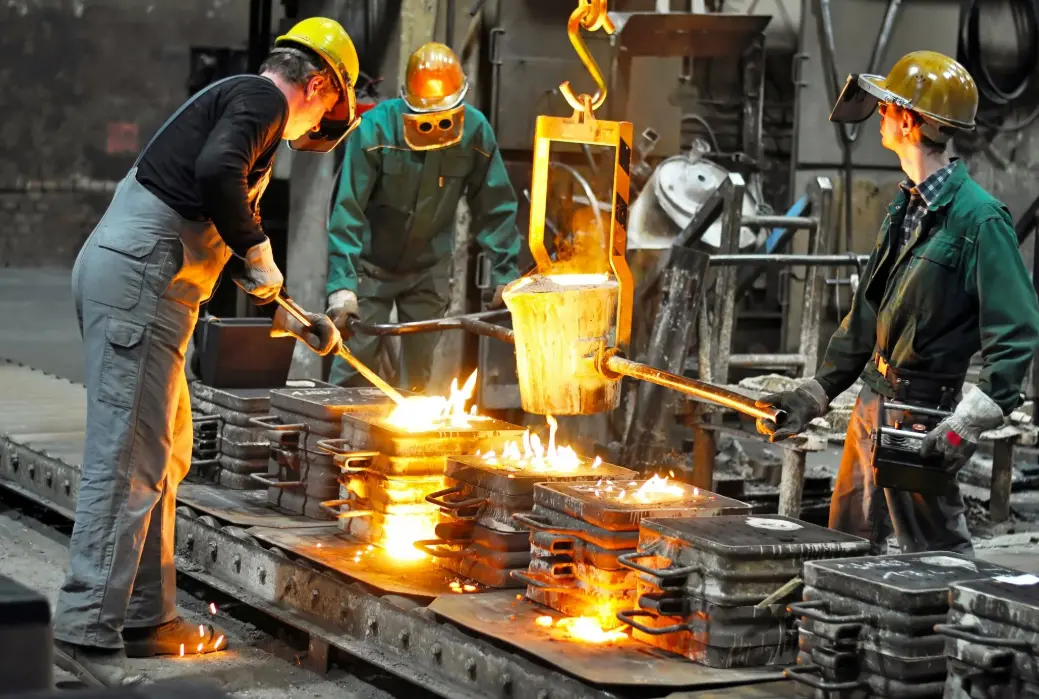
The alloys industry encompasses the production, processing, and application of metallic materials created by combining two or more elements, primarily metals, to enhance properties such as strength, durability, corrosion resistance, and conductivity. This sector plays a pivotal role in modern manufacturing, supplying essential materials for industries like aerospace, automotive, construction, electronics, and healthcare. Key alloys include steel (iron combined with carbon and other elements), aluminum alloys for lightweight structures, and superalloys for high-temperature environments in jet engines. Driven by technological advancements and increasing demand for sustainable materials, the industry focuses on innovation in recycling, additive manufacturing, and eco-friendly production methods to meet global challenges. With a market valued in the billions, it supports economic growth by enabling efficient infrastructure, energy solutions, and consumer goods.
Table of Contents
- Part 1: OnlineExamMaker AI Quiz Generator – Save Time and Efforts
- Part 2: 20 Alloys Industry Quiz Questions & Answers
- Part 3: Try OnlineExamMaker AI Question Generator to Create Quiz Questions
Part 1: OnlineExamMaker AI Quiz Generator – Save Time and Efforts
What’s the best way to create a Alloys Industry quiz online? OnlineExamMaker is the best AI quiz making software for you. No coding, and no design skills required. If you don’t have the time to create your online quiz from scratch, you are able to use OnlineExamMaker AI Question Generator to create question automatically, then add them into your online assessment. What is more, the platform leverages AI proctoring and AI grading features to streamline the process while ensuring exam integrity.
Key features of OnlineExamMaker:
● Combines AI webcam monitoring to capture cheating activities during online exam.
● Allow the quiz taker to answer by uploading video or a Word document, adding an image, and recording an audio file.
● Automatically scores multiple-choice, true/false, and even open-ended/audio responses using AI, reducing manual work.
● OnlineExamMaker API offers private access for developers to extract your exam data back into your system automatically.
Automatically generate questions using AI
Part 2: 20 Alloys Industry Quiz Questions & Answers
or
Question 1: What is an alloy?
A) A pure metal element
B) A mixture of two or more metals or a metal and a non-metal
C) A type of rock formation
D) A chemical reaction product
Answer: B
Explanation: An alloy is a mixture of two or more metals or a metal and a non-metal, which improves properties like strength and durability.
Question 2: Which of the following is a ferrous alloy?
A) Brass
B) Stainless steel
C) Bronze
D) Aluminum alloy
Answer: B
Explanation: Stainless steel is a ferrous alloy because it contains iron as the primary component, along with chromium for corrosion resistance.
Question 3: What is the primary advantage of using alloys in the aerospace industry?
A) Reduced weight
B) Increased brittleness
C) Lower melting points
D) Enhanced strength and heat resistance
Answer: D
Explanation: Alloys provide enhanced strength and heat resistance, which are crucial for withstanding the extreme conditions in aerospace applications.
Question 4: Which alloy is commonly used for making coins and jewelry?
A) Steel
B) Brass
C) Titanium alloy
D) Nickel alloy
Answer: B
Explanation: Brass, an alloy of copper and zinc, is valued for its malleability, corrosion resistance, and attractive golden appearance in coins and jewelry.
Question 5: What process is used to create alloys by melting and mixing metals?
A) Forging
B) Casting
C) Smelting
D) Extrusion
Answer: C
Explanation: Smelting involves melting metals and mixing them to form alloys, allowing for uniform composition and desired properties.
Question 6: Which element is added to iron to produce stainless steel?
A) Carbon
B) Chromium
C) Aluminum
D) Zinc
Answer: B
Explanation: Chromium is added to iron to create stainless steel, providing excellent corrosion resistance due to the formation of a protective oxide layer.
Question 7: What is the main component of bronze?
A) Iron and carbon
B) Copper and tin
C) Aluminum and magnesium
D) Nickel and copper
Answer: B
Explanation: Bronze is primarily composed of copper and tin, offering good wear resistance and is historically used for statues and tools.
Question 8: Why are aluminum alloys popular in the automotive industry?
A) High density
B) Low strength
C) Lightweight and good corrosion resistance
D) High cost
Answer: C
Explanation: Aluminum alloys are favored for their lightweight nature and corrosion resistance, which improve fuel efficiency and vehicle longevity.
Question 9: Which alloy is known for its use in surgical instruments due to its biocompatibility?
A) Brass
B) Titanium alloy
C) Steel
D) Bronze
Answer: B
Explanation: Titanium alloys are biocompatible, strong, and corrosion-resistant, making them ideal for surgical instruments and implants.
Question 10: What effect does adding carbon to iron have on its properties?
A) Makes it softer
B) Increases its ductility
C) Forms steel with greater hardness
D) Reduces its melting point
Answer: C
Explanation: Adding carbon to iron creates steel, which has greater hardness and strength compared to pure iron.
Question 11: Which alloy is commonly used in electrical wiring for its conductivity?
A) Stainless steel
B) Copper alloy (e.g., with silver)
C) Titanium alloy
D) Nickel alloy
Answer: B
Explanation: Copper alloys, often with elements like silver, maintain high electrical conductivity while improving other properties like strength.
Question 12: What is the key characteristic of superalloys?
A) Low temperature resistance
B) Ability to withstand high temperatures and stresses
C) High brittleness
D) Poor corrosion resistance
Answer: B
Explanation: Superalloys are designed for extreme environments, offering excellent high-temperature strength and resistance to oxidation.
Question 13: Which process improves the surface hardness of an alloy?
A) Annealing
B) Case hardening
C) Quenching
D) Tempering
Answer: B
Explanation: Case hardening adds a hard outer layer to alloys, enhancing wear resistance while maintaining a tough core.
Question 14: What is the primary use of nickel-based alloys?
A) In construction beams
B) For turbine blades in jet engines
C) In household utensils
D) For electrical insulators
Answer: B
Explanation: Nickel-based alloys are used in turbine blades due to their high strength, creep resistance, and ability to operate at high temperatures.
Question 15: Which alloy system is based on aluminum and is lightweight for aircraft?
A) Duralumin
B) Cast iron
C) Brass
D) Stainless steel
Answer: A
Explanation: Duralumin, an aluminum-copper alloy, is lightweight and strong, making it suitable for aircraft structures.
Question 16: How does alloying affect the corrosion resistance of metals?
A) Always decreases it
B) Has no effect
C) Can improve it by forming protective layers
D) Only works for non-metals
Answer: C
Explanation: Alloying can improve corrosion resistance, as seen in stainless steel, by creating passive oxide layers that protect the base metal.
Question 17: What is the role of silicon in aluminum alloys?
A) Increases weight
B) Improves casting properties and strength
C) Reduces conductivity
D) Makes it more brittle
Answer: B
Explanation: Silicon in aluminum alloys enhances fluidity during casting and increases strength, making it easier to manufacture complex parts.
Question 18: Which alloy is used in shipbuilding for its resistance to seawater?
A) Pure iron
B) Copper-nickel alloy
C) Zinc alloy
D) Magnesium alloy
Answer: B
Explanation: Copper-nickel alloys resist corrosion from seawater, making them ideal for marine applications like ship hulls and piping.
Question 19: What is the eutectic point in alloy phase diagrams?
A) The point of maximum solubility
B) Where the alloy has the lowest melting point
C) The highest temperature for solidification
D) A point of no significance
Answer: B
Explanation: The eutectic point represents the composition and temperature where an alloy melts and solidifies at the lowest possible temperature.
Question 20: Which factor is most important in selecting an alloy for a specific application?
A) Color
B) Cost and required properties like strength and durability
C) Availability of pure metals
D) Aesthetic appeal only
Answer: B
Explanation: The selection of an alloy depends on balancing cost with essential properties such as strength, corrosion resistance, and suitability for the application.
or
Part 3: Try OnlineExamMaker AI Question Generator to Create Quiz Questions
Automatically generate questions using AI